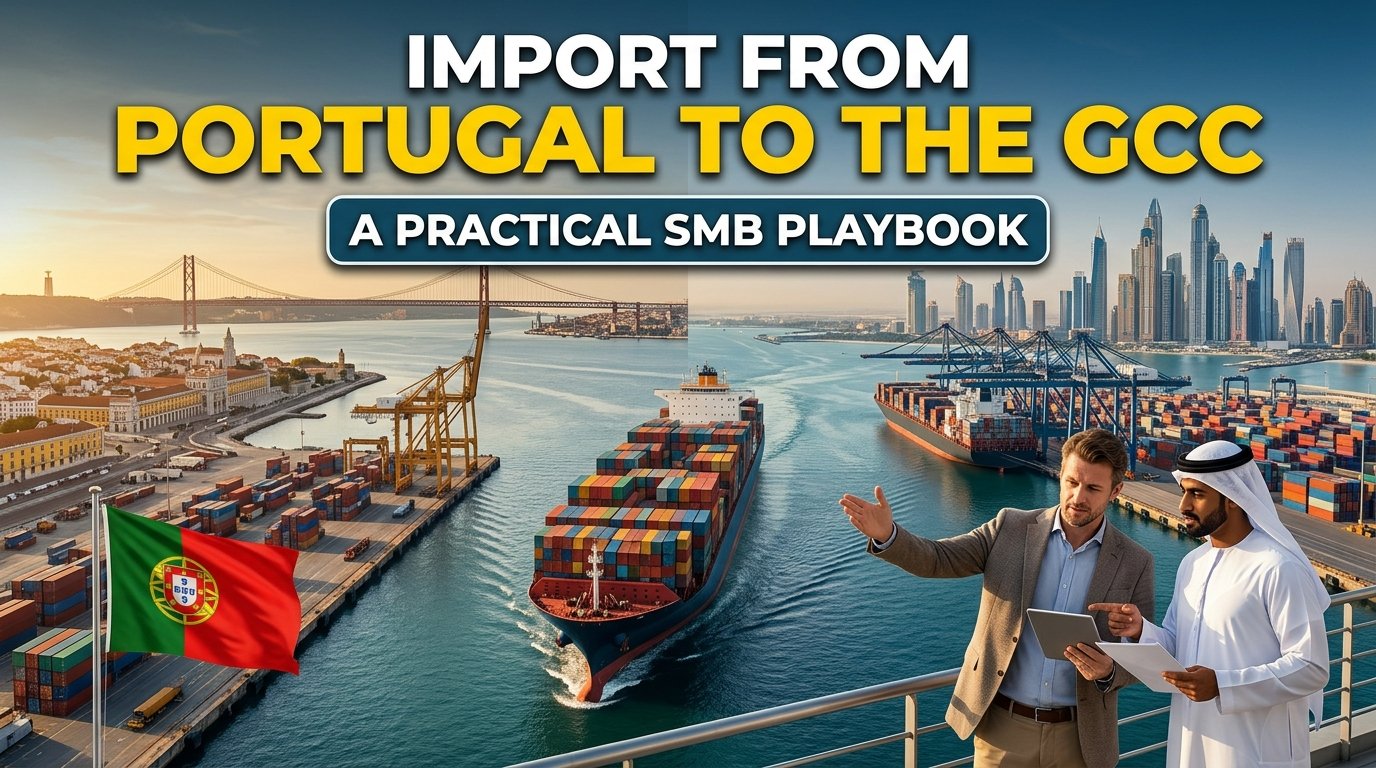
How to Import from Portugal to the GCC: A Practical SMB Playbook
Portugal sells the Gulf machinery, furniture, wood, stone and food. It’s not a huge flow. And that’s exactly why it’s interesting.
Portugal exported about $312.75 million to the UAE in 2025. To Saudi Arabia, it was about $186.4 million in 2024. Those are small numbers next to what the GCC imports from Asia. A small base means room to grow, and few importers who know the route well.
But I won’t oversell it. Shipping from Portugal to the Gulf in late 2026 means dealing with real disruption, real paperwork, and a 5% duty that Portuguese goods do not escape.
This playbook gives you the accurate version: what to import, what the rules actually are, how to route cargo right now, and a step-by-step process you can follow on your first shipment.
Why Portugal to the GCC Is Worth a Look

Portugal isn’t the first country GCC buyers think of. That’s the opening. The product mix is practical, the quality reputation in categories like cork, stone, and furniture is strong, and supplier relationships are still easy to win.
Here’s what the trade data shows, so you’re not guessing.
What Portugal Actually Sells to the Gulf
The UAE data lists vehicles, machinery, electrical equipment, wood, furniture, and edible fruits and nuts among Portugal’s larger export lines. For Saudi Arabia, furniture and lighting led the list, followed by vehicles, dairy and honey, machinery, wood and electrical equipment.
That tells you where proven demand sits. It also tells you something useful: dairy, honey, fruit and nuts exist as categories, but they trigger halal and food-safety rules we’ll cover below.
Where SMBs Can Compete
You won’t beat China on price. Compete where European design, craftsmanship, and traceability matter:
- Furniture and interior fit-out products
- Cork products and wood products
- Natural stone and ceramics for construction and design projects
- Specialty foods, such as olive oil, honey, and dried fruit (with halal paperwork)
- Machinery and industrial components for B2B buyers
Start with one category where you already have a supplier you trust.
The Duty Reality Check (No Free Lunch)
This section matters more than any other, because it’s where most European import guides go wrong.
Portugal is in the EU. The GCC is a customs union. But there is no EU-GCC trade agreement in force that gives Portuguese goods blanket zero duty.
What the Rules Actually Say
The GCC applies a common external customs duty of 5% on most goods. Exceptions exist: basic foods and some other categories can be zero-rated, while alcohol and tobacco carry higher rates, and Saudi Arabia applies higher rates on selected product lists.
And the trade deal? The EU-GCC free trade talks stalled in 2008 over differing ambitions. Gulf News reports they have gained renewed momentum heading into 2026, but I found no concluded agreement. So plan your pricing on 5% unless your product is on an exemption list.
Why This Helps You
Honest costing protects your margin. If you quote a buyer assuming zero duty and customs charges 5%, you either lose money or lose the relationship.
Do the opposite. Quote a clear landed cost, include the duty, and win trust. That’s a competitive advantage over exporters who guess.
The New 12-Digit Tariff
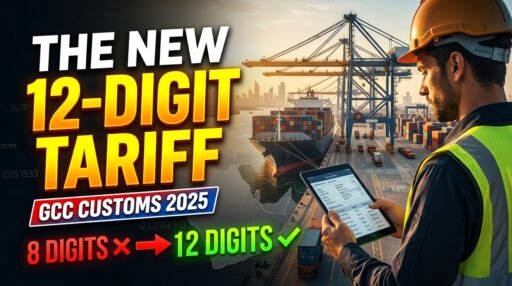
One more change to know. Since 1 January 2025, the GCC uses a 12-digit integrated customs tariff, replacing the earlier 8-digit structure. Your first 6 digits are the international HS code. The rest are GCC-specific, so let your customs broker confirm the full code. Our GCC customs, HS codes and Incoterms guide explains the basics.
Shipping Routes Right Now: What’s Changed
Normally I’d give you a clean transit time and move on. This year, the honest answer is “ask for a written schedule,” because the Gulf’s sea lanes are disrupted.
Here’s the situation as reported by shipping analysts in 2026. Conditions change quickly, so treat this as context, not a forecast.
Hormuz and the Red Sea
As of May 2026, one forwarder reported commercial movement through the Strait of Hormuz remained heavily restricted and inconsistent, affecting Gulf hubs including Jebel Ali. That matters because Jebel Ali is the usual landing point for UAE cargo.
On the other side, there’s a partial recovery. Seatrade Maritime reported on 14 October 2026 that Suez Canal transits by container ships had climbed above 50% of pre-conflict levels, with a fuller return expected by early 2027.
Workarounds Carriers Are Using
Carriers adapted. MSC announced a service linking Europe with Jeddah and King Abdullah Port on Saudi Arabia’s west coast, with onward trucking, to avoid the blocked Strait. Other routings use Omani ports with overland transport.
Here’s how the options compare:
| Option | Best for | Watch out for |
|---|---|---|
| Sea to Jebel Ali (via Hormuz) | Normal UAE routing | Schedule unreliability, surcharges |
| Sea to Jeddah or King Abdullah, then truck | Hormuz-free access to the Gulf | Extra overland leg and cost |
| Sea to an Omani port, then truck | Flexibility to UAE and beyond | Handling and border steps |
| Air freight | High-value, urgent items | Cost per kilo |
Which one fits your cargo depends on timing and budget. Our sea freight team can quote the current options.
What to Put in Your Contract
Because routing is uncertain, protect yourself in writing:
- Who pays war-risk and emergency surcharges
- Who pays if cargo is diverted to a different port
- What happens to the delivery date if the vessel is rerouted
- Which port counts as the delivery point
For more on how shipping terms shift cost and risk, read FOB vs CIF: which shipping term saves you money.
The Documents You Need (And Where Portuguese Exporters Get Stuck)
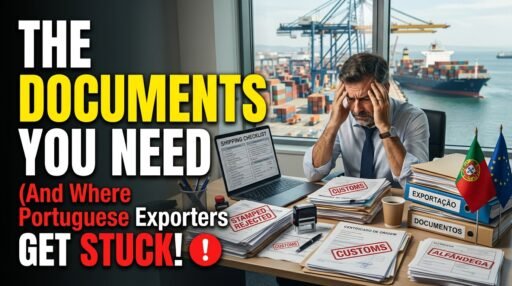
Paperwork decides whether your cargo clears in days or sits in port. Get these ready before you book.
The Core Set
Everyone needs a commercial invoice, packing list, and bill of lading or air waybill. Add the items below as your product requires.
Certificate of Origin
A Certificate of Origin proves where goods were made. In Portugal, the Lisbon Chamber of Commerce and Industry issues them and says it can provide certificates within 24 hours. The Portuguese Business Association (AEP) also issues them digitally by email within 24 hours.
The chamber’s step-by-step guide says products made in Portugal should show “Comunidade Europeia, Portugal” as the origin. Ask your buyer or bank whether they also need the certificate legalized or attested, since some Gulf buyers do.
Be clear on what it does. It proves origin and satisfies buyers and banks. It does not, by itself, cut your duty to zero.
Halal Certification for Food
For food, halal certification is not optional. Dubai’s Food Code 2.0 requires halal certificates for imported meat and poultry, issued by a body recognized by the UAE authority. For Saudi Arabia, the certificate must come from a body recognized by the Saudi Halal Center.
Check the certifier against the current recognition lists before you pay for anything. A certificate from an unrecognized body can be worthless at the port. Our customs clearance team can confirm requirements for your product.
Conformity Certificates for Manufactured Goods
Don’t assume a CE mark is enough. Saudi Arabia requires a conformity certificate for imported goods, handled through the SABER portal. The GCC also operates a regional conformity scheme and “G” mark.
CE documents may help as technical evidence, but the destination’s conformity route decides. Check early. It’s the step most first-time exporters skip.
Other Documents Worth Checking
- A phytosanitary certificate for plants and some plant products
- Health and veterinary certificates for dairy and animal products
- Arabic and English labeling for consumer goods
- Your EORI number and the Portuguese export declaration, which your forwarder usually files
Which Products Work Best (And What to Watch)

Match your product to the paperwork it triggers. This saves weeks.
Lower-Friction Categories
Furniture, cork and wood products, stone, ceramics, and industrial components usually avoid halal and food-authority steps. They still need correct HS codes, conformity checks where relevant, and clean documents.
Typical headings to verify with your broker: furniture (HS 9401 to 9403), cork articles (HS 4503 and 4504), ceramic tiles (HS 6907 and 6908). These are starting points, not final codes.
Higher-Friction Categories
Food, dairy, honey, cosmetics, and pharmaceuticals involve SFDA or equivalent approvals, halal proof, shelf-life and labeling rules, and sometimes pre-registration. They can pay well, but plan 4 to 8 weeks of lead time for paperwork on a first shipment.
Incoterms: Which Term to Use in 2026
An Incoterm decides who pays what, and who carries risk where. With routing uncertain, this choice matters more than usual.
For a first shipment, I’d lean toward CIF or DAP. They keep you in control of the main leg while the buyer handles import clearance. DDP is tempting, but it exposes you to duty, VAT, and any diversion costs you can’t fully predict.
If a buyer insists on FOB, make sure they understand they carry the ocean risk. Our guide to FOB vs CIF walks through the trade-offs.
Cost Control: Where You Can Actually Save
Margins on European goods can be healthy, but only if you control the extras.
Practical Ways to Protect Margin
- Consolidate LCL shipments with other exporters to share container cost
- Negotiate surcharge caps and written validity periods on quotes
- Insure against loss with all-risk cargo insurance, and ask about war-risk cover
- Pre-clear paperwork to avoid demurrage and storage fees
- Use a bonded warehouse or free zone if you serve several GCC markets
On that last point, goods cleared at one GCC entry point can move inside the customs union without further duty. That makes a well-placed hub useful for multi-country distribution. Our warehousing and distribution service is built for this.
Don’t Forget the Last Mile
Landed cost isn’t just port fees. Last-mile delivery in the Gulf can change your margin. Read last mile delivery in Gulf countries before you finalize pricing.
The Step-by-Step Playbook: Portugal to the GCC in 10 Steps
Follow these in order on your first shipment. Each step prevents a specific mistake.
- Pick one product with proven demand and a reliable supplier. Avoid experiments.
- Classify it. Get the HS code and the full 12-digit GCC tariff line confirmed by a broker.
- Check the rules. Is it halal-regulated, SFDA-regulated, or subject to conformity certification (G-Mark, SABER, ECAS)?
- Cost it honestly. Include 5% duty, VAT, freight, insurance, surcharges, and last-mile delivery.
- Choose your Incoterm and write the rerouting and surcharge terms into the contract.
- Order your certificates early: Certificate of Origin from the chamber, halal from a recognized body, conformity where needed.
- Book freight with a written schedule and ask which port and route will actually be used.
- Pack and label to destination standards, with Arabic labels for consumer goods.
- Submit documents and let your forwarder file the export declaration and the GCC import entry.
- Review the shipment. Record lead time, cost variances, and any delays, then improve the next one.
Common Mistakes (And How to Avoid Them)

Learn these before you lose money on them.
The Five That Hurt Most
- Assuming zero duty. Quote 5% unless an exemption applies.
- Using an unrecognized halal certifier. Verify against the current recognition list.
- Relying on a CE mark alone. Confirm the destination’s conformity route.
- Ignoring routing risk. Put rerouting and surcharge terms in writing.
- Wrong HS code. A wrong code means the wrong duty or a held shipment.
FAQ: Importing from Portugal to the GCC
Is there a free trade agreement between the EU and the GCC?
No agreement is in force. Talks stalled in 2008 and have been revived, but I found no concluded deal. Plan on the standard 5% GCC duty unless an exemption applies.
How much duty will I pay on goods from Portugal?
Most goods face the GCC common external tariff of 5%, plus VAT where applicable. Some basic foods and categories are zero-rated, and some products carry higher rates. Your broker can confirm the exact line.
Do I need a Certificate of Origin?
Usually yes, because buyers, banks, and some customs checks ask for it. In Portugal, chambers such as the Lisbon Chamber of Commerce and Industry issue them. It proves origin but does not automatically lower duty.
Do I need halal certification?
For food products, yes. Meat, poultry and many other foods need a halal certificate from a body the destination country recognizes. Check the current recognition list before you apply.
Is a CE mark enough to enter the GCC?
Not automatically. Destination countries run their own conformity routes, such as Saudi Arabia’s SABER process and the GCC “G” mark. Check early.
Can I still ship to Dubai right now?
Yes, but routing is less predictable. Carriers use alternative routings, including Saudi Red Sea ports with onward trucking. Ask your forwarder for a written schedule and surcharge terms.
Do I need a company in the GCC?
No. A licensed freight forwarder or customs broker can act for you under DAP or DDP. Your buyer will still need valid import credentials.
What’s the best first product to try?
Pick something with low regulatory friction and a reliable supplier, such as furniture, cork, stone, or industrial components. Save food and cosmetics for your second or third shipment, once you know the process.
The Bottom Line: Start Small, Document Everything
Portugal to the GCC is a real opportunity, but not a magic one. You won’t get zero duty from a treaty that doesn’t exist. You will get a quality-positioned product, a clear route to market, and an edge over exporters who guess at the rules.
Follow the 10 steps. Quote honestly. Put routing risk in writing. Do those three things and your first shipment becomes a repeatable system.
At Al Furqan Shipping & Logistics, we’ve handled GCC freight for more than two decades, from sea freight and customs clearance to warehousing and distribution and halal logistics. Tell us your product, your Portuguese port, and your destination, and we’ll give you a landed-cost estimate with current routing options.
Request a quote and let’s plan your first shipment properly.
If you’re comparing other European routes, see our playbooks for France and Germany, and our piece on how war, tariffs and AI are redefining trade in 2026.
Sources: Portugal exports to the UAE, Portugal exports to Saudi Arabia, EU Council on EU-GCC talks, Gulf News on EU-GCC talks, GCC customs and 12-digit tariff, Seatrade Maritime on Suez, Lisbon Chamber of Commerce