
Oil Prices, War and Logistics: How Global Conflicts Shape Energy Markets
When wars break out, oil prices often spike within hours. This deep connection between global conflict and oil markets affects everyone—from traders and policymakers to businesses planning supply chains and everyday consumers watching gas prices climb.
Who this is for: Energy analysts, supply chain managers, investors, and anyone trying to understand why oil prices and war create such dramatic market swings.
We’ll explore how military logistics oil dependency creates vulnerabilities that ripple through global markets. You’ll learn about the specific ways war impact on oil prices happens—from damaged pipelines to blocked shipping routes. We’ll also cover how smart companies and governments build strategic response systems to handle oil supply chain disruption before it cripples their operations.
The stakes are real. A single conflict can trigger energy security crises that last for months, reshaping entire economies and forcing rapid strategic pivots across industries.
How Global Conflicts Drive Oil Market Volatility

Impact of Geopolitical Tensions on Crude Oil Pricing
Global tensions between major powers send oil markets into overdrive faster than any other single factor. When Russia invaded Ukraine in 2022, Brent crude jumped from $96 to over $130 per barrel within weeks. This dramatic surge shows how geopolitical oil volatility creates immediate price reactions that ripple through the entire global economy.
Oil markets react to tensions even before actual conflicts begin. Trade disputes between the US and Iran regularly add $5-10 per barrel to crude prices based purely on the threat of supply interruptions. Major oil-producing nations like Saudi Arabia, Russia, and Iran control roughly 40% of global production, making any political instability in these regions a direct catalyst for price volatility.
The war impact on oil prices extends beyond direct military action. Sanctions, diplomatic disputes, and even harsh rhetoric between nations cause traders to build risk premiums into oil futures contracts. When the US imposed sanctions on Iranian oil exports in 2018, prices climbed 25% despite minimal actual supply disruption, proving that perception often matters more than reality in energy markets.
Supply Chain Disruptions in Conflict Zones
Physical infrastructure becomes the first casualty when conflicts erupt in oil-rich regions. Pipelines, refineries, and loading terminals make easy targets for military strikes or sabotage operations. The attacks on Saudi Aramco facilities in 2019 temporarily cut global oil supply by 5%, demonstrating how vulnerable critical energy infrastructure remains to hostile actions.
Oil supply chain disruption doesn’t require direct hits on production facilities. Shipping lanes through conflict zones force tankers to take longer, more expensive routes. The Strait of Hormuz, through which 21% of global petroleum liquids pass, becomes a chokepoint during Middle Eastern tensions. Insurance rates for tankers increase dramatically, adding hidden costs that eventually reach consumers at gas pumps.
Regional conflicts create domino effects across global supply networks. When fighting broke out in Libya in 2011, the country’s 1.6 million barrels per day of production went offline for months. Other producers scrambled to fill the gap, but temporary shortages pushed prices up 15% globally, showing how localized conflicts impact worldwide energy markets.
Strategic Petroleum Reserve Releases During Wartime
Governments maintain emergency oil stockpiles specifically for crisis situations, but timing their release requires careful political calculation. The US Strategic Petroleum Reserve holds roughly 400 million barrels, enough to cover about 20 days of total American oil consumption. During the Gulf War in 1991, releasing 17 million barrels helped stabilize prices and calm market panic.
The effectiveness of reserve releases depends heavily on coordination between major consuming nations. When the International Energy Agency coordinated releases totaling 60 million barrels following Libya’s production halt in 2011, oil prices dropped $10 per barrel within days. This coordinated approach proves more effective than individual nations acting alone.
Political timing often trumps pure market logic when deciding on reserve releases. Presidents facing election years or economic recessions feel pressure to tap reserves even when supplies aren’t critically low. The 2022 release of 180 million barrels from US reserves aimed to combat high gas prices caused by the Russia-Ukraine conflict, showing how energy security during conflict becomes intertwined with domestic political considerations.
Market Speculation and Fear-Driven Price Spikes
Financial traders amplify the global conflict oil market volatility through speculative positions that can dwarf actual supply and demand fundamentals. Hedge funds and investment banks hold oil futures contracts worth hundreds of billions of dollars, creating artificial demand that pushes prices higher during crisis periods.
Fear-based trading often creates price bubbles that burst once actual supply data emerges. During the initial weeks of the Russia-Ukraine war, futures contracts suggested oil might reach $200 per barrel. When Russian oil continued flowing through alternative channels and strategic reserves entered the market, prices retreated to more sustainable levels around $90-100 per barrel.
Oil market instability feeds on itself through algorithmic trading systems that automatically buy or sell based on news headlines and technical indicators. A single report about pipeline attacks in Iraq can trigger thousands of computerized trades within seconds, creating price spikes that have little connection to actual supply disruptions. This technological amplification makes modern oil markets more volatile than ever before, requiring sophisticated risk management strategies from both producers and consumers.
Critical Supply Chain Vulnerabilities in Oil Transportation

Chokepoint Risks in Major Shipping Routes
The global oil transportation network depends heavily on narrow waterways that can become dangerous bottlenecks during conflicts. The Strait of Hormuz handles about 20% of the world’s oil traffic, making it arguably the most critical chokepoint for crude oil transportation security. When tensions rise in the Persian Gulf, even the threat of closure sends oil prices and war concerns rippling through markets worldwide.
The Suez Canal presents another major vulnerability, with roughly 10% of global oil passing through this Egyptian waterway. The 2021 Ever Given blockage showed how quickly a single incident can disrupt oil supply chain operations, and during wartime, such chokepoints become prime targets for economic warfare.
| Major Oil Chokepoints | Daily Oil Flow (million barrels) | Strategic Risk Level |
|---|---|---|
| Strait of Hormuz | 21.0 | Critical |
| Strait of Malacca | 15.6 | High |
| Suez Canal | 5.5 | High |
| Bab el-Mandeb | 4.8 | Medium |
The Strait of Malacca, connecting the Indian and Pacific Oceans, carries significant oil shipments to Asia’s largest economies. Any disruption here affects global conflict oil market dynamics, particularly impacting China, Japan, and South Korea’s energy supplies. Pirates, territorial disputes, and potential military conflicts make these narrow passages extremely vulnerable to both intentional attacks and accidental blockages.
Pipeline Infrastructure Targeting During Conflicts
Pipelines represent sitting ducks during military conflicts because they’re impossible to hide and extremely difficult to defend across thousands of miles. The war impact on oil prices becomes immediately apparent when major pipeline systems face attacks or sabotage. These infrastructure networks often cross multiple countries, creating complex geopolitical oil volatility scenarios where conflicts can spread beyond initial combatants.
Recent conflicts have shown how quickly pipeline attacks can cripple energy security during conflict. The Nord Stream pipeline explosions in 2022 demonstrated how underwater infrastructure remains vulnerable despite seeming protection from direct military assault. Similarly, attacks on Iraqi pipelines during various conflicts have repeatedly shown how easily small groups can inflict massive economic damage.
Key pipeline vulnerabilities include:
-
Border crossings where pipelines become political pawns
-
Remote sections that are difficult to monitor and protect
-
Pump stations and control facilities that represent concentrated targets
-
Underwater segments vulnerable to naval mines or sabotage divers
The economic mathematics of pipeline attacks favor attackers significantly. A small explosive device costing hundreds of dollars can shut down infrastructure worth billions, creating immediate oil market instability that affects global prices. Repair times often stretch for weeks or months, during which alternative transportation methods struggle to compensate for lost capacity.
Refinery Capacity Limitations Under Wartime Conditions
Refineries become critical weak points during conflicts because they’re large, stationary targets that require significant time and resources to repair or replace. Military logistics oil dependency makes these facilities high-value targets for both conventional military strikes and terrorist attacks. The complex nature of refining operations means that even minor damage can shut down entire facilities for extended periods.
Wartime conditions create multiple operational challenges for refineries beyond direct physical threats. Staff shortages develop as personnel are drafted into military service or flee conflict zones. Supply chains for critical chemicals and spare parts get disrupted, making routine maintenance impossible. Power grid instability affects the precise electrical requirements needed for refining processes.
The war economy oil effects multiply when refineries go offline because crude oil availability doesn’t automatically translate to usable fuel products. During World War II, Allied bombing of German synthetic fuel plants proved more effective than targeting oil fields themselves. Modern conflicts show similar patterns – attacking one major refinery can have greater impact than disrupting multiple smaller production sites.
Refinery vulnerability factors:
-
Geographic concentration in specific regions or countries
-
Specialized equipment that takes months or years to replace
-
Environmental hazards that complicate military defense
-
Skilled workforce requirements that are difficult to maintain during conflicts
The strategic implications extend beyond immediate fuel shortages. Countries with limited domestic refining capacity become extremely vulnerable to supply disruptions, forcing them to rely on refined product imports that are even more expensive and logistically challenging than crude oil imports.
Military Logistics Dependencies on Oil Resources
Fuel Consumption Rates in Modern Warfare
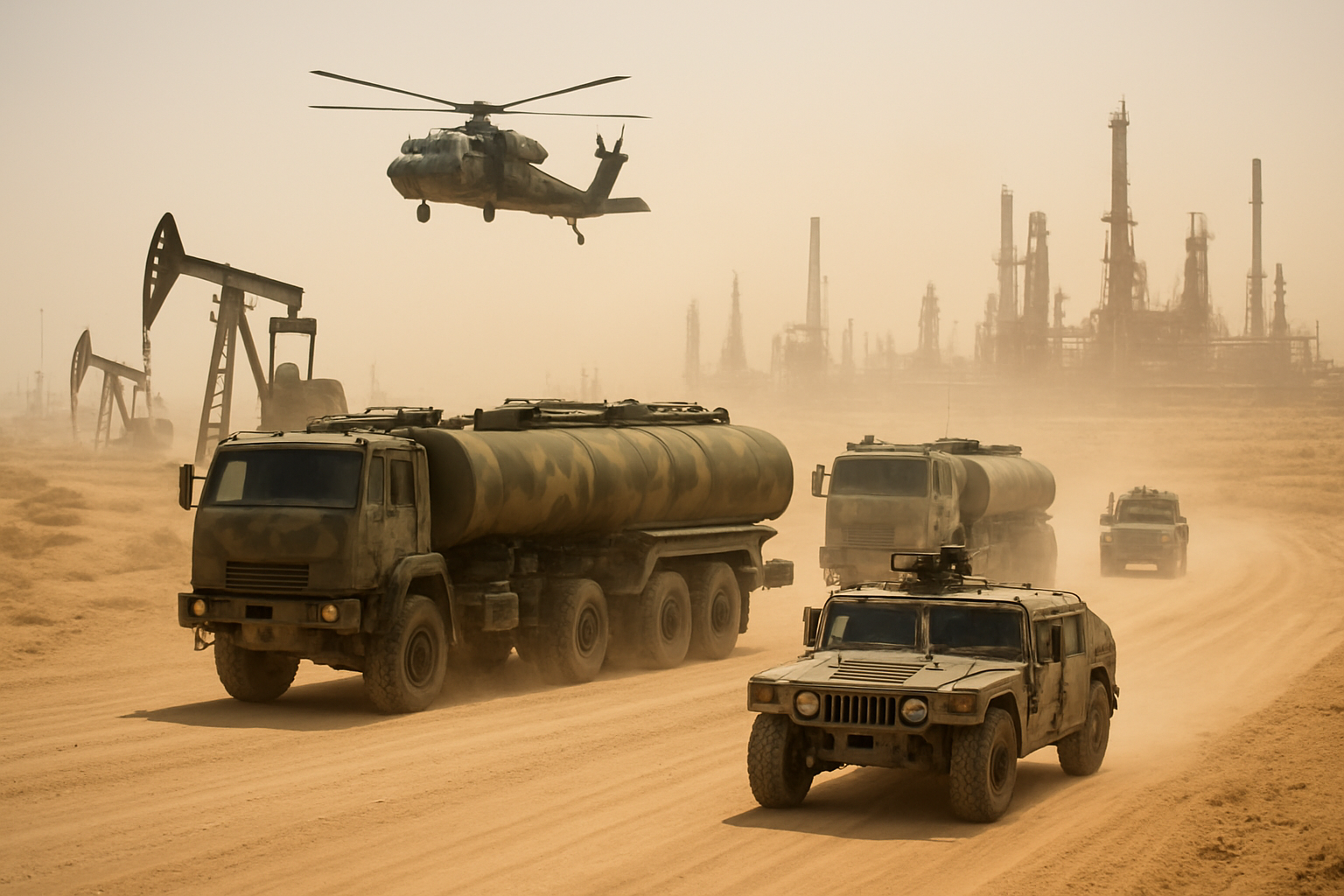
Military forces consume staggering amounts of fuel during active operations, with military logistics oil dependency reaching unprecedented levels in contemporary warfare. A single M1A2 Abrams tank burns approximately 10 gallons of fuel per hour during combat operations, while a squadron of F-35 fighter jets can consume thousands of gallons during a single mission. Modern military operations require roughly 2.5 to 4 gallons of fuel per soldier per day, compared to just 1 gallon during World War II.
The U.S. military alone consumes over 100 million barrels of oil annually, making it one of the world’s largest institutional fuel users. During the Iraq War, fuel costs accounted for nearly 20% of total operational expenses, highlighting how war impact on oil prices creates bidirectional pressure on both military budgets and global energy markets.
| Military Asset | Daily Fuel Consumption |
|---|---|
| Aircraft Carrier | 5,000+ gallons |
| Combat Brigade | 40,000-60,000 gallons |
| Fighter Squadron | 25,000+ gallons |
Strategic Fuel Stockpiling for Military Operations
Defense organizations maintain extensive fuel reserves to ensure operational readiness during conflicts when oil supply chain disruption becomes a critical vulnerability. The U.S. Strategic Petroleum Reserve holds approximately 727 million barrels, while military-specific reserves include forward-positioned fuel stocks in key strategic locations worldwide.
NATO countries coordinate fuel stockpiling through standardized agreements, ensuring member nations maintain minimum 90-day reserves. Military fuel depots employ sophisticated logistics networks, including:
-
Underground storage facilities resistant to enemy attacks
-
Mobile fuel distribution systems for forward deployment
-
Pre-positioned fuel stocks in allied territories
-
Emergency fuel allocation protocols during crises
The challenge lies in balancing adequate reserves with the massive storage and security costs involved.
Alternative Energy Solutions for Defense Applications
Military organizations increasingly explore renewable energy alternatives to reduce military logistics oil dependency and improve operational security. Solar-powered forward operating bases reduce fuel convoy vulnerabilities, while hybrid-electric vehicles lower the logistics footprint in combat zones.
The U.S. Navy operates several nuclear-powered vessels, eliminating fuel dependency for propulsion. Experimental projects include:
-
Portable nuclear reactors for remote bases
-
Biofuel production from algae and waste materials
-
Advanced battery systems for equipment and vehicles
-
Wind and solar installations at permanent facilities
These initiatives aim to reduce the tactical vulnerability created by fuel supply lines, which often become high-priority targets for enemy forces.
Cost Implications of Sustained Military Campaigns
Extended military operations create enormous financial pressure through escalating fuel costs, particularly when geopolitical oil volatility drives prices higher during active conflicts. The delivered cost of fuel in combat zones can reach $400 per gallon when accounting for transportation, security, and logistics overhead.
Fuel-related expenses during prolonged campaigns include:
-
Transportation costs through hostile territories
-
Security escorts for fuel convoys
-
Infrastructure development for fuel distribution
-
Emergency procurement at premium prices
-
Equipment maintenance due to harsh operating conditions
The Pentagon estimates that every $10 increase in oil prices adds approximately $1.3 billion to annual military fuel costs, demonstrating how global conflict oil market dynamics directly impact defense budgets and strategic planning capabilities.
Economic Ripple Effects Across Global Markets

Inflation Pressures from Rising Energy Costs
When oil prices and war collide, everyday consumers feel the heat first through their wallets. Energy costs touch virtually every aspect of daily life, creating a domino effect that starts at gas stations and ripples through grocery stores, utility bills, and beyond. During the Russia-Ukraine conflict, global oil prices spiked dramatically, pushing gasoline costs to record highs in many countries and forcing central banks to grapple with accelerating inflation rates.
The relationship between crude oil and inflation operates through multiple channels. Higher fuel costs directly impact transportation expenses, which get passed along to consumers through increased prices for goods and services. Food prices often surge first, as agricultural production and distribution rely heavily on diesel fuel. Heating and electricity costs climb as utilities adjust their rates to reflect higher input costs.
Central banks face a particularly challenging dilemma when geopolitical oil volatility drives inflation. Traditional monetary policy tools become less effective because the price increases stem from supply constraints rather than demand-driven pressures. This forces policymakers to choose between fighting inflation through interest rate hikes or supporting economic growth during uncertain times.
Transportation Sector Cost Increases
Airlines, shipping companies, and trucking firms operate on razor-thin margins that make them extremely vulnerable to sudden fuel price shocks. When war impact on oil prices sends crude costs soaring, these companies face immediate pressure to adjust their pricing structures or absorb massive cost increases that can quickly turn profitable operations into loss-making ventures.
Commercial aviation provides a stark example of this vulnerability. Fuel typically represents 20-30% of airline operating costs, meaning a 50% increase in jet fuel prices can eliminate profit margins entirely. Airlines respond through fuel surcharges, route cancellations, and capacity reductions that ultimately reduce travel options and increase ticket prices for consumers.
The shipping industry faces similar challenges, with bunker fuel costs representing a significant portion of vessel operating expenses. Container shipping rates often include fuel adjustment factors that automatically pass cost increases to shippers, who then face difficult decisions about absorbing costs or raising prices for end customers.
Ground transportation networks experience parallel disruptions. Trucking companies must balance fuel cost increases against competitive pressures, often leading to service reductions in less profitable routes and higher shipping costs for businesses that depend on just-in-time delivery systems.
Manufacturing Disruptions and Production Delays
Manufacturing operations feel the squeeze from multiple angles when oil supply chain disruption creates market instability. Beyond direct energy costs for plant operations, manufacturers must navigate increased costs for raw materials derived from petroleum, transportation delays, and supply chain uncertainties that can halt production lines.
Petrochemical-dependent industries face particularly severe challenges. Plastics manufacturers, pharmaceutical companies, and chemical producers rely on stable crude oil supplies for feedstock materials. Price volatility creates planning difficulties and can force temporary production shutdowns when input costs exceed profitable output prices.
Production scheduling becomes increasingly complex as manufacturers attempt to balance inventory costs against supply uncertainty. Companies often accelerate orders for critical components or raw materials, creating additional demand pressures that can amplify price increases across industrial supply chains.
| Manufacturing Impact | Immediate Effects | Long-term Adjustments |
|---|---|---|
| Energy-intensive industries | Production cuts, cost absorption | Investment in energy efficiency |
| Petrochemical sectors | Raw material shortages | Alternative feedstock exploration |
| Consumer goods | Price increases, margin compression | Supply chain diversification |
The automotive industry exemplifies these complex interactions, facing higher costs for petroleum-based materials like plastics and synthetic rubber, increased transportation expenses for components, and energy cost pressures at assembly plants.
Strategic Response Mechanisms for Oil Security

Emergency Reserve Coordination Between Allies
Countries around the world maintain strategic petroleum reserves as their first line of defense against oil supply disruptions caused by global conflict oil market volatility. The International Energy Agency coordinates massive releases from these reserves when geopolitical oil volatility threatens global stability. During the 2022 conflict in Eastern Europe, the United States released 180 million barrels from its Strategic Petroleum Reserve while allied nations contributed additional supplies.
Successful reserve coordination requires real-time communication networks between major oil-consuming nations. Japan, South Korea, Germany, and other IEA members have established protocols for rapid deployment of emergency supplies. These coordinated releases help stabilize oil prices and war-related market panic by flooding markets with available crude when traditional supply chains face disruption.
The effectiveness of reserve coordination depends on timing and scale. Small releases often fail to impact markets significantly, while massive coordinated efforts can prevent price spikes that damage global economies. Nations must balance domestic energy security needs with international cooperation obligations when deciding release volumes.
Alternative Supply Route Development
War impact on oil prices drives nations to diversify their crude oil transportation security networks beyond traditional shipping lanes. The development of multiple pipeline systems, rail networks, and maritime routes reduces dependency on single chokepoints that adversaries might target during conflicts.
Europe’s experience with Russian energy dependency highlighted the critical importance of supply route diversification. New LNG terminals across European ports now provide alternative access to North American and Middle Eastern energy supplies. Similarly, the Trans-Adriatic Pipeline offers European consumers access to Caspian Sea resources without relying on Russian infrastructure.
Strategic planners evaluate multiple factors when developing alternative routes:
-
Geographic accessibility during various conflict scenarios
-
Infrastructure capacity to handle required volumes
-
Political stability of transit countries
-
Cost competitiveness compared to existing routes
-
Timeline for construction and operational readiness
Maritime route security involves establishing protected shipping corridors with naval escorts when necessary. Countries invest in ice-capable tankers to access Arctic shipping routes that bypass traditional maritime chokepoints like the Strait of Hormuz or Suez Canal.
Diplomatic Negotiations for Energy Access
Energy diplomacy plays a crucial role in maintaining oil supply chain stability during military logistics oil dependency crises. Nations engage in complex negotiations to secure continued energy access even when broader political relationships deteriorate.
Successful energy diplomacy often involves separating energy trade from other political disputes. Switzerland and other neutral countries frequently serve as intermediaries in these negotiations, helping conflicting parties maintain essential energy flows while pursuing broader geopolitical objectives.
Modern energy diplomacy includes several key strategies:
-
Long-term supply contracts that survive short-term political tensions
-
Neutral payment systems that bypass standard banking restrictions
-
Technical cooperation agreements for pipeline and infrastructure maintenance
-
Emergency supply protocols for humanitarian energy needs
Diplomatic efforts also focus on preventing the weaponization of energy supplies. International agreements establish norms around targeting civilian energy infrastructure and maintaining minimum supply levels for humanitarian purposes.
Investment in Renewable Energy Independence
Energy security during conflict increasingly depends on domestic renewable energy production that reduces reliance on volatile international oil markets. Countries accelerate renewable investments when oil market instability threatens economic stability and national security.
Solar and wind installations provide energy independence that traditional oil imports cannot match. Domestic renewable capacity shields economies from war economy oil effects and reduces strategic vulnerabilities that adversaries might exploit during conflicts.
Investment priorities include:
| Technology | Strategic Advantage | Implementation Timeline |
|---|---|---|
| Solar Power | Rapid deployment, distributed generation | 2-5 years |
| Wind Energy | Large-scale capacity, coastal accessibility | 3-7 years |
| Energy Storage | Grid stability, demand management | 1-3 years |
| Smart Grids | Efficient distribution, resilience | 5-10 years |
Battery storage technology enables renewable systems to provide reliable baseload power that reduces petroleum dependency for electricity generation. Electric vehicle infrastructure further decreases transportation fuel imports while supporting domestic energy systems.
Military facilities increasingly adopt renewable energy systems to reduce fuel supply vulnerabilities. Solar installations at military bases provide energy independence that enhances operational security during extended conflicts when traditional fuel supply chains face disruption.
Government policies accelerate renewable deployment through tax incentives, research funding, and regulatory streamlining. These investments create long-term energy security benefits that extend far beyond immediate crisis response capabilities.

Global conflicts have a massive impact on oil markets, creating price swings that ripple through every corner of our economy. When wars break out or tensions rise in key oil-producing regions, we see immediate disruptions to supply chains and transportation routes that keep crude flowing worldwide. Military operations themselves depend heavily on oil resources, which adds another layer of complexity to these situations and can drive prices even higher.
The economic effects don’t stop at the gas pump – they spread through manufacturing, shipping, food production, and basically every industry that relies on energy. Smart governments and companies are now building strategic reserves and backup plans to protect themselves when these disruptions hit. If you’re a business owner or investor, it’s time to think seriously about how oil price volatility could affect your bottom line and start putting safeguards in place before the next crisis strikes.