
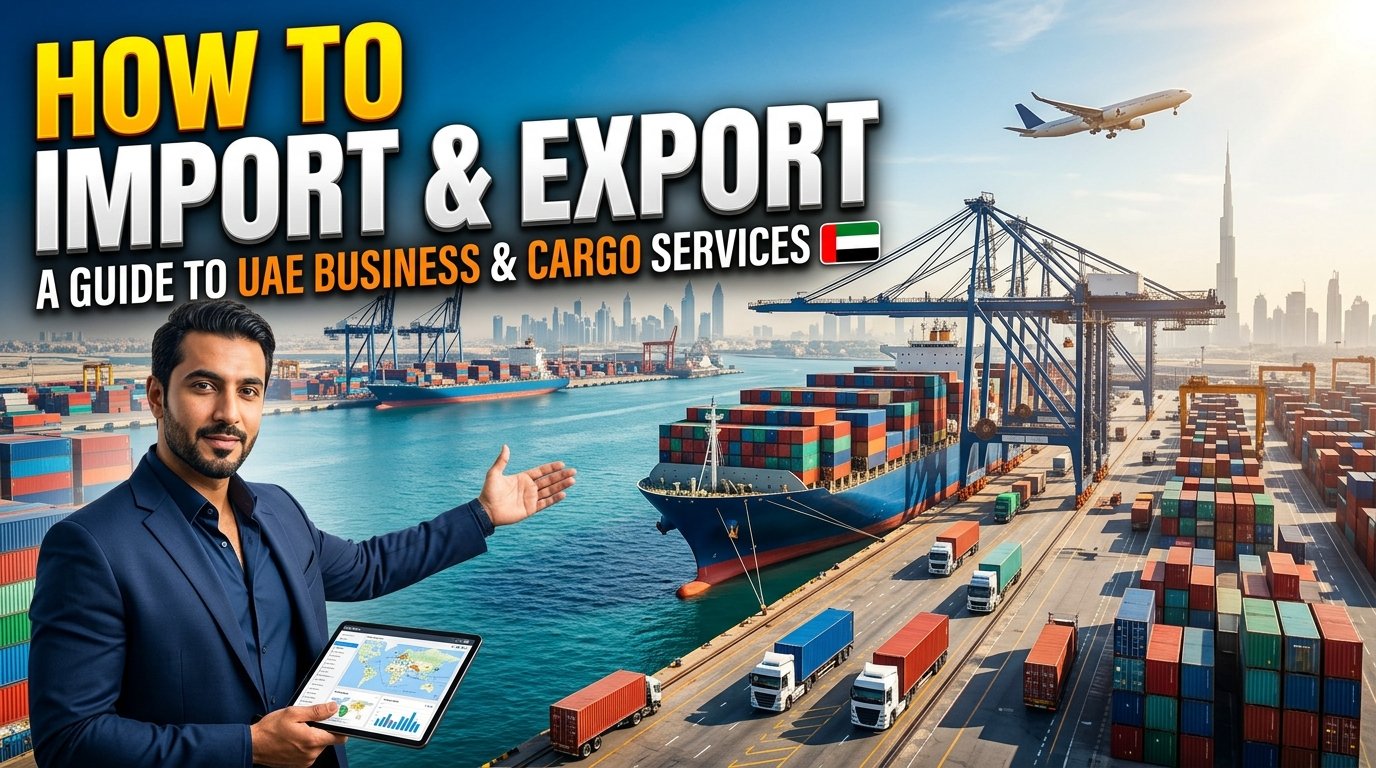
Import & Export Process in UAE
Cargo services in the UAE can help when your business needs to move goods from a supplier to a customer abroad. The right arrangements matter because shipment requirements vary by goods, origin, destination, and timing. Freight forwarding is the coordination of cargo movement, carrier bookings, and related logistics between an origin and a destination.
Al Furqan Shipping is a company you can contact to discuss import, export, and shipping needs. Before requesting a tailored quote, explore the options that may fit your goods and business needs. Your choice will depend on where the cargo starts, where it must go, and what the customer expects at delivery.

Key Takeaways
- Plan around the goods, origin, destination, and timing.
- Freight forwarding coordinates cargo movement and related logistics.
- Air, sea, and road freight each suit different shipment needs.
- Customs requirements and documents depend on the shipment.
- Share clear shipment details when requesting a tailored quote.
The arrangement begins with defining the shipment and its route, then coordinating the steps needed to move it. The process can differ for an import and an export, so it helps to understand what each may involve.
How to Import & Export
An import or export shipment is coordinated from pickup through the required border steps and delivery. The route and goods shape each stage, and the actual process depends on the shipment and the applicable requirements.
A logistics provider may coordinate transport bookings and related logistics, while the shipper and recipient handle their own responsibilities. The parties involved, route, and cargo details affect how the shipment moves. Confirm roles and service scope before arrangements begin.
The shipment’s goods and route determine its process, including the border steps and delivery arrangements required.
Importing goods into the UAE
An import may involve coordinating pickup from the supplier, arranging transport, completing applicable customs steps, and delivering the goods. The sequence can vary by origin, destination within the UAE, shipment type, and the parties’ responsibilities. A shipment’s arrival at a port or airport does not by itself complete delivery.
For example, a business receiving stock from an overseas supplier may need pickup arranged at the supplier’s location, followed by transport and border processing. The delivery arrangement then needs to match the receiving address and any requirements at that location. Ask which steps are included in the proposed service.
Exporting goods from the UAE
An export may involve preparing the goods, arranging transport, completing applicable export formalities, and delivering the cargo to the recipient. The shipper should align preparation and dispatch with the receiving party’s needs. The export process also depends on the cargo and the route it will take.
A recipient may need delivery to a business address, a warehouse, or another agreed location. Confirm who is responsible for each handoff, especially if transport and final delivery are arranged separately. Neither flow should be treated as a guaranteed Al Furqan Shipping service without confirming the scope directly.
Transport mode changes the route and the practical trade-offs, including how cargo moves between locations. Comparing air freight, sea freight, and road freight can help you narrow down an option for your shipment.
Which freight option fits your shipment?
The right mode depends on how quickly you need the shipment, what it contains, and where it is going. Start with the route, then consider cargo characteristics and budget; no single mode suits every shipment.
Air freight moves cargo by aircraft and is generally suited to time-sensitive shipments. Sea freight moves cargo between ports and may follow scheduled vessel sailings. Road freight carries cargo overland by truck, with suitability depending on the route.

| Mode | Typical fit | How it moves | Main planning consideration |
|---|---|---|---|
| Air freight | Time-sensitive cargo | Aircraft between airports | Check route and timing |
| Sea freight | Bulky or heavy cargo | Vessels between ports | Allow for the vessel schedule and port handling |
| Road freight | Suitable overland routes | Trucks between locations | Check route and cross-border requirements |
Air freight may suit a shipment when timing matters, although the route and available schedule still need consideration. The choice is not just about distance. Check how the cargo will reach the airport or port and how it will travel from there to its destination.
Sea freight may fit bulky or heavy cargo when the vessel schedule and port handling work for the shipment. A business should account for the steps around port movement, not only the vessel journey. The suitable choice depends on the cargo and the full route.
Road freight can be considered for suitable overland routes. Cross-border requirements and the route itself affect whether it works for a particular shipment. A journey that looks direct on a map may still involve border processes or delivery arrangements to plan.
Compare urgency, cargo characteristics, route, and budget before choosing transportation. These factors help you discuss the practical trade-offs with a logistics provider without assuming a transit time or rate. The selected mode is only one part of the arrangement.
Some shipments also need a specific handling approach or consolidation. Parcels, vehicles, household moves, and project cargo are examples to discuss as possible requirements with the provider.
What other cargo services may your shipment need?
Several small consignments may need consolidation before they move together, rather than separate port-to-port or airport-to-airport arrangements. Handling depends on the shipment, and you should confirm availability, route coverage, and handling needs directly.
Services such as pickup or door-to-door delivery depend on the route and the service scope. A logistics provider may need to coordinate several handoffs, from collection to final delivery. Confirm which locations are covered and which steps are included before making plans.
Parcels and consolidated shipments
A parcel shipment is an individual package arranged for transport. LCL, or less-than-container-load, combines cargo from multiple shippers in a shared container. That can suit cargo that does not need a full container, but the arrangement involves coordinating the shared load.
Ask whether the shipment needs collection, consolidation, or delivery beyond the main transport point. Pickup and door-to-door arrangements depend on the service and route, so do not assume that every handoff is included. Clear locations help define the requested scope.
Vehicles, household moves, and project cargo
Vehicle transport, international household moves, and oversized or heavy project cargo are specialized requirements. A vehicle may travel in a container or on a roll-on/roll-off vessel, with other modes depending on the route and requirements. The best arrangement also depends on how the vehicle can be prepared and handled.
Household moves can involve many separate items and delivery details. Project cargo may require careful planning because an item’s size or weight can affect movement and handling. Describe any unusual dimensions or handling concerns when discussing the shipment.
These categories are not confirmed as available services from Al Furqan Shipping. Confirm availability, route coverage, and handling needs directly with the company before planning around a particular option. The details matter for both the requested service and the movement of the goods.
Whichever service type you consider, customs steps and paperwork still need attention. Accurate shipment details help the relevant parties prepare for clearance and reduce avoidable confusion at the border.
What customs clearance and documents should you plan for?
Customs clearance depends on accurate shipment details and paperwork that fits the goods and route. Requirements can vary by goods, origin, destination, and applicable rules; check the requirements that apply to your specific shipment.
Customs clearance involves presenting shipment information to the relevant customs authorities. The information may support customs declarations, classification, and the assessment of any applicable duties or taxes. These depend on shipment details and relevant requirements, so avoid relying on a document list alone.

| Document | What it supports | When it may apply |
|---|---|---|
| Commercial invoice | Transaction details | Commonly used for commercial shipments |
| Packing list | Contents and packing details | Useful for checking the shipment against its paperwork |
| Bill of lading or air waybill | Transport record | The document used depends on sea or air transport |
| Certificate of origin | Country-of-origin details | When required for the shipment |
A commercial invoice records transaction details, while a packing list describes the shipment’s contents and packing. A bill of lading is used for sea transport, and an air waybill is used for air transport. A certificate of origin may be required depending on the goods and destination.
Use this checklist to catch basic details that can affect customs processing:
- Confirm the goods description.
- Check applicable classification requirements with a qualified customs professional.
- Verify whether permits or restrictions apply.
- Confirm consignee and destination details.
Customs declarations, classification, and any applicable duties or taxes depend on the shipment and the rules that apply to it. A description that is too broad may not explain what the cargo contains, so make the goods details clear and consistent across the paperwork.
Requirements can differ by route and cargo type, including whether a permit or certificate is needed. Verify the applicable requirements with the relevant authority or a qualified customs professional. Careful documentation supports the next step: giving a provider enough information to assess the shipment and prepare a quote.
What should you prepare before requesting a cargo quote?
A quote request is more useful when it names the route, cargo details, and required service. Specific details help a logistics provider assess the shipment, and the quote depends on the shipment details and requested service scope.
For example, “move a shipment from the UAE” leaves important questions unanswered. An origin, destination, goods description, and delivery needs make the request clearer. Include your preferred mode or timing if you have one, while noting that the final arrangement depends on the details.
Gather these six details before contacting a provider:
- Origin.
- Destination.
- A clear description of the goods.
- Shipment weight and dimensions.
- Preferred mode or timing.
- Pickup, delivery, and any special handling needs.
Weight and dimensions help describe the physical shipment, while a clear goods description helps identify its nature. State whether the cargo needs pickup or delivery at a particular location. If you know of special handling needs, include them rather than leaving the provider to guess.
A route and service request also help clarify what the quote should cover. You might need transport only, or you may want pickup and final delivery considered. Spell out the locations and requested handoffs so the proposed service scope reflects your plans.
Al Furqan Shipping can be contacted at info@alfurqanshipping.com to request a tailored quote. Send the shipment details and describe the service you are seeking. A quote depends on the information provided and the requested service scope, so avoid assuming a price or availability before the details are assessed.
A useful quote request names the route, describes the cargo, and explains the service you need.
Email the shipment details to info@alfurqanshipping.com to ask Al Furqan Shipping for a tailored quote. Matching the request to the actual cargo and route gives you a clear next step for arranging the shipment.
Conclusion
A well-prepared shipment starts by matching its requirements to the route and service. Fit the arrangement to the goods, then confirm applicable requirements before dispatch.
For UAE businesses, the practical next step is to email info@alfurqanshipping.com with your shipment details and request a tailored quote from Al Furqan Shipping. The information you share can help define the service you are asking about. Contact the company by email to request a tailored quote.