How AI Is Revolutionizing Freight Forwarding

Create a realistic image of a modern freight forwarding control center with multiple computer monitors displaying digital logistics dashboards, route optimization maps, and real-time tracking data, featuring a diverse team of professionals including a white male logistics manager and a black female data analyst working at workstations, with shipping containers and cargo trucks visible through large windows in the background, bright fluorescent lighting creating a professional atmosphere, holographic AI interface elements floating above the screens, and the text "AI Revolutionizing Freight" prominently displayed on the main central monitor.
 How AI Is Revolutionizing Freight Forwarding

The freight forwarding industry is experiencing a major transformation as AI freight forwarding solutions reshape how companies move goods across the globe. Traditional logistics operations that once relied on manual processes and guesswork are now powered by smart algorithms that predict, optimize, and automate every step of the supply chain.

This guide is designed for freight forwarders, logistics managers, and supply chain professionals who want to understand how artificial intelligence is changing their industry. You’ll discover practical applications that are already delivering results and learn how these technologies can improve your operations.

We’ll explore how AI route optimization is slashing transportation costs by finding the most efficient delivery paths, and examine how automated freight documentation is eliminating the costly errors that plague manual processing. You’ll also see how predictive analytics logistics are giving companies unprecedented supply chain visibility, allowing them to spot problems before they disrupt operations.

These AI logistics solutions aren’t just futuristic concepts—they’re working technologies that forward-thinking companies are using right now to stay competitive in an increasingly complex global marketplace.

AI-Powered Route Optimization Cuts Transportation Costs

Create a realistic image of a modern logistics control room with multiple large wall-mounted screens displaying digital maps with highlighted route paths in different colors, cargo trucks and shipping containers on a loading dock in the background, sophisticated computer workstations with data analytics dashboards showing cost reduction graphs and transportation metrics, clean industrial setting with bright LED lighting, conveying efficiency and technological advancement in freight operations, absolutely NO text should be in the scene.

Smart algorithms analyze traffic patterns and weather conditions

AI freight forwarding systems now tap into massive data streams to create smarter shipping routes. These advanced algorithms process real-time traffic data from GPS systems, historical congestion patterns, and weather forecasts to map out the most efficient paths for cargo movement. Machine learning models continuously learn from millions of data points, including rush hour patterns in major shipping hubs, seasonal weather disruptions, and port congestion levels.

The technology goes beyond basic GPS navigation by incorporating predictive weather modeling that can forecast storms, temperature changes, and other conditions that might affect transportation. For temperature-sensitive cargo, AI systems automatically adjust routes to avoid extreme weather zones, protecting valuable shipments while maintaining delivery schedules. Traffic pattern analysis helps avoid bottlenecks at major intersections, border crossings, and industrial areas during peak hours.

Dynamic routing reduces fuel consumption by up to 30%

AI route optimization delivers substantial cost savings through intelligent fuel management. Advanced algorithms calculate the most fuel-efficient paths by analyzing vehicle weight, cargo type, road gradients, and current fuel prices across different regions. The technology considers multiple variables simultaneously – something human planners simply can’t match in terms of speed and accuracy.

Companies using AI logistics solutions report dramatic reductions in fuel costs. The 30% savings comes from eliminating unnecessary mileage, avoiding traffic congestion, and selecting routes with optimal speed limits and fewer stops. Smart routing also factors in driver break requirements and vehicle maintenance schedules to create comprehensive efficiency gains.

Dynamic load balancing plays a crucial role here. AI systems can redistribute cargo across multiple vehicles to optimize weight distribution, reducing fuel consumption per shipment. The technology also identifies opportunities for consolidated shipments, allowing multiple customers’ cargo to share transport resources more effectively.

Real-time adjustments minimize delivery delays and penalties

Modern freight forwarding faces constant disruptions – from weather events to port strikes to sudden traffic accidents. AI-powered systems excel at making split-second routing decisions when conditions change. Real-time monitoring of global shipping conditions allows immediate route modifications that keep deliveries on track.

The financial impact of avoiding delays extends beyond customer satisfaction. Late delivery penalties can cost freight companies thousands of dollars per shipment, especially in time-sensitive industries like automotive manufacturing or pharmaceuticals. AI route optimization prevents these costly penalties by building buffer time into schedules and automatically rerouting shipments around unexpected obstacles.

Machine learning algorithms become more accurate over time, learning from each disruption to better predict and avoid similar issues in the future. This creates a continuous improvement cycle where routing decisions become increasingly sophisticated and reliable.

Global and GCC impact

The Gulf Cooperation Council region presents unique logistics challenges that AI route optimization addresses effectively. Desert conditions, extreme temperatures, and concentrated urban areas require specialized routing strategies. AI systems designed for GCC markets factor in prayer times, cultural events, and regional business practices when planning delivery schedules.

Cross-border shipping within the GCC benefits significantly from AI logistics solutions. The technology navigates complex customs regulations, varying road conditions between countries, and different infrastructure capabilities. Smart algorithms optimize routes between major ports like Jebel Ali and King Abdulaziz Port, considering factors like processing times and facility capacities.

Globally, freight forwarding automation through AI route optimization creates competitive advantages for companies serving international markets. The technology handles multi-modal transportation seamlessly, coordinating between ships, trucks, trains, and aircraft to create the most cost-effective shipping solutions across continents.

Automated Documentation Eliminates Manual Processing Errors

Create a realistic image of a modern office workspace showing the transition from manual to automated documentation processes, with a desk split into two sections - one side cluttered with paper documents, manual stamps, and filing folders representing traditional freight forwarding paperwork, and the other side featuring a sleek computer monitor displaying digital shipping documents and automated workflow interfaces, with a white male professional in business attire working at the digital side, surrounded by clean organized space, bright office lighting, and subtle background elements like shipping containers or logistics symbols, conveying efficiency and technological advancement, absolutely NO text should be in the scene.

Digital customs forms reduce compliance risks and fines

Paper-based customs documentation has long been the Achilles’ heel of freight forwarding operations. Traditional manual processes create countless opportunities for errors, from incorrect commodity codes to missing required fields. AI freight forwarding solutions now automatically generate digital customs forms by pulling data directly from shipment records, eliminating transcription mistakes that previously cost companies thousands in penalties.

Smart systems cross-reference product information with current tariff codes and trade agreements, ensuring accurate classification every time. They also flag potential compliance issues before submission, such as restricted goods or missing certificates. This proactive approach has helped freight forwarders reduce customs-related fines by up to 85% while accelerating clearance times.

Instant invoice generation accelerates payment cycles

Freight forwarding automation transforms billing from a weeks-long process into a matter of minutes. Instead of waiting for manual data entry and multiple approval layers, AI systems automatically compile charges from various sources – carrier rates, fuel surcharges, handling fees, and customs duties – into accurate invoices.

These systems track every cost component throughout the shipping process, creating detailed breakdowns that clients can easily understand and verify. Automated invoicing has cut payment processing time from an average of 45 days to just 12 days, significantly improving cash flow for freight forwarders.

Electronic bills of lading streamline cargo tracking

Digital bills of lading powered by AI logistics solutions provide real-time visibility that paper documents simply cannot match. Smart systems automatically update shipment status as cargo moves through different checkpoints, eliminating the need for manual status calls and reducing tracking errors.

Electronic documentation also enables instant sharing between all parties – shippers, carriers, customs authorities, and consignees – through secure digital platforms. This seamless information flow prevents delays caused by missing or misplaced documents and creates an audit trail that’s accessible from anywhere.

Automated regulatory updates ensure constant compliance

Trade regulations change frequently, making manual compliance tracking nearly impossible. AI-powered systems continuously monitor regulatory databases worldwide, automatically updating documentation requirements and flagging changes that affect specific shipments or trade lanes.

These systems learn from historical data to predict which regulatory changes will impact different types of cargo, giving freight forwarders advance notice to adjust their processes. This predictive capability helps maintain compliance while avoiding costly delays from unexpected regulatory shifts.

Predictive Analytics Transform Supply Chain Visibility

Create a realistic image of a modern logistics control center with multiple large wall-mounted monitors displaying colorful data visualizations, charts, and world maps showing shipping routes and real-time cargo tracking information, with a sleek desk in the foreground featuring laptops and tablets showing predictive analytics dashboards, surrounded by a clean, high-tech environment with blue and white LED lighting, glass surfaces, and a professional atmosphere that conveys advanced supply chain technology and data-driven decision making, absolutely NO text should be in the scene.


Machine learning forecasts potential shipping disruptions

AI supply chain visibility reaches new heights when machine learning algorithms analyze thousands of data points to predict shipping disruptions before they happen. These systems process weather patterns, port schedules, vessel tracking data, and historical shipping records to identify potential bottlenecks weeks in advance.

Smart algorithms can predict when a typhoon might delay cargo ships in the Pacific or when labor disputes could shut down major ports. This early warning system gives freight forwarders time to reroute shipments, adjust schedules, and communicate changes to clients before problems escalate into costly delays.

The technology goes beyond weather and labor issues. Machine learning models track vessel performance data, analyzing engine efficiency, fuel consumption patterns, and maintenance schedules to predict mechanical failures. When a ship shows signs of potential breakdown, the system alerts logistics managers who can arrange alternative transportation before cargo gets stranded at sea.

Demand prediction optimizes inventory placement

Predictive analytics logistics transforms how companies position inventory across global supply networks. AI algorithms analyze purchasing patterns, seasonal trends, economic indicators, and consumer behavior data to forecast where products will be needed most.

These systems help freight forwarders advise clients on optimal warehouse locations and inventory distribution strategies. Instead of reactive shipping after orders arrive, companies can position goods closer to anticipated demand centers, reducing transportation costs and delivery times.

The technology considers multiple variables simultaneously – holiday shopping patterns, regional economic growth, competitor activities, and even social media trends that might signal changing consumer preferences. This comprehensive analysis enables more accurate demand forecasting than traditional methods.

Machine learning models continuously refine their predictions by comparing forecasts against actual demand patterns. The more data they process, the more accurate their predictions become, creating a self-improving system that gets better at inventory optimization over time.

Port congestion alerts enable proactive planning

Port congestion represents one of the biggest challenges in global shipping, causing delays that ripple through entire supply chains. AI freight forwarding solutions now monitor port activity in real-time, tracking vessel arrivals, berth availability, cargo processing speeds, and dock worker productivity levels.

These monitoring systems create congestion forecasts that show when ports are likely to become overwhelmed. The technology analyzes patterns like seasonal shipping volumes, scheduled vessel arrivals, and port processing capacity to predict bottlenecks days or weeks ahead.

When congestion alerts trigger, freight forwarders can redirect shipments to less crowded ports, adjust shipping schedules, or negotiate priority handling with port authorities. Some systems even suggest alternative routes that might add distance but save time by avoiding congested facilities.

The alerts include severity levels and estimated delay durations, helping logistics managers make informed decisions about whether to wait out the congestion or pay extra for alternative routing. This proactive approach prevents cargo from sitting in port queues for extended periods, reducing storage fees and keeping supply chains moving smoothly.

Real-time port data integration allows these systems to adjust predictions as conditions change, providing freight forwarders with the most current information needed for quick decision-making in dynamic shipping environments.

Intelligent Warehouse Management Maximizes Operational Efficiency

Create a realistic image of a modern automated warehouse interior with towering shelves of organized inventory, robotic systems moving packages along conveyor belts, automated guided vehicles transporting pallets across polished concrete floors, LED lighting illuminating the vast space, digital screens displaying logistics data mounted on walls, and a white male warehouse supervisor in safety vest monitoring operations from a control station, with the overall atmosphere conveying technological efficiency and streamlined operations, absolutely NO text should be in the scene.

AI-driven inventory tracking prevents stockouts and overstock

Modern warehouses are transforming their inventory management through AI freight forwarding technologies that precisely monitor stock levels in real time. Smart sensors and RFID tags work alongside machine learning algorithms to track every item’s movement, location, and condition throughout the facility. These systems learn from historical data patterns, seasonal fluctuations, and demand forecasting to automatically trigger reorders before stockouts occur.

The technology goes beyond simple counting. AI systems analyze product velocity, storage costs, and carrying expenses to determine optimal inventory levels for each item. This prevents the costly scenario of overstocking slow-moving products while ensuring fast-moving items remain available. Intelligent warehouse management platforms can predict demand spikes up to 90 days in advance, allowing freight forwarders to adjust inventory accordingly and maintain service levels without tying up excessive capital in stock.

Robotic systems accelerate picking and packing processes

Warehouse robotics powered by AI are revolutionizing order fulfillment speed and accuracy. Autonomous mobile robots (AMRs) navigate warehouse floors using computer vision and mapping algorithms, efficiently retrieving items for human workers or robotic arms. These systems reduce picking time by up to 70% compared to traditional manual methods.

AI-powered robotic arms equipped with advanced sensors can handle various package sizes and shapes, adapting their grip strength and positioning automatically. Machine learning algorithms continuously improve their performance, learning from each interaction to become more precise and faster over time. The robots work collaboratively with human staff, taking over repetitive tasks while humans focus on complex decision-making and quality checks.

Smart space utilization increases storage capacity

AI logistics solutions optimize warehouse layouts by analyzing product dimensions, turnover rates, and access patterns to maximize storage density. Dynamic slotting algorithms continuously reassign product locations based on changing demand patterns, ensuring frequently picked items are positioned in easily accessible zones while slower-moving inventory occupies higher shelves or less convenient locations.

Vertical space optimization systems use AI to determine the most efficient stacking patterns and storage configurations. These platforms can increase storage capacity by 40% without expanding physical footprint, significantly reducing real estate costs for freight forwarding operations.

Storage Optimization Method Capacity Increase Implementation Time
AI-driven slotting 25-30% 2-4 weeks
Dynamic location assignment 15-20% 1-2 weeks
Vertical space algorithms 35-40% 4-6 weeks

Automated quality control reduces damaged goods claims

Computer vision systems powered by AI inspect packages at multiple points throughout the warehouse workflow, identifying damage, incorrect labeling, or packaging issues before items reach customers. These systems can detect microscopic cracks, dents, or other defects that human inspectors might miss, reducing damaged goods claims by up to 85%.

Machine learning algorithms analyze images of products in real time, comparing them against quality standards and flagging anomalies immediately. The technology learns to identify new types of damage patterns and quality issues, becoming more effective over time. Automated sorting systems divert potentially damaged items for human inspection, while acceptable products continue through the fulfillment process without delay.

Weight verification systems integrated with AI ensure packages match expected specifications, catching mislabeled or incorrectly packed items before shipment. This proactive approach protects both freight forwarders and their customers from costly returns and damaged relationships.

Enhanced Customer Experience Through Real-Time Communication

Create a realistic image of a modern freight forwarding office with a black female customer service representative sitting at a sleek desk with multiple computer monitors displaying logistics dashboards and shipping tracking interfaces, while speaking on a wireless headset with a warm, professional smile, surrounded by contemporary office furniture, large windows showing container ships in the background, bright natural lighting creating a welcoming atmosphere, with shipping containers and cargo imagery subtly visible through the glass, emphasizing connectivity and real-time communication in the logistics industry, absolutely NO text should be in the scene.

Chatbots provide instant shipment status updates

Modern AI freight forwarding companies deploy sophisticated chatbots that deliver immediate responses to customer inquiries about shipment locations, delivery times, and cargo status. These intelligent systems tap into real-time tracking databases and provide accurate information within seconds, eliminating the frustration of waiting for human representatives during business hours.

Smart chatbots understand natural language queries and can handle complex questions about multiple shipments, customs clearance status, and expected delivery windows. They integrate seamlessly with existing logistics platforms, pulling data from various sources to give customers comprehensive updates about their freight movements across different transportation modes.

Predictive notifications keep clients informed of delays

AI logistics solutions analyze historical patterns, weather data, port congestion levels, and traffic conditions to predict potential delays before they impact shipments. This proactive approach allows freight forwarders to notify customers about expected delays hours or even days in advance, giving businesses time to adjust their operations accordingly.

These predictive systems send automated alerts through multiple channels – email, SMS, or mobile app notifications – ensuring clients receive critical updates through their preferred communication method. The AI continuously learns from new data, improving prediction accuracy over time and reducing the number of unexpected surprises that can disrupt supply chains.

Mobile platforms offer 24/7 cargo visibility

Supply chain AI technology powers mobile applications that give customers round-the-clock access to their cargo information. These platforms display real-time location data, temperature readings for sensitive goods, and milestone updates as shipments progress through different stages of the logistics journey.

Advanced mobile interfaces include interactive maps showing exact vessel or truck locations, estimated arrival times at each checkpoint, and detailed timeline views of completed and upcoming logistics events. Customers can set custom alerts for specific milestones, receive push notifications about important updates, and access complete shipment histories for better supply chain planning.

Automated exception handling resolves issues faster

When problems arise during freight transportation, AI systems immediately detect anomalies and trigger automated response protocols. These intelligent solutions can reroute shipments around port closures, reassign cargo to alternative vessels when delays occur, and automatically generate new documentation when routing changes happen.

The automated exception handling process includes instant customer notification about the issue, proposed solutions, and revised delivery timelines. AI freight forwarding platforms can even predict which alternative routes will minimize delays and costs, presenting customers with optimized options while human experts focus on more complex problem-solving tasks.

Cost Reduction Strategies Powered by Machine Learning

Create a realistic image of a modern freight forwarding warehouse with cargo containers and shipping boxes in the background, featuring digital screens displaying cost analytics charts and graphs with downward trending arrows indicating cost reduction, robotic automated systems moving packages, conveyor belts with sensors, a white male logistics manager in business attire analyzing data on a tablet while standing near the automated equipment, warm industrial lighting highlighting the technology integration, creating a professional and efficient atmosphere that demonstrates machine learning optimization in logistics operations, Absolutely NO text should be in the scene.

Carrier Rate Optimization Finds the Best Shipping Deals

Machine learning algorithms continuously analyze millions of carrier rates, shipping routes, and historical pricing data to identify the most cost-effective shipping options. These AI logistics solutions compare rates across multiple carriers in real-time, factoring in variables like delivery timeframes, service reliability, and seasonal pricing fluctuations. The technology learns from past shipping patterns and market trends, automatically flagging opportunities where companies can switch carriers or negotiate better rates.

Smart rate optimization systems track carrier performance metrics beyond just price, including on-time delivery rates, damage claims, and customer service quality. This comprehensive approach helps freight forwarding cost reduction by preventing costly delays and service failures that traditional lowest-price strategies often overlook. Companies using these AI-powered systems report savings of 15-25% on their annual shipping costs while maintaining or improving service quality.

Container Utilization Algorithms Minimize Wasted Space

Advanced algorithms solve complex three-dimensional packing problems that human planners struggle with, maximizing container space usage while respecting weight limits and cargo compatibility rules. These systems consider factors like fragility, temperature requirements, and loading sequence to create optimal loading plans that reduce the number of containers needed for shipments.

AI freight forwarding platforms use machine learning to analyze historical shipment data and predict optimal container configurations for future loads. The technology identifies patterns in cargo dimensions, weights, and shipping routes to continuously improve packing efficiency. Companies implementing these solutions typically see container utilization rates improve from 65-70% to 85-90%, directly translating to lower shipping costs and reduced environmental impact.

Insurance Premium Reduction Through Risk Assessment

Machine learning models analyze vast datasets including weather patterns, geopolitical events, carrier safety records, and route-specific risk factors to provide more accurate cargo insurance assessments. These predictive analytics logistics systems help freight forwarders negotiate lower insurance premiums by demonstrating reduced risk profiles through data-driven insights.

Risk assessment algorithms evaluate real-time conditions along shipping routes, identifying potential hazards like severe weather, port congestion, or security threats. This proactive approach allows for dynamic route adjustments and risk mitigation strategies that insurance providers recognize with reduced premiums. Companies leveraging AI-powered risk assessment report insurance cost reductions of 10-20% while maintaining comprehensive coverage.

Cost Impact

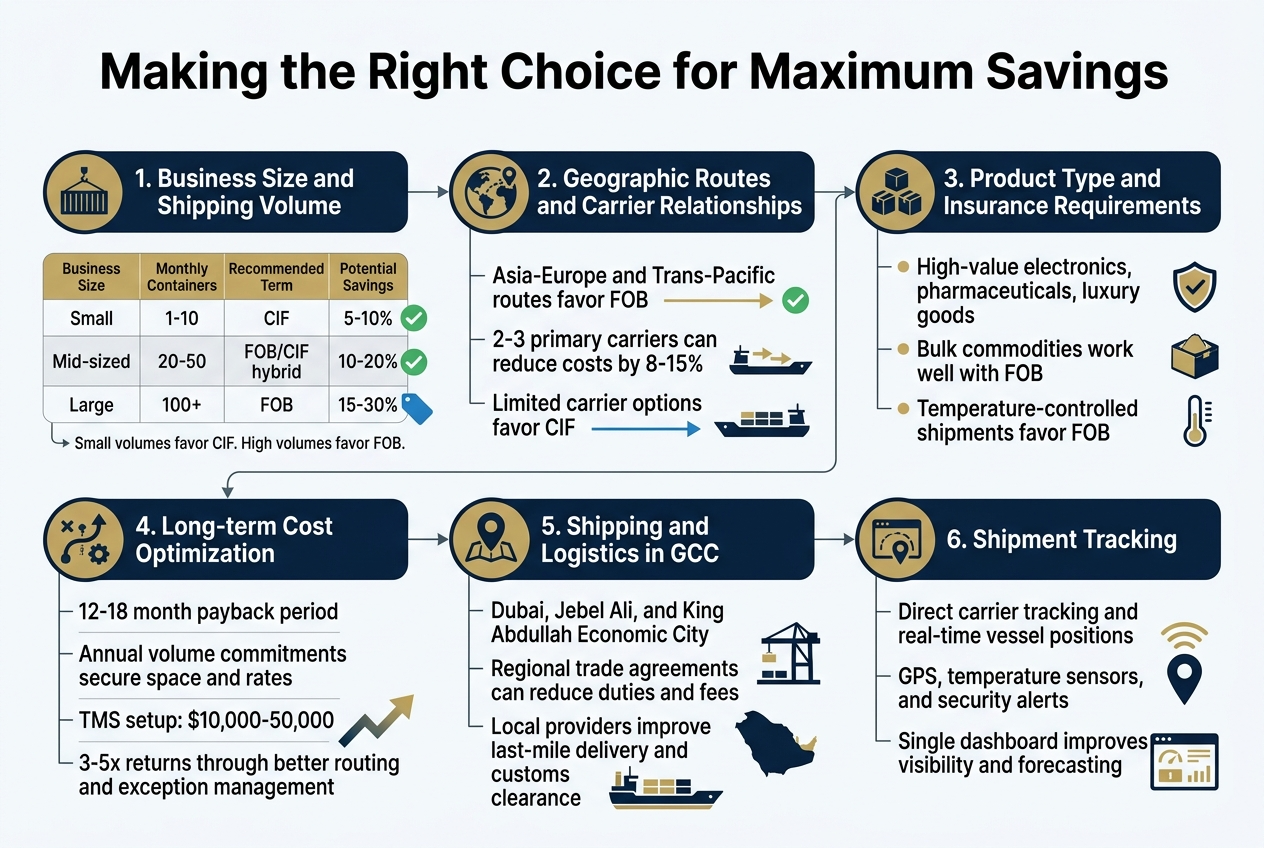
The combined effect of these machine learning strategies creates significant financial advantages for freight forwarding operations. Companies implementing comprehensive AI solutions across rate optimization, container utilization, and risk assessment typically achieve total cost reductions of 20-35% within the first year of deployment. The technology’s ability to process and analyze data at scale provides competitive advantages that traditional manual processes simply cannot match, making AI supply chain visibility essential for staying competitive in today’s logistics market.

Create a realistic image of a modern freight forwarding control center with multiple large digital screens displaying global shipping routes, logistics data visualizations, and warehouse analytics dashboards, featuring a diverse team of professionals including a white male logistics coordinator and a black female data analyst working at sleek workstations with laptops and tablets, surrounded by holographic projections of cargo containers, shipping trucks, and airplanes, set against a high-tech office environment with glass walls, blue ambient lighting, and a world map backdrop showing interconnected shipping lanes, conveying innovation and efficiency in the freight industry, absolutely NO text should be in the scene.
AI has completely transformed how freight forwarding companies operate today. From slashing transportation costs through smart route planning to eliminating those frustrating paperwork mistakes that used to cost businesses thousands of dollars, artificial intelligence is solving real problems that have plagued this industry for decades. Companies can now see exactly what’s happening in their supply chains, run their warehouses like well-oiled machines, and keep customers happy with instant updates about their shipments.

The bottom line is simple: businesses that embrace these AI tools are already seeing dramatic improvements in their operations and their profit margins. If you’re still handling freight forwarding the old-fashioned way, you’re not just missing out on efficiency gains – you’re falling behind competitors who are using machine learning to cut costs and deliver better service. The technology is here, it’s proven, and it’s time to make the switch before your competition leaves you in the dust.

Introduction

Dubai has long been synonymous with bold ambitions — from towering skyscrapers to futuristic transport. Now, the city is shifting its focus: imagine a city where your everything — work, shopping, recreation, transport — is within 1 kilometre of your home or hub. While the term “1-km city” isn’t yet formally defined, the concept aligns closely with Dubai’s “20-Minute City” and pedestrian-first master-plans.

This new urban paradigm has profound implications for:

  • how people move

  • how goods are delivered

  • how live-work-play ecosystems function

  • and how logistics, supply-chain and infrastructure adapt

Let’s explore what this vision means, how Dubai is making it real, and why it matters for logistics and supply-chain professionals across the Gulf.


1. What the “1-Km City” Means in Practice

Futuristic Dubai 1-Km City Skyline

At its core, the idea is simple: design the city so that essential destinations — work, transport hubs, retail, leisure, healthcare — are within a short walk or micro-mobility ride (e-scooter, bicycle) of 1 km (or roughly a 10-12 minute walk).

Key attributes include:

  • Mixed-use neighbourhoods — residential, commercial and leisure all integrated.

  • Dense pedestrian networks and cycling infrastructure.

  • Transport-oriented development (TOD) centering on metro/tram nodes.

  • Reduced car dependency and shorter vehicle-based journeys.

In Dubai, this is already being translated via the Dubai 2040 Urban Master Plan and the Dubai Walk Master Plan, which envisages a 6,500 km network of walkways across 160 areas.

For example:

  • The district of Al Barsha 2 is being developed with 17 km of walking and cycling paths ensuring key amenities are within a short ride or walk. Khaleej Times

  • The “20-Minute City” model already points toward the smaller-scale goal of short distance access within neighbourhoods. The National News

Hence, while the “1-km city” isn’t an official policy term yet, it captures the micro-mobility, hyper-connectivity ethos of Dubai’s next phase of urban design.


2. Why Logistics & Supply-Chain Professionals Should Care

A) Delivery & Last-Mile Efficiency

Shorter distances mean goods can be delivered faster, more sustainably and at lower cost. A “1-km city” enables:

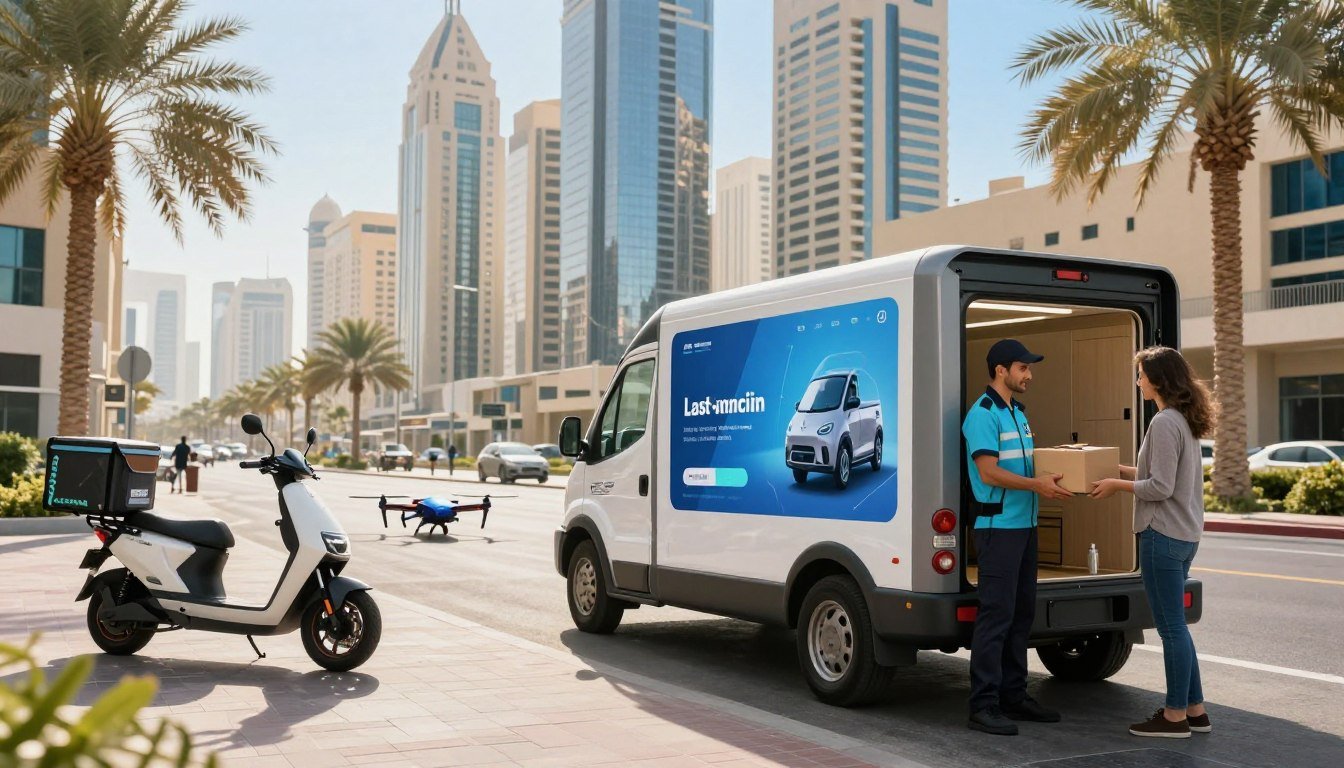
  • Micro-fulfilment centres within neighbourhoods.

  • Electric cargo bikes or cargo drones navigating short loops.

  • Rapid delivery windows (30–60 minutes) for e-commerce.

B) Reduced Transport Burden & Carbon Footprint

As private-vehicle dependency drops, logistics providers can redesign fleets toward smaller EVs, micro-vehicles and smarter routing. This aligns with Dubai’s push for sustainability and reduced emissions. Gulf Today+1

C) New Hubs & Multi-Modal Opportunities

With metro and transit-oriented nodes becoming focal points, freight forwarding and supply-chain firms can consider:

  • Logistics hubs near metro or tram stations.

  • Integration of rail (for longer hauls) with short-haul urban delivery loops.

  • Partnerships with real-estate/development for built-in micro-logistics spaces.

D) Workforce & Skills Shift

As the city becomes more walkable and dense:

  • Localised delivery roles increase (micro-mobility operators, cart/rickshaw-style EVs).

  • Data analysts and urban logistics planners will be in demand to optimise these new delivery zones.

  • Sustainability managers and shared-mobility strategists will find a growing niche.


3. What’s Already Underway in Dubai

  • Walk & Soft-Mobility Network: 6,500 km of interconnected walkways by 2040 — to increase share of walking and non-motorised mobility from 13 % to 25 %.

  • Transit-Oriented Development (TOD): Expanding metro-station precincts and linking densification to transport nodes.

  • Al Barsha 2 Model District: A practical example of walkable neighbourhood design in Dubai. Khaleej Times

  • 20-Minute City Strategy: A shift away from car-first, towards integrated neighbourhoods.

These give logistics firms clarity: urban planning has shifted; last-mile and urban delivery ecosystems are evolving; the built environment is aligning around micro-mobility and soft-transport.


4. Challenges & What to Watch

  • Climate & Comfort: With Gulf summers, shaded walkways, cooled spaces and micro-mobility comfort matter — not just distance. The National News

  • Land-Use Mixing: Achieving true mixed-use (retail, services, housing) can be complex in zoning and development.

  • Infrastructure Investment: Micro-logistics and last-mile hubs need land, power (for EVs), digital connectivity — firms need to partner early.

  • Data & Visibility: With smaller loops and many delivery points, firms will require high visibility and AI-based routing.

  • Integration with Macro-Logistics: While neighbourhood delivery distances shorten, the long-haul supply chains remain — integrating both is key.


5. Action Plan for Logistics Companies in the GCC

  1. Audit your urban delivery footprint: Map where your packages end up in cities like Dubai; identify “>1 km” legs that can be redesigned into micro-loops.

  2. Explore micro-fulfilment & dark stores: Place fulfilment closer to dense urban zones to reduce distance and time.

  3. Fleet modernisation: Invest in EVs, cargo bikes, micromobility capable vehicles for inner-city loops.

  4. Collaborate with urban planners: Stay engaged with RTA, Dubai Planning, real-estate developers building walkable districts.

  5. Use data & AI: Build routing models that account for short-distance urban loops, micro-mobility, and time-of-day windows (especially in hot climates).

  6. Skill-up the workforce: Train staff in micro-logistics operations, SDG/ESG reporting, and dense-urban routing.

  7. Position your brand: Use “1-km city / neighbourhood delivery” as a service differentiator — faster, greener, more localised.


6. Conclusion

Dubai’s evolution into a “1-km city” is not just a marketing slogan — it’s a bold move towards ultra-connectivity, sustainability, and a reimagined logistics landscape.

For freight forwarders, logistics providers and supply-chain professionals across the GCC, this presents a unique inflection point:

  • Shorter delivery distances

  • Micro-fulfilment hubs

  • Electric and cargo-bike fleets

  • AI-enhanced routing

  • Skills for an urban-first world

By aligning your strategy with this city-scale shift, you’re not just adapting — you’re positioning your business to lead in the new era of Gulf logistics.

After all: in a “1-km city”, the distance between ambition and delivery is just a short walk away.

Electric Transportation In Gulf Countries

Create a realistic image of a modern Middle Eastern cityscape with futuristic glass skyscrapers under bright blue sky, featuring multiple electric vehicles including white and silver EVs driving on clean wide roads, electric charging stations with sleek designs positioned along palm tree-lined streets, solar panels visible on building rooftops, and subtle desert landscape in the background, with the text "Electric Transportation In Gulf Countries" displayed prominently in modern sans-serif font across the upper portion of the image, conveying innovation and sustainability with warm golden lighting typical of Gulf region sunshine.

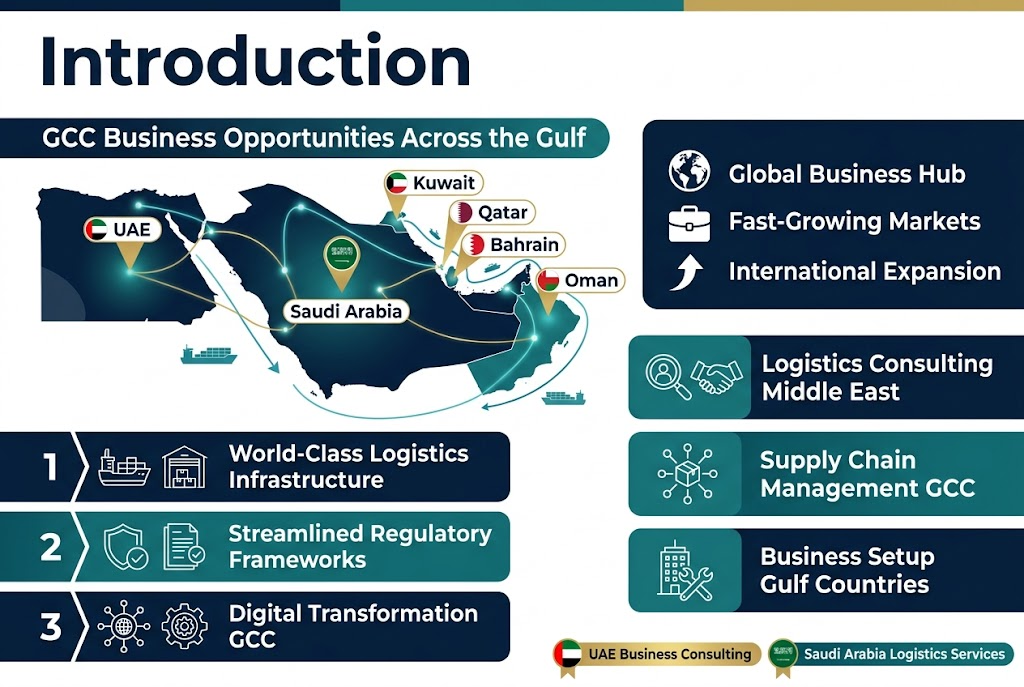
Electric transportation in Gulf countries is gaining serious momentum as nations across the region accelerate their shift toward sustainable mobility solutions. This guide is designed for policymakers, business leaders, automotive industry professionals, and investors who want to understand the rapidly evolving electric vehicle landscape in the Gulf Cooperation Council (GCC) states.

The Gulf region is experiencing a remarkable transformation in how people and goods move from place to place. Countries like the UAE, Saudi Arabia, and Qatar are investing billions in electric transportation infrastructure while rolling out ambitious policies to support widespread adoption.

We’ll explore the current state of electric vehicle adoption across Gulf nations, examining which countries are leading the charge and where opportunities exist for growth. You’ll also discover how government policies are driving this transformation, from generous incentives to mandatory EV quotas that are reshaping the automotive market. Finally, we’ll dive into the charging infrastructure development happening across the region, including the massive investments being made to ensure drivers can charge their vehicles conveniently anywhere they go.

Current State of Electric Vehicle Adoption Across Gulf Nations

Create a realistic image of a modern Middle Eastern city street scene showcasing the current electric vehicle adoption with several white and silver electric cars and SUVs parked and driving alongside traditional gasoline vehicles, featuring distinctive Gulf architecture with glass towers and palm trees in the background, under bright sunny desert lighting with clear blue skies, including a few electric vehicle charging stations visible on the sidewalk, with Middle Eastern male and female pedestrians of various ethnicities walking nearby, capturing the transitional phase of transportation technology in an upscale urban Gulf setting, absolutely NO text should be in the scene.

UAE Leading the Regional EV Market Transformation

The United Arab Emirates has emerged as the Gulf region’s electric vehicle pioneer, with Dubai and Abu Dhabi driving significant adoption rates. The country now hosts over 15,000 registered electric vehicles, representing the highest concentration in the GCC region. Tesla Model 3 and Model S dominate the luxury segment, while BMW i3 and Nissan Leaf capture the mid-range market.

Dubai’s ambitious Green Mobility Strategy 2030 targets 10% of all government fleet vehicles to be electric by 2025. The emirate has already converted 20% of its taxi fleet to hybrid and electric models, with plans to reach 50% by 2026. Abu Dhabi follows closely with its own sustainability initiatives, focusing on electric buses for public transportation.

The UAE’s strategic location as a regional hub has attracted major automotive manufacturers to establish EV operations. BYD opened its first Middle East assembly facility in Abu Dhabi, while Lucid Motors chose the country for its regional headquarters. These investments have created a ripple effect, encouraging local dealerships to expand their electric vehicle offerings and service capabilities.

Private sector adoption shows promising growth, with luxury car buyers increasingly choosing electric models. The country’s affluent population and tax-free environment make EVs financially attractive, especially when considering long-term operational savings.

Saudi Arabia’s Massive Investment in Electric Infrastructure

Saudi Arabia has committed $20 billion to electric vehicle infrastructure development as part of its Vision 2030 program. The kingdom aims to produce 500,000 electric vehicles annually by 2030, positioning itself as a regional manufacturing hub. NEOM, the futuristic city project, will operate entirely on renewable energy with autonomous electric transportation systems.

The Public Investment Fund has partnered with Lucid Motors to establish a manufacturing facility in Riyadh, expected to produce 150,000 vehicles annually by 2025. This partnership includes technology transfer agreements and local workforce development programs. Additionally, Saudi Arabia has signed agreements with Chinese manufacturers including BYD and Geely to establish assembly operations.

The Saudi Green Initiative includes plans for 500,000 EV charging points nationwide by 2030. The first phase focuses on major cities and highway corridors, with 10,000 charging stations already operational. ARAMCO has pivoted its strategy to include EV charging networks, leveraging its existing fuel station infrastructure for rapid deployment.

Government fleet electrification has begun with pilot programs in Riyadh and Jeddah. The Ministry of Interior has ordered 5,000 electric patrol vehicles, while the Ministry of Health is testing electric ambulances in urban areas. These initiatives demonstrate the kingdom’s commitment to leading by example in the transition to sustainable transportation.

Qatar’s Strategic EV Integration for Sustainable Development

Qatar’s National Vision 2030 includes specific targets for electric vehicle adoption as part of its environmental sustainability goals. The country has established a comprehensive EV roadmap with incentives for both individual and fleet purchases. Qatar Foundation has committed to electrifying its entire vehicle fleet by 2025, serving as a model for other organizations.
The 2022 FIFA World Cup showcased Qatar’s electric transportation capabilities, with over 800 electric buses serving tournament venues. This infrastructure remains operational, providing sustainable public transportation for residents and visitors. Qatar Airways has also invested in electric ground support vehicles at Hamad International Airport, reducing emissions from airport operations.

Kahramaa, Qatar’s utility company, has installed smart charging stations across Doha and other major cities. The network includes both AC and DC fast-charging options, with plans to expand to 2,000 charging points by 2025. The integration with Qatar’s smart grid allows for optimized charging during off-peak hours, reducing strain on the electrical system.

Private sector partnerships have accelerated EV adoption, with major employers offering workplace charging facilities. Qatar Petroleum and other large corporations have begun transitioning their vehicle fleets, creating demand for local EV services and maintenance capabilities.

Kuwait and Bahrain’s Emerging Electric Transportation Initiatives

Kuwait has launched its National Electric Vehicle Strategy with targets to have 15% of new vehicle sales be electric by 2030. The Kuwait Investment Authority has allocated $2 billion for clean transportation projects, including EV charging infrastructure and incentive programs. The government offers reduced registration fees and free parking for electric vehicles in public areas.

Kuwait Petroleum Corporation is piloting electric vehicle charging stations at select fuel stations, with plans to expand across the country. The company is also testing electric delivery vehicles for its retail operations. Kuwait University has established an Electric Vehicle Research Center, focusing on battery technology and charging optimization for desert climates.

Bahrain’s Economic Vision 2030 includes electric transportation as a key component of its sustainability strategy. The kingdom has partnered with regional investors to establish EV assembly operations, targeting both domestic consumption and export to neighboring countries. The Bahrain Airport Company has introduced electric shuttle buses and is testing autonomous electric vehicles for passenger transport.

Both countries face unique challenges due to their smaller markets and limited manufacturing capabilities. However, their strategic positions as regional financial and logistics hubs provide opportunities for EV-related services and technology development. Regional cooperation initiatives are exploring shared charging networks and standardized regulations to accelerate adoption across both nations.

Government Policies Driving Electric Transportation Growth

Create a realistic image of a modern Middle Eastern government building with distinctive Gulf architecture featuring glass facades and traditional Islamic design elements, with several electric vehicles including white Tesla sedans and electric buses parked in the foreground, solar panels visible on the building roof, Arabian Gulf flags on flagpoles, palm trees lining the entrance, clear blue sky with bright sunlight, and a Middle Eastern male government official in traditional white thobe walking near the building entrance, conveying a sense of progress and modernization. Absolutely NO text should be in the scene.

Tax Incentives and Import Duty Reductions for EV Buyers

Gulf governments have rolled out comprehensive financial incentives to make electric vehicles more accessible to consumers. The UAE leads the charge with complete exemption from customs duties on electric and hybrid vehicles, while Dubai offers free registration, licensing, and Salik (toll) tag services. Kuwait provides substantial import duty reductions of up to 90% for fully electric vehicles, alongside reduced insurance premiums.

Saudi Arabia’s approach includes customs duty exemptions for electric vehicles and preferential financing rates through government-backed programs. Qatar eliminates import duties entirely for EVs and offers reduced annual registration fees. These incentives create significant cost savings – buyers can save between $3,000 to $15,000 depending on the vehicle category and country.

The financial benefits extend beyond purchase incentives. Several Gulf states provide reduced electricity rates for EV charging during off-peak hours. Bahrain offers free parking in designated areas for electric vehicle owners, while Oman provides reduced vehicle inspection fees and extended warranty requirements for EVs.

Country Import Duty Reduction Additional Benefits
UAE 100% exemption Free registration, toll exemption
Saudi Arabia 100% exemption Preferential financing rates
Kuwait Up to 90% reduction Reduced insurance premiums
Qatar 100% exemption Reduced registration fees

Regulatory Frameworks Supporting EV Infrastructure Development

Gulf nations have established robust regulatory frameworks that streamline the deployment of charging infrastructure. The UAE’s Federal Electricity and Water Authority (FEWA) has created standardized technical specifications for public charging stations, ensuring compatibility across different vehicle brands and charging networks.

Saudi Arabia’s National Industrial Development and Logistics Program mandates that all new residential and commercial developments include EV charging capabilities. The kingdom’s building codes now require pre-wiring for charging stations in parking facilities, reducing future installation costs and complexity.

Qatar’s regulatory framework includes fast-track permitting processes for charging station installations, cutting approval times from months to weeks. The country has established clear guidelines for grid connection requirements and safety standards that align with international best practices.

Kuwait has introduced zoning regulations that designate specific areas for charging infrastructure development, while also requiring fuel stations to allocate space for electric charging points. These regulations ensure strategic placement of charging facilities along major transportation corridors.

Standardization efforts across the Gulf Cooperation Council focus on creating unified charging protocols and payment systems. This regional approach allows for seamless cross-border electric vehicle travel and reduces infrastructure development costs through economies of scale.

National Vision Plans Incorporating Clean Transportation Goals

Electric transportation plays a central role in each Gulf nation’s long-term strategic vision. Saudi Arabia’s Vision 2030 aims to achieve 30% electric vehicle adoption by 2030, with specific targets for government fleet electrification and public transportation systems. The kingdom plans to establish a domestic EV manufacturing industry as part of its economic diversification goals.

UAE’s Energy Strategy 2050 incorporates ambitious targets for clean transportation, including the conversion of 42% of vehicles to clean energy by 2050. Dubai’s Clean Energy Strategy specifically targets 25% of all transportation to be smart and autonomous by 2030, with significant emphasis on electric mobility solutions.

Qatar’s National Vision 2030 integrates sustainable transportation as a key pillar of environmental development. The country has committed to electrifying its entire public bus fleet and achieving carbon neutrality in preparation for hosting major international events.

Kuwait’s New Kuwait Vision 2035 emphasizes sustainable urban development with clean transportation systems. The plan includes specific milestones for EV adoption rates and infrastructure deployment timelines.

These national visions create accountability frameworks with measurable targets, dedicated budgets, and inter-ministerial coordination mechanisms. Each country has established specialized committees to oversee implementation, ensuring that electric transportation goals align with broader economic and environmental objectives. The integration of these targets into national planning processes demonstrates the Gulf region’s serious commitment to transportation electrification beyond simple policy statements.

Charging Infrastructure Development and Expansion

Create a realistic image of a modern electric vehicle charging station in a Gulf country setting with multiple white charging posts equipped with cables and connectors, sleek electric cars plugged in for charging, contemporary Middle Eastern architecture in the background featuring glass and steel buildings, palm trees lining the area, clear blue sky with bright sunlight creating sharp shadows, well-maintained concrete surfaces with designated parking spaces, and a clean urban environment that reflects technological advancement and infrastructure development, absolutely NO text should be in the scene.

Rapid Charging Networks Along Major Highway Corridors

Gulf countries have launched ambitious plans to install fast-charging stations every 50-100 kilometers along their major highways. The UAE leads this initiative with ADNOC Distribution’s network expansion, featuring ultra-fast chargers capable of delivering 350kW power output. Saudi Arabia’s National Electric Vehicle Infrastructure Company (NEVIC) has committed to establishing charging points across the Kingdom’s extensive road network, connecting cities like Riyadh, Jeddah, and Dammam.

These highway charging stations typically offer multiple charging standards including CCS, CHAdeMO, and Tesla connectors to accommodate various vehicle types. Many locations provide amenities like convenience stores, restaurants, and prayer facilities, making the charging experience more convenient for travelers. Qatar has integrated highway charging stations with their existing Woqod fuel stations, creating hybrid energy hubs that serve both conventional and electric vehicles.

The strategic placement of these chargers addresses range anxiety – one of the primary concerns preventing widespread EV adoption. Advanced booking systems and real-time availability apps help drivers plan their journeys more effectively.

Urban Charging Stations in Shopping Centers and Business Districts

Shopping malls and business districts across Gulf cities have become prime locations for charging infrastructure deployment. Major retail chains like Mall of the Emirates, City Centre malls, and Landmark Group properties have installed Level 2 and DC fast chargers in their parking facilities. These installations provide 2-4 hours of charging time – perfect for shoppers and office workers.

Business districts in financial hubs like DIFC in Dubai, West Bay in Doha, and King Abdullah Financial District in Riyadh feature premium charging services with valet charging options. Some locations offer subscription-based charging plans for regular users, making urban EV ownership more practical and cost-effective.

Smart charging systems integrated with mobile payment platforms allow seamless transactions. Many stations include digital displays showing charging progress, estimated completion times, and nearby amenities. The integration with loyalty programs at major retailers provides additional incentives for EV owners to choose specific shopping destinations.

Home Charging Solutions for Residential Communities

Residential charging infrastructure varies significantly across Gulf nations, with newer developments leading the adoption curve. High-end residential compounds in Dubai, Abu Dhabi, and Riyadh increasingly include EV charging provisions in their master plans. These range from basic 7kW AC chargers to more sophisticated 22kW three-phase systems.

Apartment complexes and villa communities are retrofitting existing parking areas with charging stations. Property developers now market EV-ready homes as premium features, installing dedicated electrical circuits and charging equipment during construction. Some communities offer shared charging facilities managed through resident apps that handle scheduling and billing.

The challenge lies in older residential areas where electrical infrastructure requires significant upgrades. Government initiatives in the UAE and Saudi Arabia provide subsidies for residential charging installations, covering up to 50% of equipment and installation costs. Utility companies offer special EV charging tariffs with reduced rates during off-peak hours, making home charging more economical.

Workplace Charging Programs for Corporate Fleets

Corporate fleet electrification drives workplace charging program development across Gulf businesses. Major companies like Aramco, ADNOC, and Qatar Energy have installed charging stations at their facilities to support employee EV adoption and fleet conversion plans. These programs often include preferred parking spots for EVs and free charging as employee benefits.

Industrial zones and free trade areas like Jebel Ali in Dubai and King Abdullah Economic City in Saudi Arabia offer centralized charging solutions for multiple businesses. Shared charging facilities reduce individual company infrastructure costs while providing reliable charging access for employees and fleet vehicles.

Fleet management companies partner with charging network providers to offer comprehensive solutions including vehicle leasing, charging infrastructure, and maintenance services. These turnkey programs help businesses transition to electric fleets without significant capital investments or operational complexity.

Government entities lead by example, with many ministries and public sector organizations installing workplace charging stations. Dubai’s Roads and Transport Authority (RTA) and Saudi Arabia’s Public Transport Company operate electric bus fleets supported by dedicated depot charging facilities, demonstrating large-scale fleet electrification success.

Economic Benefits of Electric Transportation Transition

Create a realistic image of a modern Gulf city skyline with gleaming skyscrapers and traditional architecture, featuring electric vehicles including buses, cars, and delivery trucks on clean wide roads, with visible charging stations integrated into the urban landscape, solar panels on building rooftops, and subtle visual elements suggesting economic prosperity like new infrastructure and green spaces, under bright Middle Eastern sunlight with clear blue skies, absolutely NO text should be in the scene.

Reduced Dependency on Oil Imports for Transportation Fuel

Gulf countries face a surprising paradox: despite being major oil producers, they often rely heavily on refined petroleum imports for transportation needs. The shift to electric transportation creates a strategic opportunity to redirect domestic crude oil production toward more profitable export markets rather than domestic consumption. Electric vehicles powered by renewable energy or natural gas-generated electricity allow nations to keep more oil available for international sales, maximizing revenue from their natural resources.

Countries like the UAE and Saudi Arabia can capture higher value from each barrel by selling crude oil internationally rather than refining it domestically for transportation fuel. This economic optimization becomes particularly valuable when global oil prices are high, as nations can export premium crude while meeting domestic transportation needs through electricity generated from cheaper natural gas reserves or solar installations.

Job Creation in Green Technology and Maintenance Sectors

The electric transportation revolution spawns entirely new employment ecosystems across Gulf nations. Manufacturing facilities for EV components, battery production plants, and charging equipment assembly create thousands of skilled manufacturing jobs. Local assembly of electric buses, delivery vehicles, and passenger cars requires specialized technicians, quality control specialists, and logistics coordinators.

Maintenance and service sectors experience dramatic transformation as electric vehicles require different skill sets than traditional combustion engines. New career paths emerge for battery technicians, charging station installers, electrical system diagnostics specialists, and software maintenance professionals. Training programs develop rapidly to meet demand for certified EV mechanics and electrical system experts.

Solar panel installation and maintenance for charging infrastructure creates additional employment opportunities, particularly in regions with abundant sunshine. Grid integration specialists, energy storage system technicians, and smart charging network operators represent growing professional categories that didn’t exist in traditional transportation systems.

Lower Total Cost of Ownership for Fleet Operators

Commercial fleet operators discover significant cost advantages when transitioning to electric vehicles. Electricity costs substantially less per mile than gasoline or diesel fuel, with some Gulf countries offering preferential rates for EV charging during off-peak hours. Fleet managers report fuel cost reductions of 60-70% compared to conventional vehicles, creating immediate operational savings.

Maintenance expenses drop dramatically due to fewer moving parts in electric drivetrains. Fleet operators eliminate oil changes, transmission repairs, exhaust system maintenance, and many engine-related service requirements. Brake systems last longer due to regenerative braking, while electric motors typically require minimal maintenance over their operational lifetime.

Cost Category Traditional Fleet Electric Fleet Annual Savings
Fuel Costs $45,000 $15,000 $30,000
Maintenance $12,000 $4,000 $8,000
Insurance $8,000 $7,000 $1,000
Total $65,000 $26,000 $39,000

Government incentives, tax breaks, and reduced registration fees often sweeten the financial proposition for commercial operators. Many Gulf states offer accelerated depreciation schedules for electric fleet vehicles, creating additional tax advantages for businesses making the transition.

Increased Energy Security Through Diversified Transportation Systems

Electric transportation systems enhance national energy security by creating multiple pathways for powering mobility needs. Rather than depending solely on refined petroleum products, countries can power transportation through natural gas power plants, solar installations, nuclear facilities, or imported electricity. This diversification reduces vulnerability to supply chain disruptions in any single energy source.

Smart grid integration allows transportation systems to support overall electrical grid stability. Electric vehicle batteries serve as distributed energy storage, helping balance supply and demand fluctuations from renewable energy sources. During peak solar generation periods, excess electricity charges vehicle fleets, while vehicles can potentially feed power back to the grid during high-demand periods.

Strategic petroleum reserves become more effective when transportation systems don’t depend entirely on oil products. Countries can maintain smaller emergency fuel stockpiles while ensuring transportation networks remain operational during regional conflicts or supply disruptions. This flexibility strengthens national resilience and reduces the economic impact of global energy market volatility.

Cross-border electricity trading creates additional security benefits, as countries can source transportation energy from multiple regional partners rather than relying on oil imports from specific nations or shipping routes.

Environmental Impact and Climate Goals Achievement

Create a realistic image of a modern Gulf city skyline with gleaming skyscrapers and traditional architecture under a clear blue sky, featuring electric buses and cars on clean streets in the foreground, with solar panels visible on building rooftops, wind turbines in the distance, and lush green trees lining the roads, showing reduced air pollution with crystal clear visibility, warm golden lighting suggesting environmental progress and sustainability, absolutely NO text should be in the scene.

Significant Reduction in Carbon Emissions from Transportation

Gulf countries are experiencing dramatic shifts in their carbon footprints as electric vehicles gain traction across the region. Transportation accounts for roughly 25-30% of total carbon emissions in most GCC nations, making the transition to electric mobility a crucial component of decarbonization strategies.

The UAE leads this transformation with ambitious targets to reduce transport emissions by 40% by 2030. Early adoption data shows that each electric vehicle replaces approximately 4.6 tons of CO2 emissions annually compared to conventional gasoline vehicles. Saudi Arabia’s Vision 2030 includes plans for 30% of vehicles in Riyadh to be electric by the end of the decade, potentially eliminating millions of tons of carbon emissions from the kingdom’s most populous city.

Qatar’s National Vision 2030 emphasizes sustainable transport solutions, with electric bus fleets already operating in Doha reducing urban transport emissions by 15% since implementation. The country’s LNG-powered hybrid systems serve as stepping stones toward full electrification, cutting emissions by up to 60% compared to diesel alternatives.

Oil-rich nations like Kuwait and Bahrain are paradoxically embracing electric transportation not just for environmental reasons, but as strategic moves to preserve oil reserves for export while meeting domestic climate commitments. Kuwait’s recent pilot programs with electric government fleets have demonstrated emission reductions of over 3,000 tons of CO2 annually across just 500 vehicles.

Improved Air Quality in Major Urban Centers

Major Gulf cities are witnessing measurable improvements in air quality as electric vehicle adoption accelerates. Dubai’s Air Quality Index has improved by 12% in districts with higher EV concentrations, particularly in areas like Dubai Marina and Downtown Dubai where charging infrastructure is most developed.

Riyadh, historically challenged by dust storms and vehicle emissions, reports significant decreases in nitrogen oxide levels along major corridors where electric buses operate. The city’s real-time air monitoring systems show 20% lower particulate matter concentrations during peak hours in areas served by electric public transport.

Health benefits are becoming apparent across the region. Abu Dhabi’s Department of Health reports declining respiratory illness rates in neighborhoods with higher electric vehicle adoption. Children’s asthma rates have decreased by 8% in areas where electric school bus programs operate, providing compelling evidence of the direct health impacts of cleaner transportation.

Doha’s preparation for major international events has accelerated air quality improvements through electric vehicle integration. The city’s comprehensive monitoring network shows consistent reductions in harmful pollutants, particularly during high-traffic periods when electric vehicles make up larger portions of the traffic mix.

Supporting Paris Agreement Commitments Through Clean Mobility

Electric transportation serves as a cornerstone for Gulf nations’ Paris Agreement obligations, with each country integrating mobility electrification into their Nationally Determined Contributions (NDCs). The UAE’s NDC includes specific transport sector targets, with electric vehicles contributing an estimated 35% of the country’s overall emission reduction goals by 2030.

Saudi Arabia’s circular carbon economy approach positions electric transportation as a key enabler for achieving net-zero emissions by 2060. The kingdom’s NEOM project showcases this commitment with plans for a completely electric transportation ecosystem, serving as a testing ground for scalable solutions across the region.

Qatar’s Supreme Committee for Delivery & Legacy has established electric transportation as a permanent fixture beyond major sporting events, with infrastructure investments designed to support long-term climate goals. The country’s Natural Carbon Alliance includes specific provisions for transport electrification as part of broader decarbonization efforts.

Regional cooperation through the Gulf Cooperation Council has established shared standards for electric vehicle adoption, creating harmonized policies that support collective climate commitments. Cross-border electric vehicle corridors are being developed to enable regional travel while maintaining emission reduction targets across all member nations.

Challenges and Barriers to Widespread EV Adoption

High Initial Purchase Costs Compared to Conventional Vehicles

The price gap between electric vehicles and traditional gasoline cars remains a major hurdle in Gulf countries. Most EVs carry premium price tags that can be 30-50% higher than comparable conventional vehicles, even after government incentives. This upfront cost difference hits particularly hard in price-sensitive market segments.

The situation gets more complex when considering the total cost of ownership. While EVs offer lower operational costs through cheaper electricity and reduced maintenance, many consumers focus primarily on the sticker price. Gulf buyers often expect immediate value, making the higher initial investment a tough sell despite long-term savings.

Luxury EV models dominate showrooms across the region, but affordable mass-market options remain scarce. This leaves middle-income families with limited choices, effectively pricing them out of the electric transition. Battery costs, though declining globally, still represent a significant portion of vehicle pricing in Gulf markets.

Limited Model Availability Suitable for Gulf Climate Conditions

The extreme heat in Gulf countries creates unique challenges for EV performance that many manufacturers haven’t fully addressed. Temperatures regularly exceeding 45°C put tremendous stress on battery systems, reducing range and lifespan. Most EVs available globally aren’t specifically designed or tested for such harsh conditions.

Current model offerings lean heavily toward luxury sedans and SUVs, with minimal representation in popular vehicle categories like pickup trucks and commercial vans. This gap becomes critical since these vehicle types dominate Gulf roads and serve essential business functions.

Range anxiety intensifies in desert climates where air conditioning systems drain batteries faster than in temperate regions. Many available models struggle to meet the daily driving needs of Gulf residents who regularly travel long distances between cities or to remote locations.

Consumer Awareness and Education Gaps About EV Benefits

Misconceptions about electric vehicles persist throughout Gulf societies. Many consumers believe EVs can’t handle highway speeds or long-distance travel, unaware of modern capabilities. Others worry about battery replacement costs without understanding warranty coverage or actual lifespan data.

The complexity of charging systems confuses potential buyers. Different plug types, charging speeds, and payment methods create barriers for people accustomed to simple gas station transactions. Home charging installation requirements and electrical upgrades add another layer of uncertainty.

Cultural factors also play a role. Car ownership carries social significance in Gulf countries, and some view EVs as compromising on status or performance. Dealer knowledge varies widely, with many salespeople unable to answer basic questions about electric drivetrains or charging infrastructure.

Grid Capacity Concerns During Peak Charging Periods

Power grids across Gulf nations already strain under massive air conditioning loads during summer months. Adding widespread EV charging to evening peak demand periods could overwhelm existing infrastructure. Most people prefer charging at home after work, creating concentrated demand spikes.

Current grid designs prioritize cooling loads over transportation electrification. Upgrading distribution networks to handle simultaneous EV charging requires substantial investment and careful planning. Some residential areas lack adequate electrical capacity for multiple home chargers operating simultaneously.

Smart charging technology remains underdeveloped in the region. Without proper load management systems, uncontrolled charging could destabilize local grids or trigger expensive peak demand charges that get passed to consumers. Utility companies need time and resources to implement the sophisticated systems required for large-scale EV integration.


Logistics Management vs Supply Chain Management: What UAE Businesses Need to Know

Published: October 9, 2025 • Author: Arshad

Introduction

In the UAE—a key global trade hub connecting Asia, Europe, and Africa—the terms logistics management and supply chain management (SCM) are often used interchangeably. Understanding the distinction is crucial for businesses aiming to optimize operations and stay competitive.

Logistics focuses on the movement, storage, and delivery of goods, while SCM covers the entire process, from sourcing to delivery. UAE businesses that understand both concepts can leverage strategic ports, free zones, and advanced digital infrastructure to grow efficiently.

Logistics Management Explained

Logistics management refers to planning, execution, and control of goods movement. Key components include:

  • Transportation: Efficient routing for trucks, ships, and air freight.
  • Warehousing: Safe storage and inventory management.
  • Order Fulfillment: Ensuring timely delivery to customers.
  • Reverse Logistics: Handling returns and recycling.

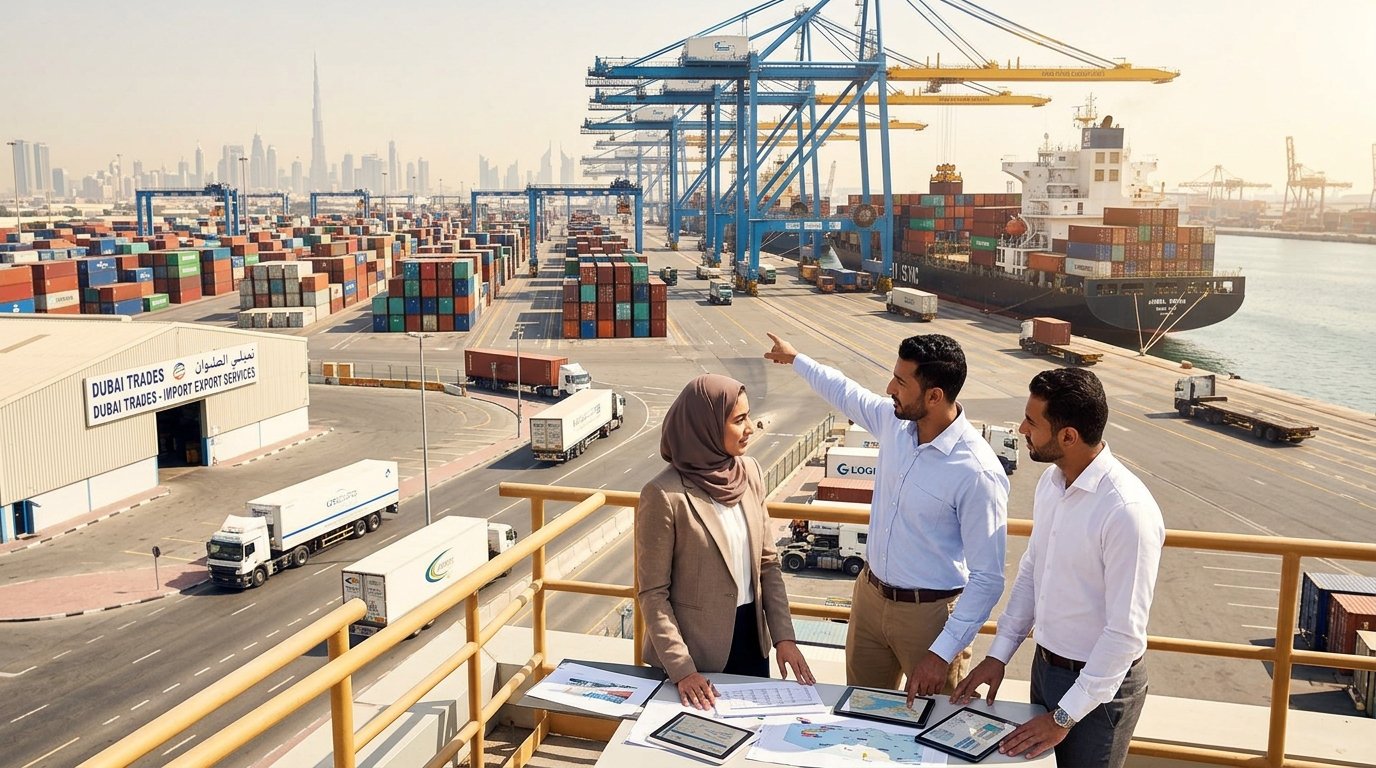
UAE Example: A retailer importing electronics from China coordinates Jebel Ali Port shipments and distributes them across Dubai and Abu Dhabi warehouses. Effective logistics ensures timely delivery and lower operational costs.

Learn more about UAE logistics best practices.

Supply Chain Management Explained

SCM integrates logistics with procurement, production, and coordination across the value chain.

  • Procurement & Supplier Management: Selecting reliable suppliers and negotiating contracts.
  • Production Planning: Scheduling manufacturing or assembly.
  • Demand Forecasting: Anticipating customer needs to prevent shortages.
  • Distribution & Delivery: Coordinating logistics providers to ensure smooth operations.

UAE Example: A fashion brand sourcing fabrics from India must manage supplier reliability, customs, and delivery schedules. SCM ensures efficiency and resilience.

See also: How UAE retailers optimize supply chains.

Key Differences Between Logistics and Supply Chain Management

Aspect Logistics Management Supply Chain Management
Scope Transportation, warehousing, inventory movement Entire network from suppliers to customers
Objective Deliver goods efficiently and on time Optimize end-to-end flow for cost, speed, and quality
Focus Execution and operations Strategy, planning, and coordination
Technology Route planning, warehouse management systems ERP, AI forecasting, IoT tracking, blockchain
UAE Example Trucking products from Jebel Ali Port Coordinating sourcing, production, and delivery for Dubai retailers

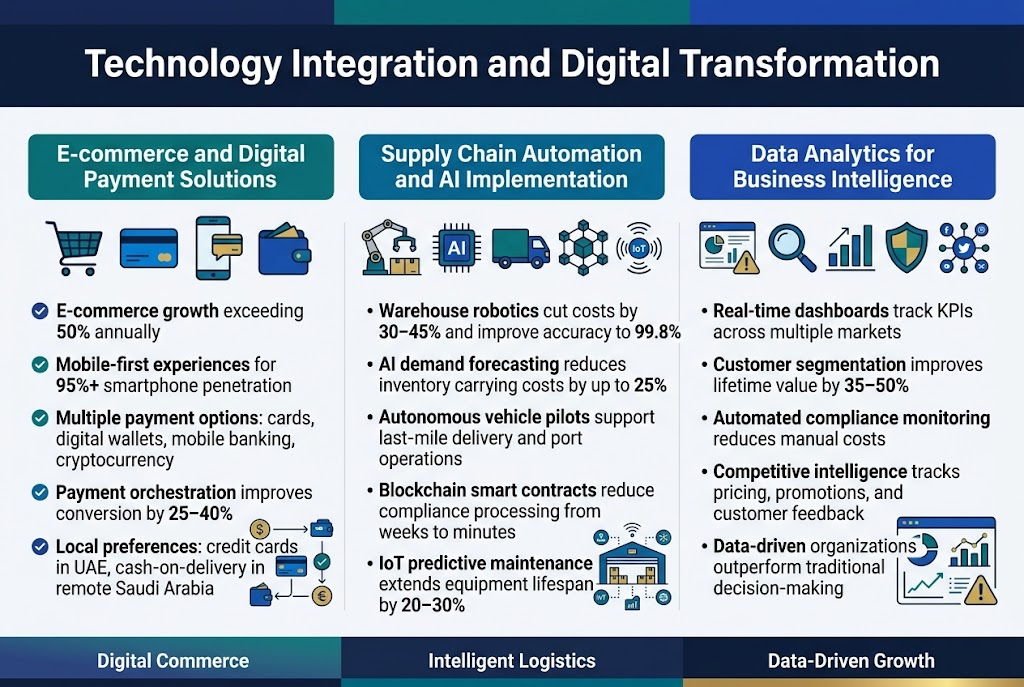
AI-driven platforms streamline complex documentation and compliance checks

Importance for UAE Businesses

Deloitte’s 2023 Global Supply Chain Report shows integrating logistics within SCM can reduce costs by up to 20% and improve delivery accuracy by 23%.

  • Strategic ports: Jebel Ali, Khalifa
  • Free zones: Dubai South, KIZAD, Sharjah Airport Free Zone
  • Advanced digital infrastructure enabling AI, IoT, and blockchain adoption

Technology Trends

  • AI & Predictive Analytics: Optimize routes and forecast demand.
  • IoT Sensors: Real-time shipment monitoring.
  • Blockchain: Supply chain transparency and traceability.
  • Automation & Robotics: Efficient warehouses and last-mile delivery.

UAE Example: Emirates SkyCargo uses AI-enabled tracking to optimize air freight routes.

Practical UAE Example

  • Logistics ensures timely shipment and warehousing.
  • SCM ensures supplier reliability, accurate forecasts, and smooth delivery.

Integration reduces spoilage, improves delivery, and boosts customer satisfaction.

Sustainability & ESG

  • Green logistics: Electric vehicles, solar warehouses
  • Ethical sourcing: Supplier compliance with labor/environmental standards
  • Waste reduction: Streamlined packaging and reverse logistics

UAE Example: DP World implements eco-friendly port operations to cut emissions.

Integration Tips

  • Map your supply chain: Identify suppliers, warehouses, and routes
  • Invest in technology: ERP, IoT, AI
  • Train your teams: Logistics execution + SCM strategy
  • Leverage local expertise: Free zones, consultants, regulations
  • Focus on resilience: Diversify suppliers and transport options

Conclusion

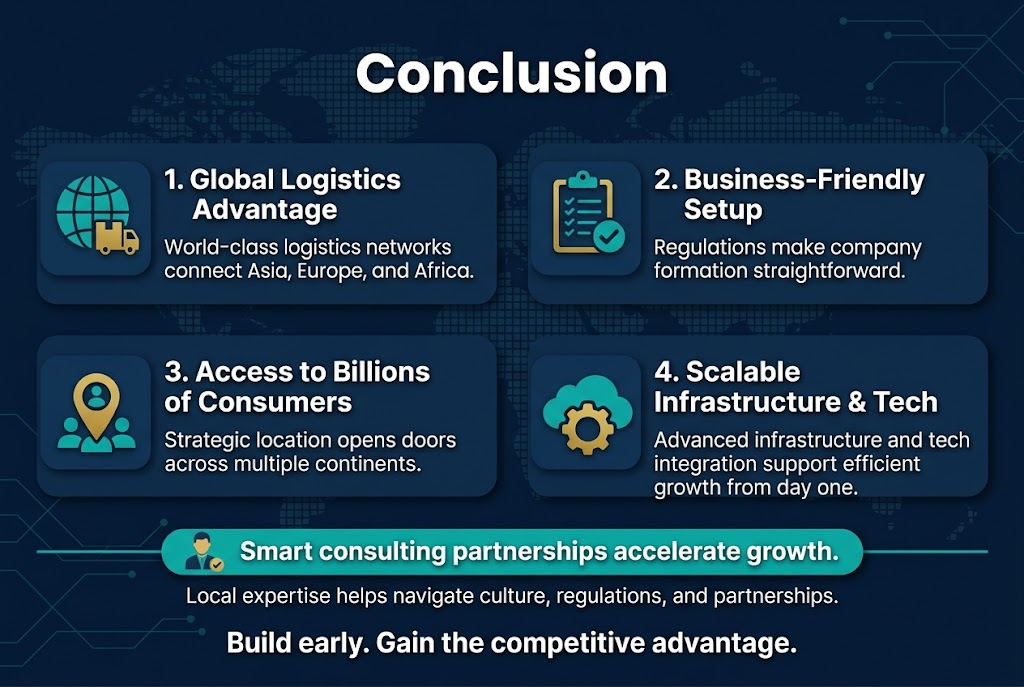
Logistics and supply chain management are two sides of the same coin. UAE businesses that integrate them gain efficiency, cost savings, resilience, and growth opportunities.

From AI-enabled warehouses to green logistics initiatives, the UAE is a hub where smart SCM can transform operations—and companies that understand both logistics and supply chain management will lead the way

Author: Arshad, Business Director specializing in sustainable supply chain practices and AI-driven logistics solutions in the UAE.

The Automated Forwarder: Where AI Actually Delivers ROI in Freight Operations (Beyond the Chatbot)

The words “AI” and “automation” are everywhere. In logistics, they often conjure images of robots in warehouses or futuristic drones zipping through skies. While these advancements are exciting, for many freight forwarders, the immediate question isn’t about sci-fi — it’s about ROI. Where can AI truly deliver tangible value today in the complex, often manual world of freight operations?

The good news? AI and automation are already transforming freight forwarding, not just with flashy headlines, but by quietly optimizing the intricate processes that define the industry. It’s time to look beyond the chatbot and understand where these technologies genuinely deliver returns.


From Manual Mayhem to Intelligent Workflows: The Core Problem

Freight forwarding is inherently complex. It involves:

  • Massive Data Volume: Tracking thousands of shipments, tariffs, regulations, and market rates.
  • Fragmented Information: Data spread across emails, PDFs, ERPs, and various carrier portals.

  • Time-Sensitive Decisions: Prices change by the minute, and delays cost money.
  • High Manual Effort: Documentation, booking, tracking, and communication often rely on human input, leading to errors and bottlenecks.

This “manual mayhem” is where AI and automation shine brightest, offering solutions that enhance efficiency, accuracy, and strategic decision-making.

Strategic planning in the age of intelligent logistics


Where AI and Automation Deliver Real ROI in Freight Operations

Let’s dive into the practical applications that are already yielding significant returns for forwarders.

1. Hyper-Automating Documentation & Compliance (Generative AI & RPA)

The Problem: Customs forms, bills of lading, manifests, invoices – the sheer volume of documentation is staggering and prone to human error. Regulations change, making compliance a constant challenge.

The AI Solution:

  • Generative AI:
  • AI can draft compliant customs declarations, generate accurate invoices, or translate complex regulatory texts in seconds. It learns from vast datasets of compliant documents, ensuring accuracy and consistency.
  • Robotic Process Automation (RPA):
  • RPA bots can extract data from emails and PDFs, validate it against existing systems, and populate various forms automatically. This drastically reduces manual data entry and minimizes errors.

The ROI: Significant reduction in manual processing time (up to 70-80% in some cases), fewer costly compliance errors, faster customs clearance, and improved cash flow.

AI-driven platforms streamline complex documentation and compliance checks.

2. Predictive Analytics for Dynamic Pricing & Capacity Planning

The Problem: Freight rates fluctuate wildly based on fuel costs, seasonality, geopolitical events, and carrier capacity. Quoting accurately and securing optimal rates requires deep market insight and rapid decision-making.

The AI Solution: Machine Learning (ML) algorithms can analyze historical data, real-time market signals, weather patterns, and news sentiment to predict future rate movements and available capacity. This allows forwarders to:

  • Offer more competitive and profitable quotes.
  • Identify optimal booking windows.
  • Proactively address potential capacity shortages.

The ROI: Improved profitability per shipment, reduced exposure to unfavorable rate swings, better resource allocation, and enhanced customer satisfaction through more reliable quotes.

AI-driven platforms streamline complex documentation and compliance checks

3. Process Mining for Operational Excellence

The Problem: Many freight forwarding operations involve complex, multi-step processes across different departments. Identifying inefficiencies, bottlenecks, and deviations from optimal paths can be incredibly difficult with traditional analysis methods.

The AI Solution: Process Mining technology analyzes digital footprints (event logs) from IT systems to reconstruct and visualize actual end-to-end processes. This allows freight forwarders to:

  • Identify hidden bottlenecks and inefficiencies in booking, tracking, and invoicing workflows.
  • Compare actual processes against ideal models.

  • Quantify the impact of process deviations.

The ROI: Optimized operational workflows, reduced cycle times, lower operational costs, and a clear roadmap for continuous improvement. This leads to higher productivity per employee and a better customer experience.

4. Enhanced Customer Service & Proactive Communication

The Problem: Customers expect real-time updates and quick responses. Manually tracking every shipment and providing proactive alerts is resource-intensive.

The AI Solution: Advanced AI-powered virtual assistants can handle routine inquiries, provide real-time tracking updates, and even anticipate potential delays before they become critical.

  • Automated Anomaly Detection:
  • AI monitors shipments and flags potential issues (e.g., vessel delays, customs hold-ups) much earlier than human intervention.
  • Proactive Notifications:
  • Automated systems then generate personalized alerts to customers, detailing the issue and proposing solutions.

The ROI: Improved customer satisfaction, reduced inbound calls, freeing up customer service teams to handle more complex client needs, and mitigating the financial impact of unforeseen disruptions.

The future of freight demands a seamlessly integrated, intelligent transport ecosystem.


Ready to Automate Your ROI?

The future of freight forwarding isn’t about replacing people; it’s about empowering them with intelligence. The real competitive edge lies in adopting these technologies to eliminate manual work and focus your team on strategic client solutions. Which area will you automate first?

Talk to an Expert About Automation


Dubai 2040 Urban Master Plan: A Blueprint for the Future of Work & Urban Life

The UAE’s Urban 2040 Master Plan is more than a blueprint for buildings and green space — it’s a roadmap for transforming how people live, work, and how goods move. As Dubai and other emirates evolve, logistics, cargo, and transportation industries are at a tipping point. Urban infrastructure, sustainability goals, and mobility changes will create profound effects for jobs, business opportunities, and regional supply chains.

This blog explores:

  • What the Urban 2040 plan aims to achieve

  • The jobs and business opportunities it will unveil

  • How GCC neighbouring countries are impacted

  • How logistics, cargo, and freight forwarding industries stand to benefit


What Is the Dubai 2040 Urban Master Plan?

According to the UAE government, the plan has these high-level goals:

  • Upgrade urban areas and ensure new growth is sustainable and inclusive.

  • Improve resource utilization (land, mobility, energy).

  • Double green and leisure areas; enhance walkability, cycling, and sustainable mobility.

  • Ensure people live closer to transit: more public transport coverage, integrated mobility.

For example, the plan seeks that by 2040 at least 55% of residents in Dubai live within 800 meters of a major public transit station.


Jobs & Business Opportunities in the UAE under 2040

Urban transformation on this scale always creates demand. Here are key employment and entrepreneurial opportunities:

Employment Opportunities

  1. Transit-Oriented Development (TOD) Specialists
    Urban planners, architects, civil engineers skilled in TOD, mixed-use developments, and public-transport-oriented design.

  2. Public Transport & Mobility Workforce
    More metro lines, expanded bus networks, last-mile delivery services, EV/e-bike operators.

  3. Green Infrastructure & Sustainability Roles
    Experts in green building, renewable energy integration, carbon-monitoring, ESG compliance.

  4. Smart Logistics & Cargo Handling Jobs
    Roles in cargo planning, urban warehousing, multimodal logistics (rail + road + sea), digital tracking, cold chain specialists.

  5. Tech + Data Analysts
    Demand for data scientists, AI/ML engineers, GIS analysts to manage big data on traffic flows, urban mobility, and resource usage.

  6. Regulatory & Governance Experts
    Professionals to help align with new policies, safety standards, mobility regulation, environment laws.

Business & Investment Opportunities

  • Urban Warehousing & Micro Fulfillment
    Warehouses placed near urban centres to support e-commerce, quick delivery, and reduced last-mile costs.

  • EV & Sustainable Delivery Services
    Green fleets for last-mile delivery, electric bikes/scooters, and perhaps driverless delivery pilots—as in Masdar city.

  • Transit-Hub Integrated Logistics Parks
    Logistics parks around metro stations, around rail stations, or close to ports + airports for multimodal freight.

  • Mobility Tech Startups
    Apps for route optimization, traffic prediction, delivery scheduling, and combining soft mobility with cargo.

  • Green Infrastructure and ESG-Compliant Services
    Suppliers/contractors for charging stations, green building materials, sustainable packaging, energy-efficient warehouses.

  • Urban Transport & Mobility Infrastructure
    Investment in metro lines, public transport, cycling/walking infrastructure; these require contractors, operators, and service providers.


GCC-Wide Impacts

Though the plan is UAE-specific, its effects ripple across the Gulf:

  • Trade Corridors Strengthened: Projects like Etihad Rail and regional logistics zones gain relevance, improving cross-border freight flows.

  • Benchmarking and Policy Spillover: Other Gulf countries will look to Dubai’s approach as a model—regulatory reforms, TOD, green mobility, urban logistics.

  • Supply Chain Hub Competition: The Gulf will see sharper competition among cities and ports to attract investment (logistics zones, free zones) to serve growing demand.


How Logistics & Cargo Industry Will Benefit

  1. Reduced Transit Times & Congestion
    With better integrated transport systems (metro, rail, roads), urban congestion will drop. Logistics companies can better predict delivery times and lower fuel/operational costs.

  2. More Warehouse Demand Near Cities
    Urban densification demands last-mile storage and micro-fulfillment centres. Firms that position assets near transit hubs will benefit.

  3. Multimodal Freight Solutions
    With urban rail and public transport expansion, combined with ports, airports and road networks, there’s room for sea-rail-road integrated logistics in the Gulf.

  4. Sustainability as Value Add
    Green delivery, emissions reduction, and energy efficiency will help logistics companies meet ESG requirements and appeal to customers sensitive to carbon footprint.

  5. Digital & Automated Logistics
    Real-time tracking, AI for routing, blockchain for freight documentation, and automation in warehousing are all enabled by planned infrastructure and regulatory support.


Challenges to Watch

  • Upfront investment costs (for developers, operators) can be high.

  • Regulatory alignment across emirates and GCC may lag.

  • Talent shortage for specialized roles (EV fleet maintenance, AI, TOD planning).

  • Urban design vs cargo flow conflicts (some areas may restrict heavy trucks or delivery times).


Action Points for Logistics and Freight Forwarding Stakeholders

  • Map your operations to new transit corridors and planned hubs to anticipate demand.

  • Invest in green fleet and last-mile infrastructure to align with mobility plans.

  • Explore partnerships with free zones, urban developers, public authorities.

  • Build skills internally (data, automation, ESG compliance).


Conclusion

The UAE Urban 2040 Master Plan is shaping a future where livability, mobility, and logistics converge. For businesses in logistics, freight forwarding, cargo handling, this is an inflection point. Jobs, business models, supply chains are evolving. Those who adapt early will set the standards for GCC’s new urban era.


When people hear “logistics” or “freight forwarding,” they often imagine containers of clothing, electronics, or furniture moving from port to port. But in the Gulf Cooperation Council (GCC), the real test of logistics expertise isn’t in moving everyday goods. It’s in handling specialized cargo — pharmaceuticals, perishables, and oil & gas project cargo — where mistakes aren’t just expensive; they can be catastrophic.

In a region that sits at the crossroads of global trade and depends heavily on industries like energy, healthcare, and food security, specialized cargo handling has become the ultimate benchmark for logistics companies.


🚑 Pharmaceuticals: The Cold Chain Challenge

Pharmaceutical logistics is one of the most demanding areas. Medicines, vaccines, and biologics require strict temperature control — often between 2°C and 8°C — from the factory floor to the patient’s hands.

  • The GCC Example: During the COVID-19 vaccine rollout, countries like the UAE and Saudi Arabia relied heavily on robust cold chain infrastructure to store and distribute millions of doses safely.

  • The Risk: Even a two-degree deviation can render a shipment unusable, leading to millions in losses and endangering lives.

  • The Expertise Needed: Trained staff, certified cold storage facilities, and real-time monitoring tools are no longer optional. They are mandatory.


🥗 Perishables: Freshness Is Everything

From fresh produce to seafood, perishables account for a significant share of GCC imports, especially in the UAE, which relies heavily on global food trade.

  • The GCC Example: Dubai has become a regional hub for food imports, with Jebel Ali Free Zone hosting specialized cold storage facilities for fresh fruits, vegetables, and dairy.

  • The Risk: A delayed customs clearance or a temperature fluctuation at the port can spoil an entire shipment.

  • The Expertise Needed: Freight forwarders must ensure seamless handling, fast customs clearance, and efficient multimodal transport to preserve freshness “farm to fork.”


⚙️ Oil & Gas Project Cargo: Engineering on the Move

No industry in the GCC is more dependent on specialized logistics than oil & gas. Project cargo often involves oversized, heavy-lift equipment that requires customized handling, route surveys, and coordination with multiple authorities.

  • The GCC Example: Saudi Arabia’s mega-projects, such as NEOM, require the movement of turbines, rigs, and large-scale industrial components across challenging terrains.

  • The Risk: A single miscalculation in packaging, lifting, or route planning can lead to accidents, delays, and financial losses worth millions.

  • The Expertise Needed: Specialized cranes, engineered transport plans, and expert teams that combine logistics with project management know-how.


🌍 Why the GCC Is the Perfect Case Study

The GCC is at the center of specialized cargo logistics for three reasons:

  1. Strategic Geography – Ports like Jebel Ali (UAE), Dammam (Saudi Arabia), and Hamad (Qatar) connect Asia, Africa, and Europe.

  2. Industry Mix – Energy, healthcare, and food security are strategic priorities for all GCC governments.

  3. Regulatory Push – Governments are strengthening compliance standards for pharmaceuticals, perishables, and ESG (Environmental, Social, Governance) reporting.

This makes the region not just a market for freight forwarders, but a real-world test bed for global logistics innovation.


💼 What This Means for Clients

For businesses in the GCC, working with the right logistics partner is about more than rates and transit times. It’s about:

  • Risk Reduction – Choosing forwarders who understand regulatory, safety, and technical challenges.

  • End-to-End Visibility – Leveraging digital tools for real-time cargo tracking.

  • Compliance Assurance – Ensuring shipments meet strict safety and ESG requirements.


🚀 Opportunities for Entrepreneurs and Job Seekers

  • Entrepreneurs: Building specialized cold chain facilities, project logistics consultancies, or AI-driven monitoring solutions.

  • Job Seekers: Careers in cold chain management, project logistics coordination, and compliance auditing are expanding rapidly.

With Saudi Vision 2030 and the UAE’s digital transformation strategies, specialized cargo logistics is opening new paths for growth in both employment and entrepreneurship.


✅ Final Thought

In GCC logistics, anyone can move a container of T-shirts. But handling pharmaceuticals, perishables, or a multi-million-dollar oil rig is where the true experts shine.

Specialized cargo handling isn’t just a service. It’s the gold standard of logistics expertise in the Gulf.

Ready to start your logistics journey?

Get in touch today!