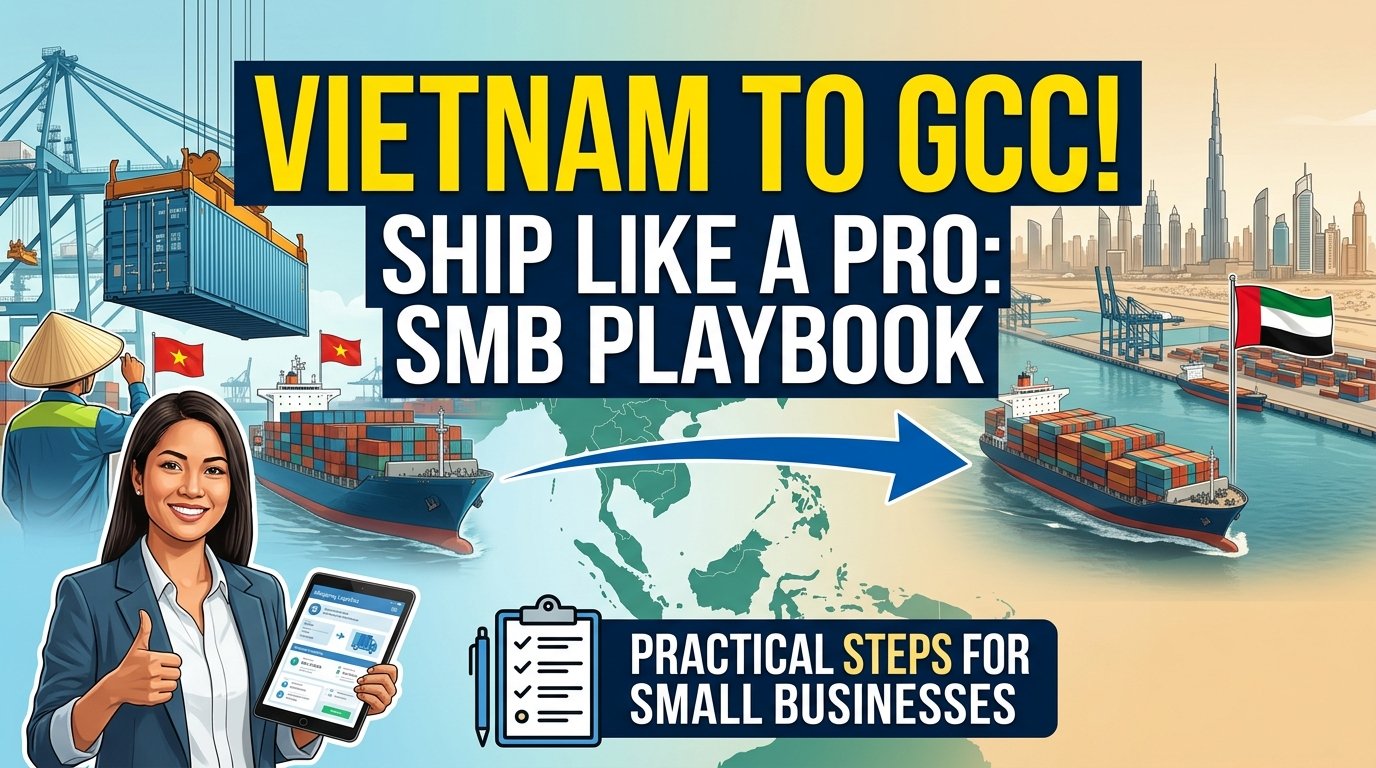
Vietnam is manufacturing the world’s goods and nobody’s talking about the Gulf markets.
You’ve got the production capacity. Low labor costs. Supply chains already built for apparel, electronics, coffee, cosmetics. Vietnam exports $400 billion annually—to everywhere except strategically the GCC, where they’re leaving billions on the table.
The Gulf Cooperation Council imports roughly $200 billion per year. Most of it comes from China, India, Europe. Vietnam sits at 2-3% of that flow.
But Vietnam products—coffee, apparel, electronics, cosmetics—command premium prices in GCC markets. A Vietnamese coffee roastery that sells beans domestically for $4/kg sells them in Saudi Arabia for $12-15/kg. That’s a 300%+ margin before the buyer’s markup.
The same dynamic works for Vietnamese textiles, electronics, handicrafts, cosmetics. The GCC wants them. But most Vietnamese SMBs don’t know how to navigate the distance, customs paperwork, or cost structure.
This playbook walks you through the actual system. Get it right on shipment one, and you’re printing 35-50% gross profit on Vietnamese goods in GCC markets. Get it wrong, and you’re sitting in port for a week while you scramble for missing certificates.
Why Vietnam to GCC Works (And Why You’re Missing Out)
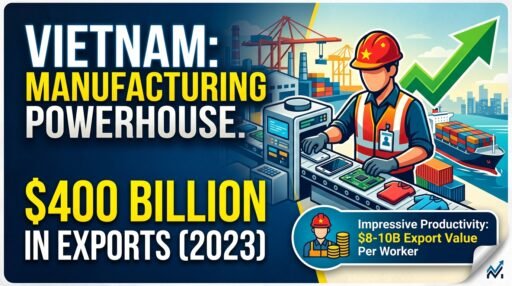
Vietnam is a manufacturing powerhouse. According to the Vietnam Ministry of Industry and Trade, the country exported $400 billion in goods in 2023. That’s roughly $8-10 billion per person employed in manufacturing.
But the GCC—Saudi Arabia ($1.07 trillion GDP), UAE ($511 billion), Qatar ($225 billion), Oman, Bahrain, Kuwait—these markets remain almost invisible to Vietnamese exporters.
Why? Distance. Customs confusion. Perceived complexity.
But the economics are real: a Vietnamese coffee roaster sells beans domestically for $4-5/kg wholesale. That same coffee, exported to Saudi Arabia with proper Halal certification and quality positioning, sells for $12-15/kg retail. That’s a 200-300% margin.
The same story plays out for Vietnamese apparel (textiles), electronics, handicrafts, cosmetics. Premium goods, discounted-to-GCC-buyers-because-they’re-not-Chinese perception, high margins.
The ASEAN-UAE Free Trade Agreement (signed 2023) provides reduced or zero duty on many Vietnamese products if you have a valid Certificate of Origin (CO). That’s the legal gate opener.
The GCC Standardization Organization (GSO) sets quality standards. Meet them, and your goods clear in 24-48 hours. Miss them, and you’re in port for 5-10 days.
The distance is real—28-35 days by sea from Ho Chi Minh City to Jebel Ali. But that distance is also your edge. Vietnamese products arrive rare, premium, differentiated.
The Distance Factor: Why 28-35 Days Changes Everything
Shipping from Shanghai to Dubai: 22-28 days.
Shipping from Ho Chi Minh City to Dubai: 28-35 days depending on route (some consolidate via Singapore, adding 5-7 days).
That extra week matters.
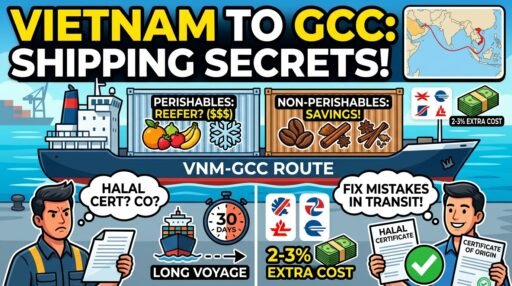
First, for cost. Vietnam’s major ports are Ho Chi Minh City (the largest), Hai Phong, and Da Nang. Not all have integrated carriers on every lane. Major shipping lines serving Vietnam-to-GCC include Maersk, MSC, CMA CGM, and ONE. You book through them, not directly. That adds 2-3% to your base freight cost.
Second, for documentation. A longer voyage gives you time to catch mistakes. If you forgot a Halal certificate, you have days to retroactively arrange it. If you shipped without a valid CO, you discover it in transit and can file for preferential duty retroactively (sometimes).
Third, for perishability. If you’re shipping Vietnamese coffee, spices, or dried goods—things that don’t require reefer—the 28-35 day transit is fine. If you’re shipping Vietnamese fresh fruit or processed foods that need temperature control, you need a reefer container, which costs more.
The Customs Baseline: Same Across All Six States
Whether you’re shipping to Saudi Arabia, UAE, Qatar, Oman, Bahrain, or Kuwait, the customs framework is identical.
Standard duty: 5% of CIF value (cost, insurance, freight). But under the ASEAN-UAE FTA, many Vietnamese products qualify for 0% duty if you have a valid Certificate of Origin.
VAT: 5% in UAE, Qatar, Oman, Bahrain. 15% in Saudi Arabia and Kuwait.
Electronic clearing: Every GCC state uses a single-window e-customs portal. UAE has eGate (Mirsal). Saudi Arabia has GAZT Customs Portal. Qatar has Qatar Customs Portal. Upload documents, pay fees online, goods clear in 24-48 hours if complete.
Miss a certificate? You’re sitting in port at $200-800 per day in storage fees.
GCC customs portals:
- UAE — eGate (Mirsal)
- Saudi Arabia — GAZT Customs Portal
- Qatar — Qatar Customs Portal
- Oman — Oman Customs
- Bahrain — Bahrain Customs
- Kuwait — Kuwait Customs
The Documents You Need (And What Everyone Misses)
Commercial invoice, packing list, bill of lading—obvious.
Here’s what catches Vietnamese exporters:
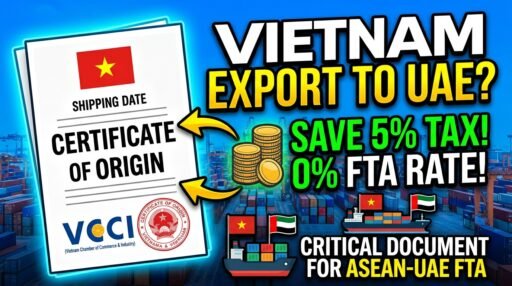
Certificate of Origin. You get this from the Vietnam Chamber of Commerce & Industry (VCCI). Proves goods are Vietnam-made. Without it, you lose the ASEAN-UAE FTA preferential duty rates. That’s 5% of shipment value you’re paying unnecessarily (difference between 5% and 0%).
Allow 2-3 weeks for the CO. Request it early.
Halal certification. Any food, beverage, or cosmetic entering the GCC needs this. Must be Arabic-stamped and issued by a GCC-approved certifier. English-only Halal certs don’t work.
Vietnam has Halal Vietnam (VAM) and MUI (Indonesia) with GCC endorsement. Budget $400-800 and 3-4 weeks. IFANCA (Islamic Food and Nutrition Council) is recognized across the region.
GSO Conformity Certificate. If it’s processed food, cosmetic, electronic, or toy, you need this. Check the GCC Standardization Organization for requirements. Costs $500-2,000 depending on complexity. Labs like SGS, QIMA, and TÜV SÜD can turn it around in 1-2 weeks if you pay for expedite.
Export Declaration (Vietnam Customs). For shipments over $200, you must file an electronic export declaration via the Vinam-c (e-customs) portal. Forwarder usually handles this. But you need to provide the commercial invoice, packing list, CO, and any product certifications.
Import licence (if regulated). Vietnamese food exports to Saudi Arabia require pre-approval from the Saudi Food & Drug Authority (SFDA). Cosmetics require GSO Conformity. Pharmaceuticals require ministry approval. Expect 4-6 weeks.
Get certificates before you book freight. Most first-timers discover these requirements after the ship has sailed.
Understanding HS Codes: The Language of Customs
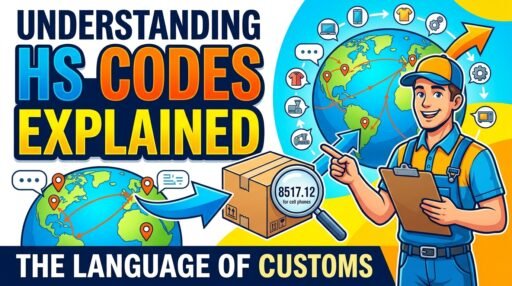
Harmonized System (HS) codes are the universal language of customs. Every product has one. Get it wrong, and you pay the wrong duty or get held up.
Vietnamese coffee beans: HS 0901 (Coffee, not roasted).
Vietnamese apparel (men’s T-shirts): HS 6109 (Men’s or boys’ T-shirts).
Vietnamese electronics (smartphones): HS 8517 (Telephone sets, including smartphones).
Prepared meals/soups: HS 2008-2009.
How to verify? Use the Vietnam Customs Tariff Database and cross-check with the World Bank’s WITS database for GCC-specific duty rates.
Get the HS code wrong and you might pay 15% duty instead of 0%. That’s a $15,000 mistake on a $100,000 shipment.
The Free-Trade Agreement Gate: ASEAN-UAE FTA
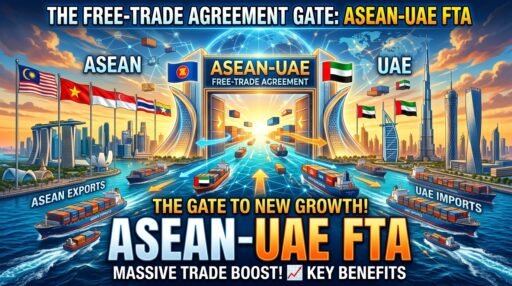
Here’s where Vietnamese exporters win.
The ASEAN-United Arab Emirates Free Trade Agreement (effective 2023) gives Vietnamese goods 0% duty on most industrial and consumer products when you have a valid Certificate of Origin.
The catch: goods must have at least 40% regional value content. For most Vietnamese-made goods (coffee, apparel, cosmetics), this is easily satisfied—local labor and raw materials count.
To claim the preferential rate:
- Obtain a CO from VCCI (state the HS code and value)
- Provide the CO file via the carrier’s or forwarder’s portal (GCC customs portals accept PDF)
- Customs applies 0% duty instead of the standard 5%
On a $100,000 coffee shipment, that saves $5,000.
On a $250,000 apparel shipment, that saves $12,500.
Most Vietnamese exporters don’t know about this. They ship without CO, pay the full 5%, and wonder why their margins are compressed.
Shipping Modes: Which One Actually Works for Vietnamese Goods
Air Freight: 3-7 days, $1.50-3.00 per kg. Use for high-value items (cosmetics, electronics) or urgent orders. Vietnam Airlines Cargo, Qatar Airways Cargo, and Emirates SkyCargo operate this lane.
Express Courier: 2-5 days, $2.40-5.00 per kg. Use for small parcels ≤ 30 kg (B2C e-commerce). DHL Express, FedEx International, and UPS Worldwide all operate Vietnam-to-GCC routes.
Ocean – Full Container Load (FCL): 25-35 days, $0.30-0.55 per kg (much cheaper per unit). Use for large volume, non-time-critical shipments (apparel, furniture, bulk coffee). Maersk, MSC, and CMA CGM operate this lane.
Ocean – Less-than-Container Load (LCL): 30-45 days, $0.60-1.00 per cubic meter. Use for small-to-medium batches when cost efficiency matters. Good for testing market fit before committing to a full FCL.
The decision tree:
- Perishable or high-value? → Air or Courier
-
18 m³ volume? → FCL
- Volume < 15 m³? → LCL or Courier (if ≤ 30 kg)
For most Vietnamese SMBs starting out, LCL makes sense. You test the market with smaller volume, validate customer demand, then scale to FCL.
Real Stories: What Actually Happens
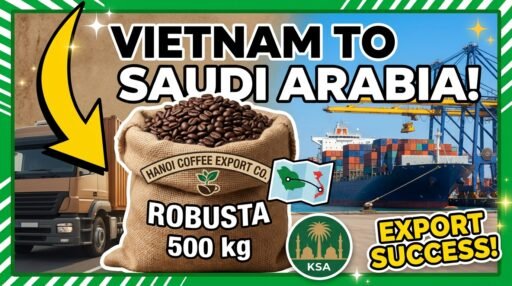
Hanoi Coffee Export Co. shipped 500 kg of Robusta coffee beans to Saudi Arabia.
Sea LCL from Ho Chi Minh City to Jeddah, 30 days. DDP terms (seller pays everything including duty). They got Halal certification and Certificate of Origin before booking. HS code 0901 (coffee, not roasted) qualified for 0% duty under ASEAN-UAE FTA.
Customs cleared in 24 hours. Distributor paid transparent landed cost. Repeat order came 6 weeks later for 2 tons.
Lesson: Vietnamese coffee roasters forget Halal certification is mandatory for GCC food imports. Budget for it. Plan 3-4 weeks. The certification unlocks the market.
Saigon Textiles (Ho Chi Minh) shipped 5 tons of men’s T-shirts to the UAE.
Sea FCL from Ho Chi Minh City to Dubai, 28 days. DAP terms (seller pays freight, buyer pays duty). HS code 6109 (men’s T-shirts) + valid CO = 0% duty under ASEAN-UAE FTA. No GSO cert needed (raw textiles, not finished).
Landed cost: $1.20/shirt. Retail in Dubai: $8-12/shirt. Margin: 70%.
Certificate of Origin saved them 5% duty on the full shipment = $2,500 in savings.
Lesson: Get the CO. It’s the difference between 0% and 5% duty. On a 5-ton shipment worth $50,000, that’s $2,500.
Vietnam Beauty Co. shipped 2 tons of shea-butter cosmetics to Qatar.
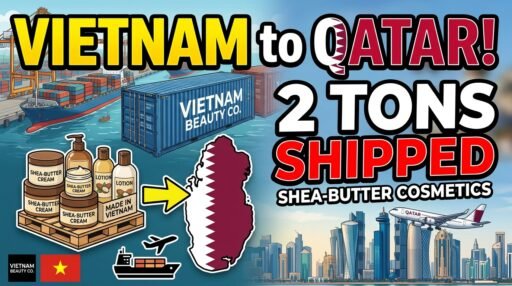
Qatar requires GSO Conformity Certification for cosmetics. Vietnam Beauty did NOT have this. Cargo sat in port 6 days while they rush-ordered a GSO test from a Dubai lab.
Cost: $1,800 in port fees + $1,200 for expedited lab test = $3,000 mistake.
Lesson: Processed goods (cosmetics, creams, supplements) need GSO testing. Plan 2-3 weeks and $500-1,500 budget. Do it before you ship, not after.
Mekong Electronics shipped 3 tons of smartphone components to Saudi Arabia.
Saudi Arabia requires EMC (electromagnetic compatibility) certification for electronics. They shipped without it. Customs held the shipment 8 days.
Lesson: Regulated products (electronics, pharma, food) need destination-country pre-approval. Start 6-8 weeks before shipping.
Cost-Control: Where The Margins Actually Hide
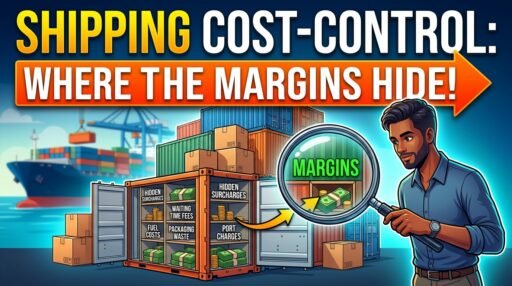
Strategy 1: Consolidate LCL shipments.
Instead of shipping 5 tons solo (expensive per unit), find another exporter shipping 7 tons. Combine into one 12-ton LCL. Share the container space. Cost per cubic meter drops 20-30%.
Choose a forwarder offering weekly consolidation from Ho Chi Minh City to Jebel Ali (Dubai) or King Abdulaziz Port (Saudi Arabia).
Strategy 2: Negotiate volume discounts.
Lock a 3-month forecast with Vietnam Airlines Cargo or DHL Express. Predictable monthly volume earns carrier rebates of 5-10%.
Strategy 3: Economy air services.
Standard air takes 3-5 days. Economy air takes 5-7 days (1-2 days slower) but costs 20-30% less. If your buyer can wait 48 hours, the savings are real.
Strategy 4: Pre-pay duties via a broker.
Avoid customs demurrage while cargo sits waiting clearance. Pay the duty upfront through a local GCC broker. Cost: 1-2% brokerage fee. Savings: avoid $50-200/day port storage.
Strategy 5: Reusable packing.
Use plastic collapsible crates and reusable EUR pallets. Carriers sometimes give 2-3% handling discounts for reusable packaging because it’s lighter and reduces landfill waste.
Strategy 6: Lock fuel-surcharge caps.
Fuel surcharges fluctuate. Lock a cap at 12-15% of base freight cost. Protects your landed-cost model.
Strategy 7: Door-to-port vs. door-to-door.
You manage the last mile yourself instead of paying carrier’s premium last-mile fee. Combine with a local 3PL like Aramex UAE or Jazp Saudi for final delivery. Often 10-20% cheaper than door-to-door.
Incoterms: Pick DAP or DDP, Not FCA
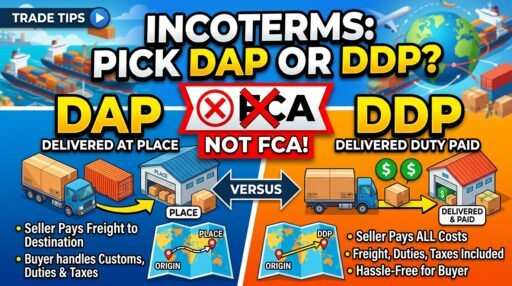
FCA (Free Carrier): Seller delivers to carrier. Buyer handles import and duty. Use for testing pilots where the buyer is experienced with customs.
CIF (Cost, Insurance, Freight): Seller pays freight to GCC port. Buyer clears customs. Use for sea freight when you want control of the ocean leg but don’t want to deal with import duty.
DAP (Delivered at Place): Seller pays freight to buyer’s location. Buyer pays duty/VAT. Balanced B2B approach. You manage logistics. Buyer handles import.
DDP (Delivered Duty Paid): Seller covers everything—freight, duty, VAT, delivery. Ideal for e-commerce. Removes “sticker shock” at checkout.
Recommendation for Vietnamese SMBs:
Start with FCA or CIF for small pilot shipments (5-10 tons). Keep your exposure low. Learn the customs process.
Move to DDP once you have a reliable GCC customs broker and volume justifies the complexity. DDP gives your customers a single price, builds trust, and removes friction from the sales process.
The Tech Stack: Automate Everything

Freightos: Compare air, sea, and courier quotes instantly. No guessing. Real-time rates from carriers.
Flexport: End-to-end ocean freight platform. Built-in customs documentation. Single dashboard for all shipments.
ShipStation: Multi-carrier label printing, order sync with Shopify/WooCommerce. Streamlines B2C fulfillment.
CustomsTrade: HS-code lookup and duty calculators. Vietnam-to-GCC specific.
Vinam-c (Vietnam e-customs portal): Submit electronic export declarations, generate permits. Eliminates physical paperwork.
ERP integration: Use Odoo, Zoho, or SAP Business One to auto-populate invoices, packing lists, CO data from your inventory system.
Result: Reducing manual data entry saves 5-10 hours per shipment, cuts errors by 30%, and lets you quote faster—a competitive edge for SMBs.
Real Protocol: The 12-Step Playbook
1. Pick a product. Something with proven GCC demand. Vietnamese coffee, apparel, electronics, cosmetics, handicrafts. Not something experimental.
2. Validate the HS code. Look it up on the Vietnam Customs Tariff Database. Confirm duty rate and ASEAN-UAE FTA eligibility.
3. Get quotes. Contact two forwarders with Vietnam-to-GCC experience. Ask for FCL, LCL, and air options.
4. Secure certificates. CO from VCCI, Halal cert (if food), GSO test (if processed). Do this in parallel.
5. Lock the Incoterm. Agree with buyer (usually DDP or DAP). Get it in writing.
6. Book freight. Lock fuel-surcharge caps at 12% max. Purchase all-risk insurance.
7. Prepare documentation. Commercial invoice, packing list, CO, certificates. Arabic translations where needed.
8. File Vietnam export declaration. Submit via Vinam-c portal. Forwarder usually handles this.
9. Pack and label. Bilingual English/Arabic labels. Country of origin “Made in Vietnam” clearly marked.
10. Upload docs to carrier/broker. Invoice, packing list, CO, certifications. Same day as pick-up.
11. Track shipment. Use carrier portal or Flexport dashboard throughout 28-35 day transit.
12. Customs clearance in GCC. Broker files import declaration, pays duties, obtains approval. Usually 24-48 hours if docs are complete.
FAQ
Do I need a company registered in GCC countries?
No. A forwarder acts as your importer of record under DAP or DDP. You don’t need local presence.
How does the ASEAN-UAE FTA actually work?
Present a valid Certificate of Origin from VCCI proving goods are Vietnam-made. Duty drops from 5% to 0% automatically. But the CO has to be legitimate and attached to the shipment.
Is HS code classification mandatory?
Yes. Every product has one. Get it wrong and you pay the wrong duty or get flagged for inspection. Take 30 minutes to verify via Vietnam Customs database.
Do I need Halal cert for all food products?
Yes. GCC won’t accept Vietnamese food without Arabic-stamped Halal certification. Budget $400-800 and 3-4 weeks.
What’s the cheapest shipping mode for Vietnam to GCC?
Sea FCL (full container) from Ho Chi Minh City. $0.30-0.55 per kg. Takes 25-35 days. Best for volume.
How do I track a shipment?
Use the Bill of Lading number on the carrier’s website. Or use Flexport for a unified dashboard.
Can I ship samples before committing to full volume?
Yes. Use DHL Express or FedEx International for samples. 2-5 days, small parcels. Tests the market and clears customs faster than sea freight.
What if my product needs refrigeration?
Use a reefer container (refrigerated sea freight). Costs 20-30% more than standard but necessary for perishables. Plan 4-6 weeks ahead for reefer availability.
How do I handle returns?
Set up an RMA (Return Merchandise Authorization) process with a local 3PL. Returns ship back under reverse-DDP. Forwarder handles insurance and customs re-entry.
Is 35 days too long for my cash flow?
No. Structure payment as: 50% upfront (to cover production), 50% on delivery. Or use a supply-chain financing partner like Flexport Capital to fund the gap.
Starting Now
Pick one product. Validate the HS code. Request the Certificate of Origin 3 weeks before shipping. If it’s food, order the Halal cert immediately. If it’s processed, order the GSO test.
Book freight 6-8 weeks ahead to avoid peak-season surcharges. Use DDP so you control the end-to-end experience but the buyer gets a single transparent price. Use a free zone if you’re serving multiple GCC countries.
The first shipment is expensive because you’re learning. The second one costs half as much because you have a playbook.
The margin arithmetic is real: get this right and you’re printing 35-50% gross profit on Vietnamese goods in GCC markets. Get it wrong once, and you’re wondering why you bothered.
The difference is usually just paperwork and planning. Not skill. Not luck.
Related Resources
These principles scale across supply chains. Whether you’re importing from East Africa to the GCC, shipping from Egypt to the GCC, importing from West Africa to the GCC, importing from New Zealand to the GCC, managing costs during ocean freight spikes, or optimizing free-zone logistics, the fundamentals are the same: plan early, validate documentation, lock costs, measure results.
Al Furqan Shipping & Logistics handles Vietnam–GCC shipments regularly, with specific expertise in Certificate of Origin processing, Halal certification coordination, and ASEAN-UAE FTA preferential duty applications. If you want a detailed landed-cost analysis or a free consultation on your first shipment, reach out here.