
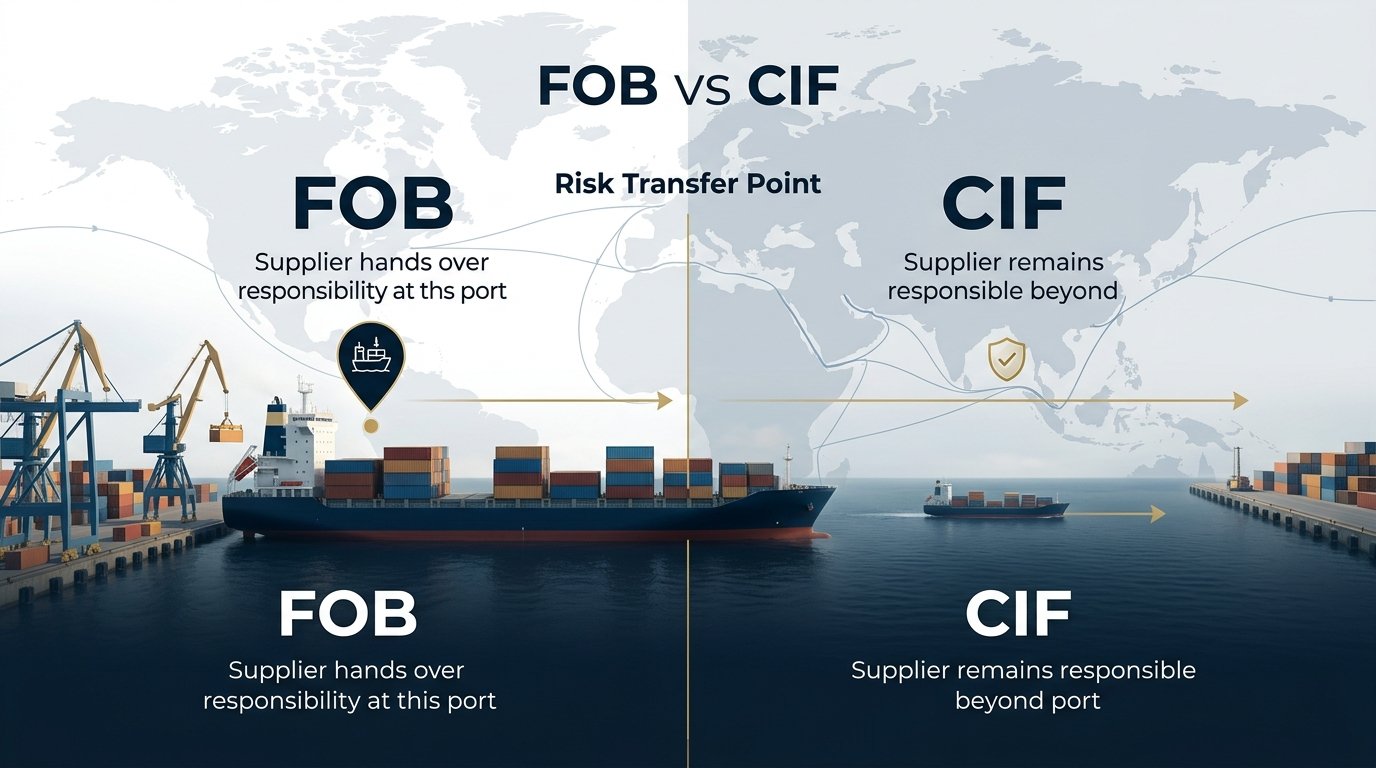
FOB vs CIF: Which Shipping Term Saves You Money?
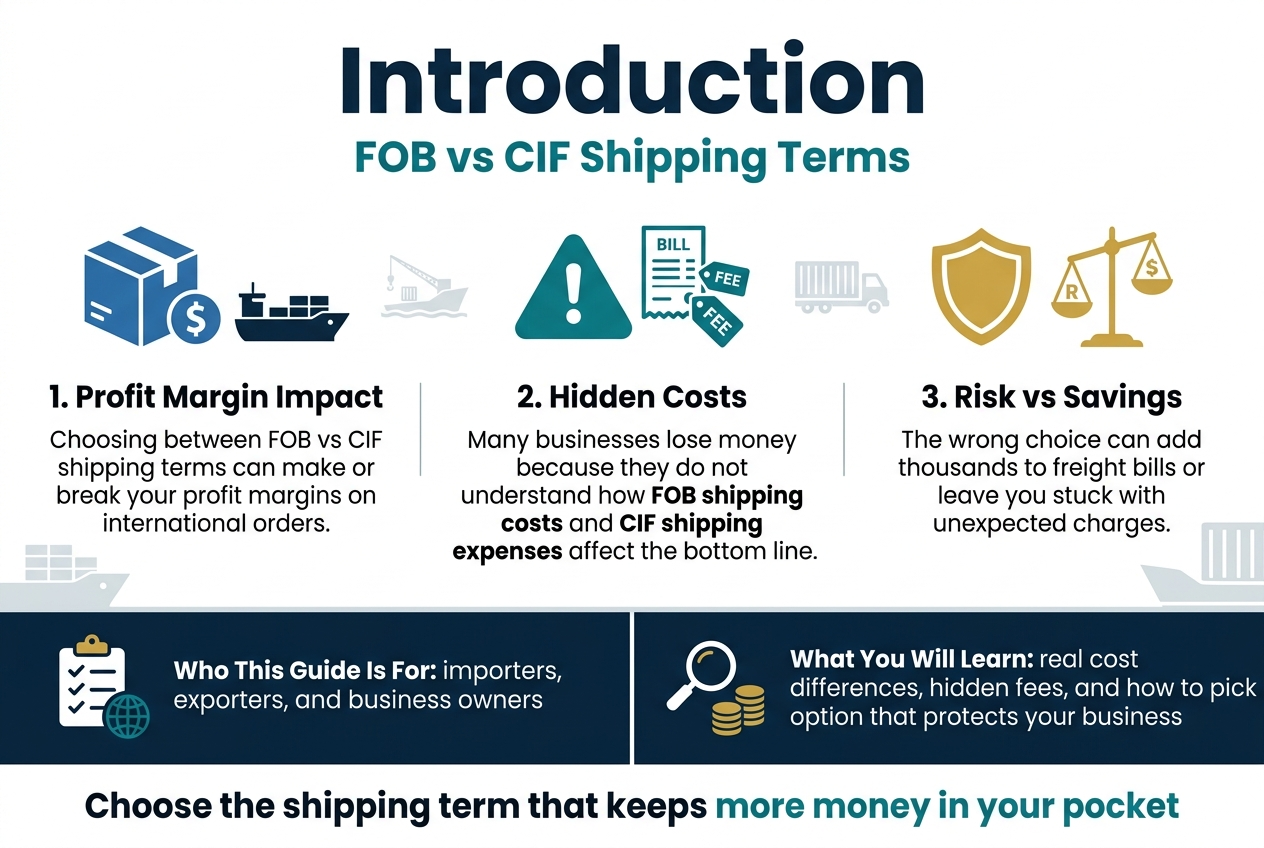
Choosing between FOB vs CIF shipping terms can make or break your profit margins on international orders. This guide is for importers, exporters, and business owners who need to understand which shipping arrangement will cut costs and reduce financial risk.
Many businesses lose money simply because they don’t understand how FOB shipping costs and CIF shipping expenses affect their bottom line. The wrong choice can add thousands to your freight bills or leave you stuck with unexpected charges.
We’ll break down the real cost differences between these international shipping terms, including hidden fees that catch most people off guard. You’ll also learn how to analyze risk versus savings to pick the option that protects your business and keeps more money in your pocket.
Understanding FOB and CIF Shipping Terms
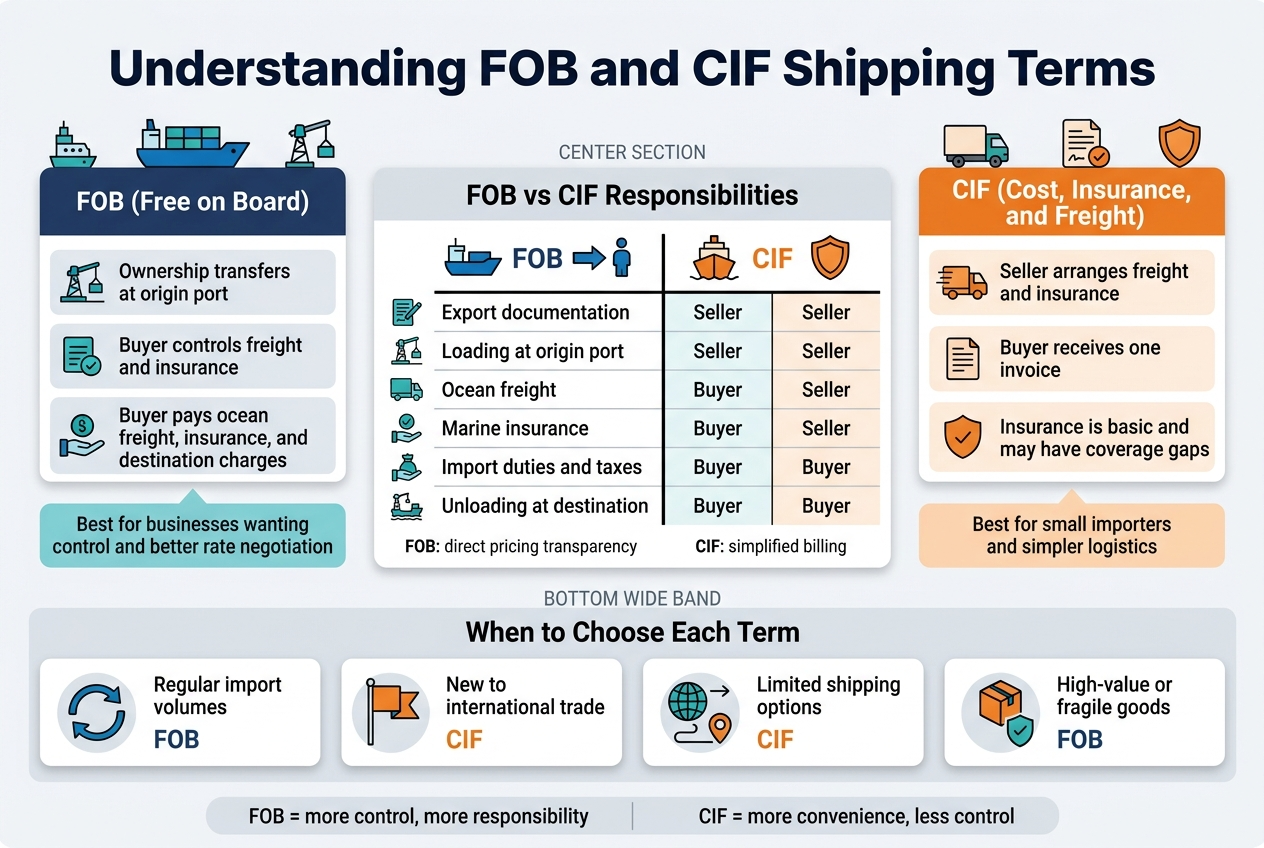
What FOB (Free on Board) means for your business
FOB shipping terms place the responsibility squarely on your shoulders once goods cross the ship’s rail at the port of origin. Under FOB agreements, you become the owner of the cargo the moment it’s loaded onto the vessel, which means you’re responsible for all costs and risks from that point forward.
This arrangement gives you complete control over shipping decisions. You choose the freight forwarder, select the shipping line, and arrange marine insurance according to your specific needs and budget. Many businesses prefer this control because it allows them to negotiate better rates with their preferred logistics partners and maintain consistent service standards across multiple shipments.
The financial implications are significant. While you pay for ocean freight, insurance, and destination charges, you often secure better rates through direct negotiations with carriers. Your purchasing power grows when you consolidate multiple shipments with the same shipping line, leading to volume discounts that can dramatically reduce per-unit shipping costs.
How CIF (Cost, Insurance, and Freight) works
CIF shipping terms create a different dynamic where your supplier handles everything until the goods reach your destination port. The seller arranges ocean transportation, pays for freight costs, and secures marine insurance coverage for the journey.
This setup appears convenient on the surface – you receive a single invoice that includes product cost plus all shipping expenses. Your supplier manages the logistics headaches, coordinates with freight forwarders, and handles documentation requirements. This can be particularly valuable for smaller businesses that lack the volume or expertise to negotiate favorable shipping rates independently.
The insurance component under CIF typically provides minimum coverage as required by international trade regulations. Your supplier purchases basic marine insurance that covers major losses like vessel sinking or cargo falling overboard, but it may not protect against damage from rough handling, moisture, or theft during port operations.
Key differences between FOB and CIF responsibilities
The responsibility transfer point creates the most significant difference between these shipping Incoterms. FOB transfers ownership and risk when goods cross the ship’s rail at the origin port, while CIF maintains seller responsibility until cargo reaches the destination port.
| Responsibility | FOB | CIF |
|---|---|---|
| Export documentation | Seller | Seller |
| Loading at origin port | Seller | Seller |
| Ocean freight | Buyer | Seller |
| Marine insurance | Buyer | Seller |
| Import duties and taxes | Buyer | Buyer |
| Unloading at destination | Buyer | Buyer |
Cost control varies dramatically between these terms. FOB buyers gain direct access to shipping markets and can shop around for competitive rates. CIF buyers receive simplified billing but surrender pricing transparency and control over service quality.
Risk management approaches differ substantially. FOB requires you to understand international shipping risks and secure appropriate insurance coverage. CIF provides basic protection through seller-arranged insurance, but coverage limitations may leave gaps in your risk management strategy.
When each shipping term applies in international trade
FOB works best when you have established relationships with freight forwarders and shipping lines. Companies with regular import volumes often achieve significant savings through FOB arrangements because they can negotiate annual contracts with carriers and secure preferential rates.
CIF suits businesses new to international trade or those dealing with occasional imports. Small-volume importers benefit from CIF because suppliers can leverage their shipping volumes to secure rates that individual small buyers cannot access independently.
Geographic considerations play a role in choosing between FOB vs CIF. Routes with limited shipping options may favor CIF arrangements where experienced suppliers can navigate complex logistics. Well-served trade lanes with multiple carrier options typically favor FOB terms where competitive pressures drive down freight rates.
Product characteristics influence the decision. High-value or fragile goods often require specialized handling and enhanced insurance coverage that you can better control under FOB terms. Commodity products with standard handling requirements may work well under CIF arrangements where cost simplicity outweighs control considerations.
Cost Breakdown Analysis for FOB Shipping
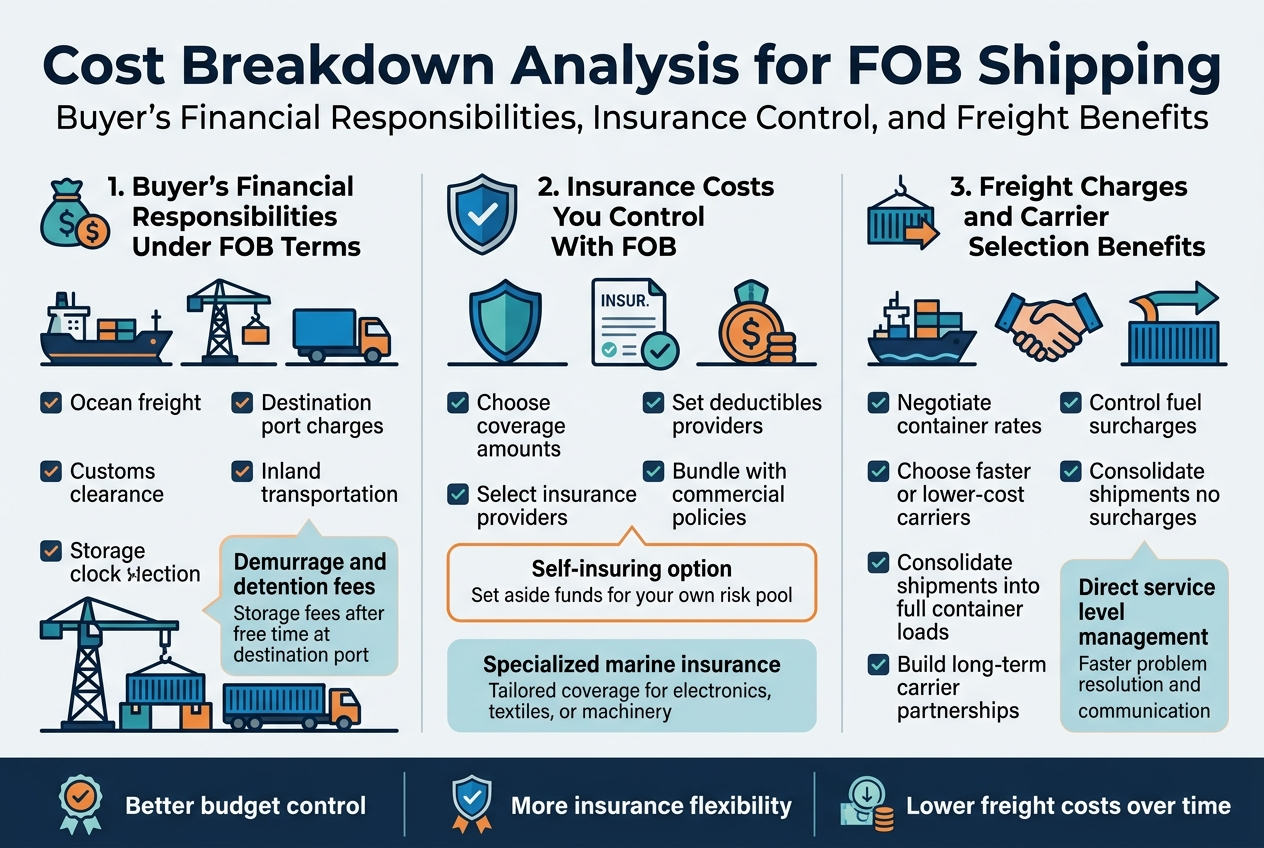
Buyer’s Financial Responsibilities Under FOB Terms
FOB shipping places distinct financial obligations on the buyer that can significantly impact your bottom line. Under FOB terms, you’re responsible for all costs once the goods cross the ship’s rail at the port of origin. This means paying for ocean freight, destination port charges, customs clearance, inland transportation, and any potential delays or storage fees at the destination port.
The upfront nature of these costs might seem daunting, but FOB shipping costs often provide better budget control. You’ll handle marine insurance directly, giving you the power to choose coverage levels and deductibles that match your risk tolerance. Destination handling fees, including terminal charges and documentation fees, become your responsibility, but this also means you can negotiate directly with service providers for better rates.
Port demurrage and detention charges fall squarely on your shoulders with FOB terms. If your cargo sits at the port longer than the free time allowance, you’ll pay storage fees. However, this responsibility also motivates efficient logistics planning and can lead to faster cargo pickup times.
Insurance Costs You Control With FOB
FOB shipping gives you complete control over marine insurance decisions, which can translate into substantial savings on your freight cost analysis. Instead of accepting the seller’s insurance choices under CIF terms, you select coverage amounts, deductibles, and insurance providers that align with your specific needs and budget.
Many businesses discover they can secure better insurance rates by bundling marine coverage with their existing commercial policies. This consolidation often results in volume discounts and simplified claims processes. You can also adjust coverage based on cargo value and risk assessment rather than accepting a one-size-fits-all approach.
Self-insuring becomes an option for companies with large shipping volumes or lower-value goods. By setting aside funds that would typically go toward insurance premiums, some businesses create their own risk pools. This strategy works particularly well for established importers with predictable shipping patterns and strong financial reserves.
The ability to choose specialized marine insurance providers means accessing expertise in specific cargo types or trade routes. Whether shipping electronics, textiles, or machinery, you can work with insurers who understand your industry’s unique risks and offer tailored coverage options.
Freight Charges and Carrier Selection Benefits
Controlling freight charges represents one of the most significant advantages in the FOB vs CIF comparison. Direct relationships with shipping lines open doors to better rates, especially for regular shippers who can leverage volume commitments. You’ll negotiate container rates, fuel surcharges, and ancillary fees directly rather than accepting the seller’s carrier arrangements.
Carrier selection flexibility allows you to prioritize different factors based on your business needs. Rush orders might require faster transit times even at higher costs, while routine shipments can use more economical services. You can also diversify your carrier portfolio to avoid over-dependence on single shipping lines and gain negotiating leverage.
Consolidation opportunities emerge when you control freight arrangements. Multiple suppliers can ship to the same destination port, allowing you to combine smaller shipments into full container loads. This strategy often reduces per-unit shipping costs and improves delivery coordination.
Service level management becomes direct and transparent. When delays or damage occur, you work directly with the carrier rather than through intermediaries. This direct relationship typically results in faster problem resolution and better communication about potential issues affecting your shipments.
Long-term partnerships with preferred carriers can yield significant benefits. Volume rebates, priority booking during peak seasons, and preferential treatment for urgent shipments often come with established relationships. These maritime shipping costs advantages compound over time, making FOB terms increasingly attractive for regular importers.
CIF Shipping Cost Structure and Hidden Expenses
Seller’s bundled pricing in CIF agreements
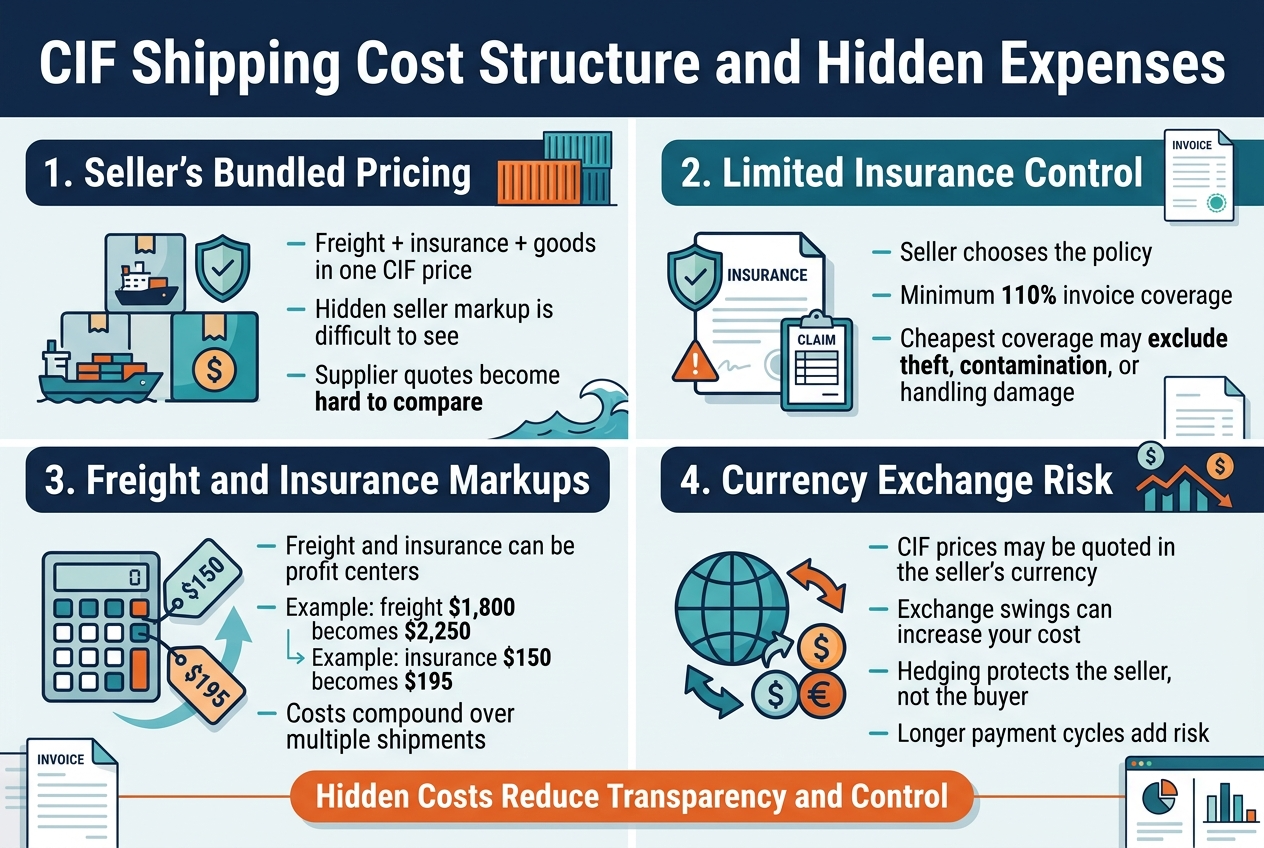
When you agree to CIF shipping terms, the seller packages everything into one neat price – freight, insurance, and the goods themselves. While this might seem convenient, it creates a black box scenario where you can’t see how much each component actually costs. The seller essentially becomes your freight forwarder and insurance broker, but without the transparency you’d get from dealing with these services directly.
This bundled approach means you’re paying whatever markup the seller decides to add. Since most sellers aren’t shipping specialists, they often rely on their own freight partners who may not offer the most competitive rates. The seller might be paying $2,000 for freight but charging you $2,500 as part of the total CIF price. You’d never know because everything gets rolled into one figure.
The real challenge comes when comparing quotes from different suppliers. With CIF pricing, you can’t easily determine if Supplier A is genuinely cheaper than Supplier B, or if one is simply padding their shipping costs more than the other. This lack of visibility makes it nearly impossible to negotiate effectively or find better shipping alternatives.
Limited control over insurance coverage quality
Under CIF terms, the seller chooses your insurance coverage, and their primary concern isn’t protecting your interests – it’s meeting their contractual obligations with minimal cost. The standard requirement calls for insurance coverage worth 110% of the invoice value, but this minimum coverage often leaves significant gaps.
The seller typically purchases the cheapest marine cargo insurance available, which might exclude common risks like theft, contamination, or damage from improper handling. You might discover after a loss that your coverage doesn’t extend to warehouse-to-warehouse protection or doesn’t cover certain types of goods-specific risks that a specialized insurer would have included.
Even worse, you have no relationship with the insurance company. If you need to file a claim, you’re dealing with an insurer who has no incentive to provide excellent service since you’re not their direct customer. The seller might not pursue claims aggressively on your behalf, especially if it means admitting fault in their packing or handling procedures.
Potential markup on freight and insurance costs
Sellers using CIF terms often treat shipping and insurance as profit centers rather than pass-through costs. This creates a double markup situation where you’re paying inflated prices for services that you could source more affordably on your own.
Consider a typical scenario: your supplier pays $1,800 for ocean freight and $150 for insurance, but adds a 25-30% markup to cover their administrative costs and generate additional profit. Your actual shipping costs become $2,250 for freight and $195 for insurance, adding $445 to your total expense. Over multiple shipments, these markups compound into substantial unnecessary costs.
The markup problem gets worse when suppliers don’t shop around for competitive shipping rates. They might have established relationships with specific freight forwarders who offer them kickbacks or volume discounts that aren’t passed along to you. Meanwhile, you could potentially access better rates through your own shipping partnerships or by working with freight forwarders who specialize in your specific trade lane.
Currency exchange risks in CIF pricing
CIF agreements often involve complex currency considerations that can work against your financial interests. When the seller quotes everything in their local currency, you’re exposed to exchange rate fluctuations between the time you agree to the price and when you actually pay.
Many sellers build currency hedging costs into their CIF prices, but these costs protect them, not you. If their local currency strengthens against yours, you pay more. If it weakens, the seller keeps the difference rather than passing savings along to you. This creates an asymmetrical risk where currency movements can only hurt your bottom line.
The timing issue becomes particularly problematic with longer production cycles. Your CIF price might be locked in when you place the order, but if payment occurs 60-90 days later, significant currency swings can dramatically impact your actual costs. Some sellers even adjust their CIF quotes periodically to account for currency movements, creating unpredictability in your budgeting process that FOB terms would eliminate.
Risk Management and Financial Impact Comparison
Who bears shipping damage liability under each term
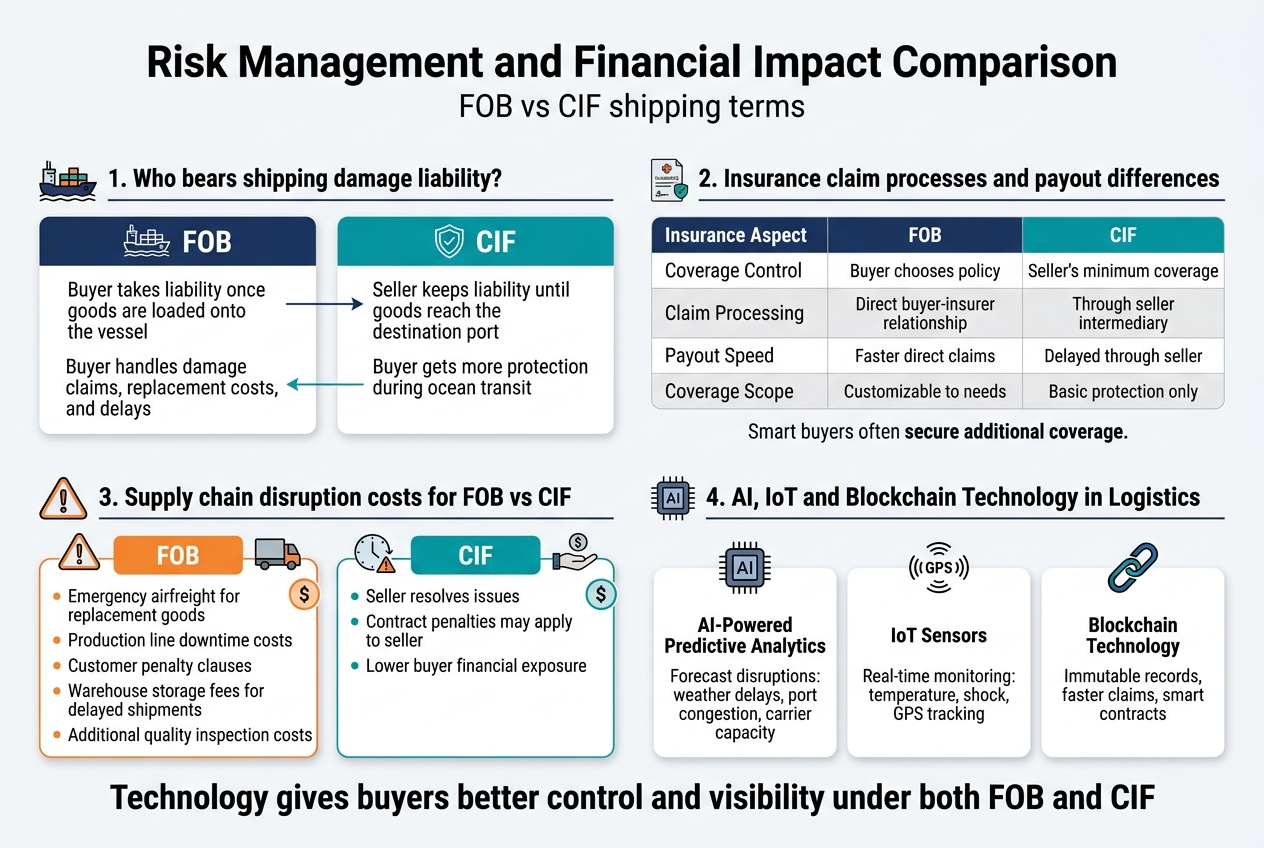
Under FOB shipping terms, the buyer takes on liability once goods are loaded onto the vessel at the origin port. This means if your cargo gets damaged during transit, you’re responsible for dealing with the mess. The seller walks away clean once they’ve delivered goods to the shipping line.
CIF shipping flips this responsibility. The seller maintains liability until goods reach the destination port, giving buyers more protection during the ocean voyage. When comparing FOB vs CIF terms, this liability shift represents a major financial consideration that directly impacts your bottom line.
The key difference lies in when risk transfers. FOB buyers must handle any damage claims, replacement costs, and delivery delays themselves. CIF buyers can look to their seller for resolution, creating a buffer against unexpected shipping problems that could derail your supply chain.
Insurance claim processes and payout differences
Insurance handling varies dramatically between these shipping Incoterms. FOB buyers must purchase their own marine cargo insurance and navigate claims independently. This means dealing directly with insurance companies, providing documentation, and waiting for payouts that might take weeks or months.
CIF arrangements include seller-provided insurance, but here’s where things get tricky. Sellers typically purchase minimum coverage that protects their interests, not necessarily yours. The insurance might cover basic risks but exclude common issues like theft, contamination, or delayed delivery.
| Insurance Aspect | FOB | CIF |
|---|---|---|
| Coverage Control | Buyer chooses policy | Seller’s minimum coverage |
| Claim Processing | Direct buyer-insurer relationship | Through seller intermediary |
| Payout Speed | Faster direct claims | Delayed through seller |
| Coverage Scope | Customizable to needs | Basic protection only |
Smart FOB buyers often secure comprehensive coverage that matches their specific cargo needs. CIF buyers might need additional insurance to fill gaps in the seller’s basic policy.
Supply chain disruption costs for FOB vs CIF
Disruption costs hit differently depending on your chosen shipping terms. FOB buyers face immediate financial pressure when shipments go wrong. Production delays, customer penalties, and emergency sourcing costs all land on your desk. You’re scrambling to find alternative suppliers or expedited shipping while managing angry customers.
CIF buyers have some protection through seller accountability. When disruptions occur, sellers must resolve issues or face contract penalties. This doesn’t eliminate all costs, but it creates shared responsibility that can reduce your financial exposure.
Maritime shipping costs extend beyond the obvious freight charges. FOB arrangements require buyers to budget for:
-
Emergency airfreight for replacement goods
-
Production line downtime costs
-
Customer penalty clauses
-
Warehouse storage fees for delayed shipments
-
Additional quality inspection costs
CIF terms shift many of these risks to sellers, but buyers might pay premium pricing that reflects this protection.
AI, IoT And Blockchain Technology in Logistics
Modern technology transforms how we manage shipping risks and costs under both FOB and CIF terms. AI-powered predictive analytics help buyers forecast potential disruptions and adjust orders accordingly. Whether you’re managing FOB or CIF shipments, these tools provide early warning systems for weather delays, port congestion, or carrier capacity issues.
IoT sensors attached to containers provide real-time cargo monitoring. FOB buyers benefit enormously from this visibility since they’re responsible for goods once loaded. Temperature sensors, shock detectors, and GPS tracking help prevent losses and provide evidence for insurance claims.
Blockchain technology creates immutable shipping records that streamline claims processes under both terms. Smart contracts automatically trigger payments or penalties based on delivery performance, reducing disputes between buyers and sellers. This technology particularly benefits FOB arrangements where buyers deal directly with multiple shipping partners.
These technological advances level the playing field between FOB vs CIF by giving buyers better control and visibility regardless of which shipping terms they choose. Companies using these tools often find they can confidently handle FOB arrangements that previously seemed too risky.
Making the Right Choice for Maximum Savings
Business Size and Shipping Volume Considerations
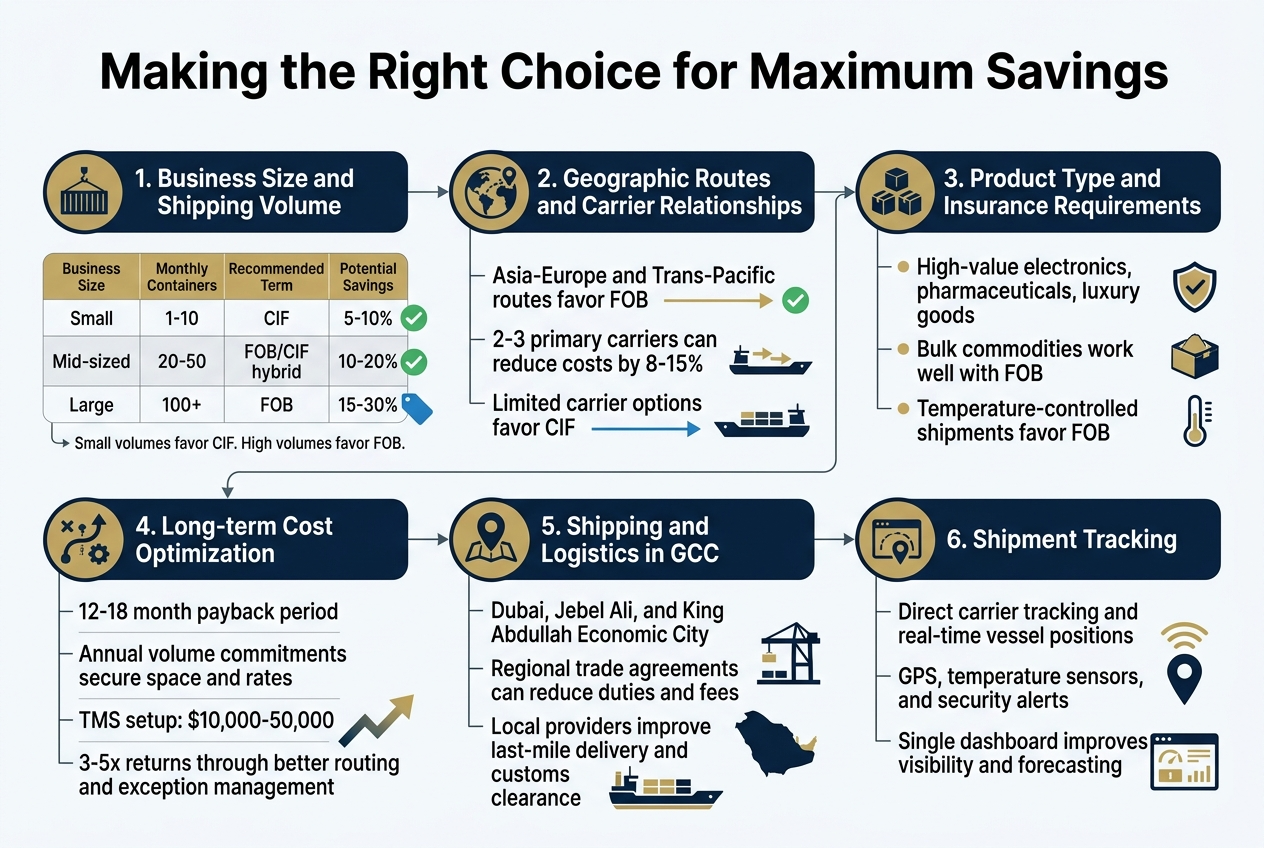
Small businesses with limited shipping volumes often benefit more from CIF arrangements since they lack the negotiating power to secure competitive freight rates independently. When you’re shipping just a few containers per month, your freight forwarder can leverage their consolidated buying power to get better rates than you could achieve alone.
Mid-sized companies typically reach a sweet spot around 20-50 containers monthly where FOB vs CIF decisions become more strategic. At this volume, you can negotiate directly with carriers while still maintaining flexibility in your shipping terms comparison. Your FOB shipping costs become more predictable, and you gain better control over transit times and service levels.
Large enterprises moving 100+ containers monthly almost always see savings with FOB terms. The volume discounts on maritime shipping costs can be substantial, often reducing per-container costs by 15-30%. These companies also have dedicated logistics teams to manage the complexity that comes with FOB responsibility.
| Business Size | Monthly Containers | Recommended Term | Potential Savings |
|---|---|---|---|
| Small | 1-10 | CIF | 5-10% |
| Mid-sized | 20-50 | FOB/CIF hybrid | 10-20% |
| Large | 100+ | FOB | 15-30% |
Geographic Routes and Carrier Relationships
Your shipping routes significantly impact which international shipping terms deliver the best value. Major trade lanes like Asia-Europe or Trans-Pacific routes offer abundant carrier options, making FOB more attractive due to competitive pricing.
Carriers often provide better rates for FOB shipments on high-volume routes because they can optimize vessel utilization. Your ability to book directly with multiple carriers creates pricing competition that benefits your bottom line. Routes with limited carrier options or irregular schedules favor CIF arrangements where your supplier’s established relationships can secure space and better rates.
Building direct relationships with 2-3 primary carriers on your main routes typically reduces costs by 8-15% compared to using freight forwarders exclusively. These partnerships also provide priority booking during peak seasons and better customer service when issues arise.
Product Type and Insurance Requirements
High-value electronics, pharmaceuticals, and luxury goods require specialized handling and comprehensive insurance coverage. CIF terms often include basic marine insurance, but it’s rarely sufficient for valuable cargo. You’ll need to purchase additional coverage regardless of your chosen shipping Incoterms savings approach.
Bulk commodities like raw materials or industrial components work well with FOB terms since insurance costs are relatively low and standardized handling procedures apply. The insurance savings alone can offset the additional logistics management required under FOB.
Temperature-controlled shipments need careful carrier selection and monitoring capabilities that favor FOB arrangements. You maintain direct communication with the carrier about reefer settings and can respond quickly to equipment failures.
Long-term Cost Optimization Strategies
Successful freight cost analysis requires looking beyond individual shipment costs to annual spending patterns. Companies that switch from CIF to FOB typically see 12-18 month payback periods as they develop internal logistics capabilities and carrier relationships.
Contract negotiations become more strategic when you control freight arrangements. Annual volume commitments with carriers can secure guaranteed space allocation and preferential rates. This approach works particularly well for businesses with predictable seasonal patterns.
Investing in transportation management systems (TMS) and logistics expertise pays dividends when managing FOB shipments. The initial setup costs typically range from $10,000-50,000 but generate 3-5x returns through improved routing, carrier selection, and exception management.
Shipping And Logistics In GCC
The Gulf Cooperation Council region presents unique opportunities for FOB CIF difference optimization. Major ports in Dubai, Jebel Ali, and King Abdullah Economic City offer excellent connectivity and competitive carrier rates for FOB shipments.
Regional free trade agreements within GCC countries can significantly reduce duties and fees when you control the shipping arrangements. Your freight forwarder may not always optimize for these regional benefits under CIF terms.
Local logistics providers in the GCC often provide better last-mile delivery and customs clearance services when you book FOB. Their regional expertise can reduce port delays and simplify documentation requirements.
Shipment Tracking
FOB arrangements provide direct access to carrier tracking systems and real-time vessel positions. You receive immediate notifications about delays, port changes, or equipment issues that impact your supply chain planning.
Modern container tracking technology includes GPS monitoring, temperature sensors, and security alerts that CIF suppliers don’t always share promptly. This visibility enables proactive inventory management and customer communication.
Third-party logistics platforms can aggregate tracking data from multiple carriers into single dashboards when you manage FOB shipments directly. This consolidated view improves supply chain visibility and enables better demand forecasting.
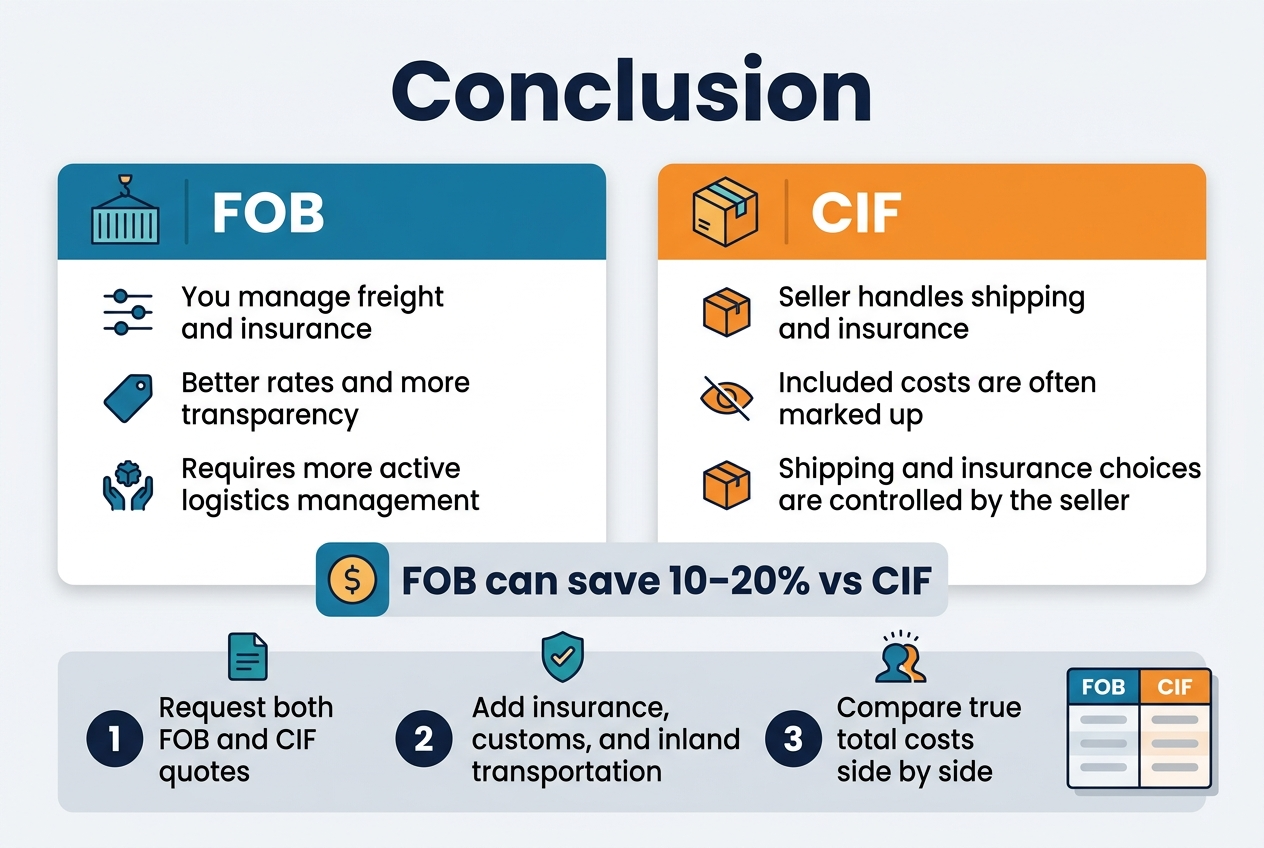
FOB and CIF shipping terms each come with their own cost structures and risk levels that can significantly impact your bottom line. FOB puts you in control of shipping arrangements and insurance, which often leads to better rates and transparency, but requires more hands-on management. CIF might seem convenient since the seller handles everything, but those “included” costs are usually marked up and hidden in the product price, plus you’re stuck with whatever shipping and insurance options they choose.
The smart money move depends on your business size, shipping volume, and comfort level with logistics management. If you’re shipping regularly and have the resources to manage freight forwarding, FOB typically saves you 10-20% compared to CIF arrangements. Start by requesting both FOB and CIF quotes for your next shipment, then calculate the true total costs including insurance, customs, and inland transportation. Once you see the real numbers side by side, the choice becomes much clearer.