
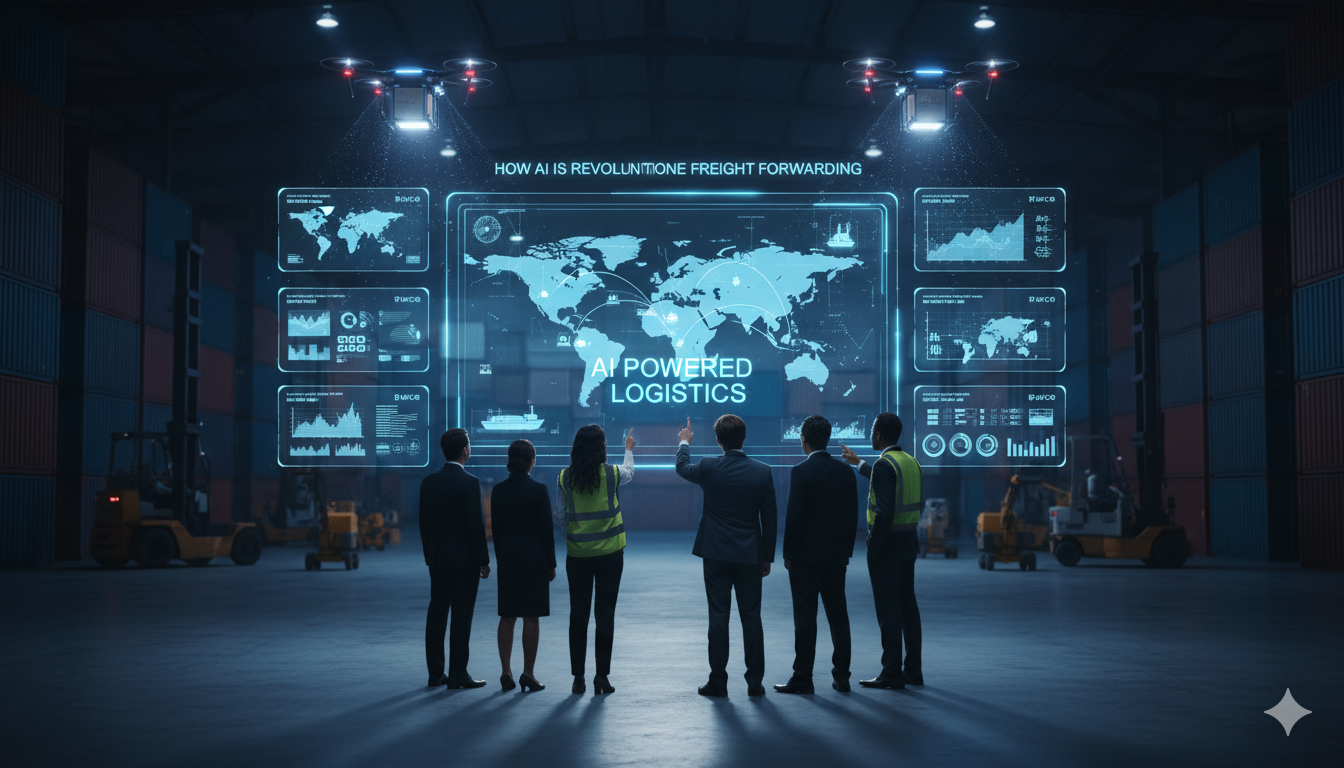
How AI Is Revolutionizing Freight Forwarding
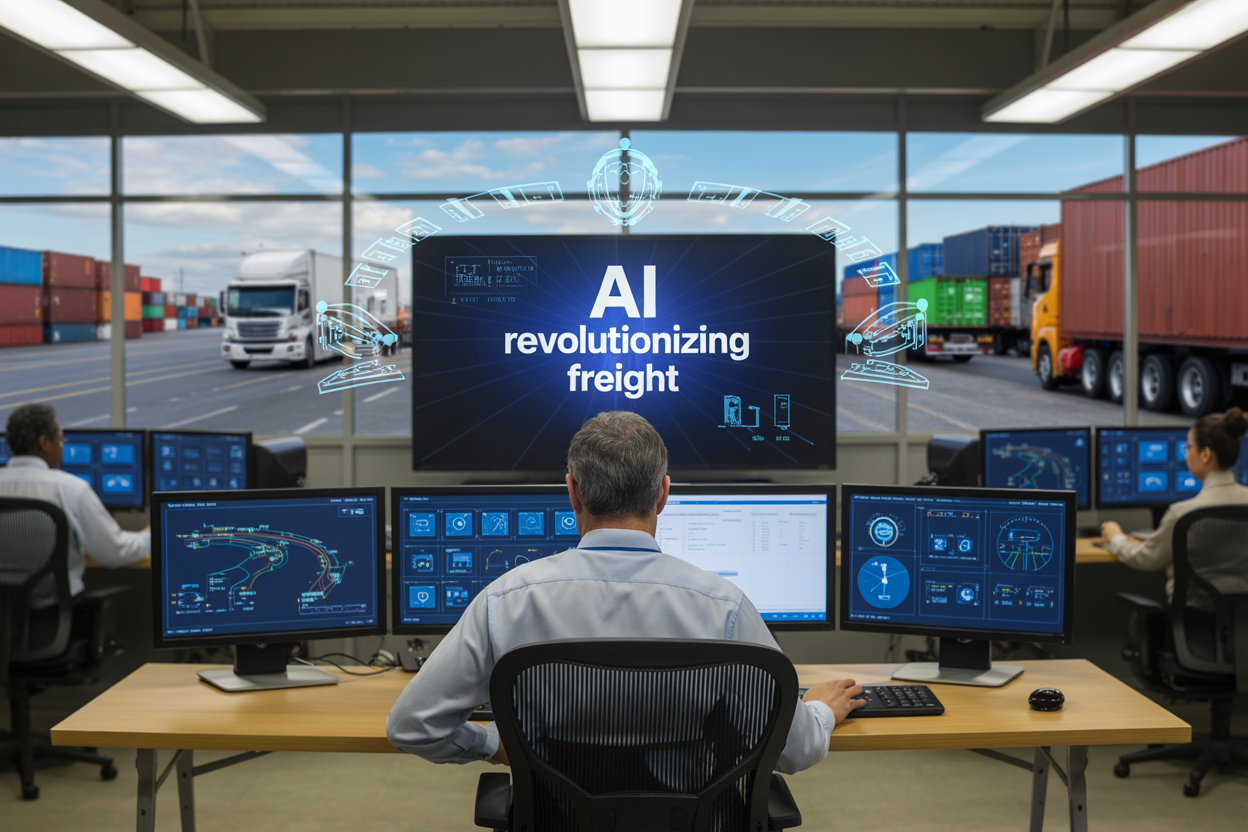
The freight forwarding industry is experiencing a major transformation as AI freight forwarding solutions reshape how companies move goods across the globe. Traditional logistics operations that once relied on manual processes and guesswork are now powered by smart algorithms that predict, optimize, and automate every step of the supply chain.
This guide is designed for freight forwarders, logistics managers, and supply chain professionals who want to understand how artificial intelligence is changing their industry. You’ll discover practical applications that are already delivering results and learn how these technologies can improve your operations.
We’ll explore how AI route optimization is slashing transportation costs by finding the most efficient delivery paths, and examine how automated freight documentation is eliminating the costly errors that plague manual processing. You’ll also see how predictive analytics logistics are giving companies unprecedented supply chain visibility, allowing them to spot problems before they disrupt operations.
These AI logistics solutions aren’t just futuristic concepts—they’re working technologies that forward-thinking companies are using right now to stay competitive in an increasingly complex global marketplace.
AI-Powered Route Optimization Cuts Transportation Costs
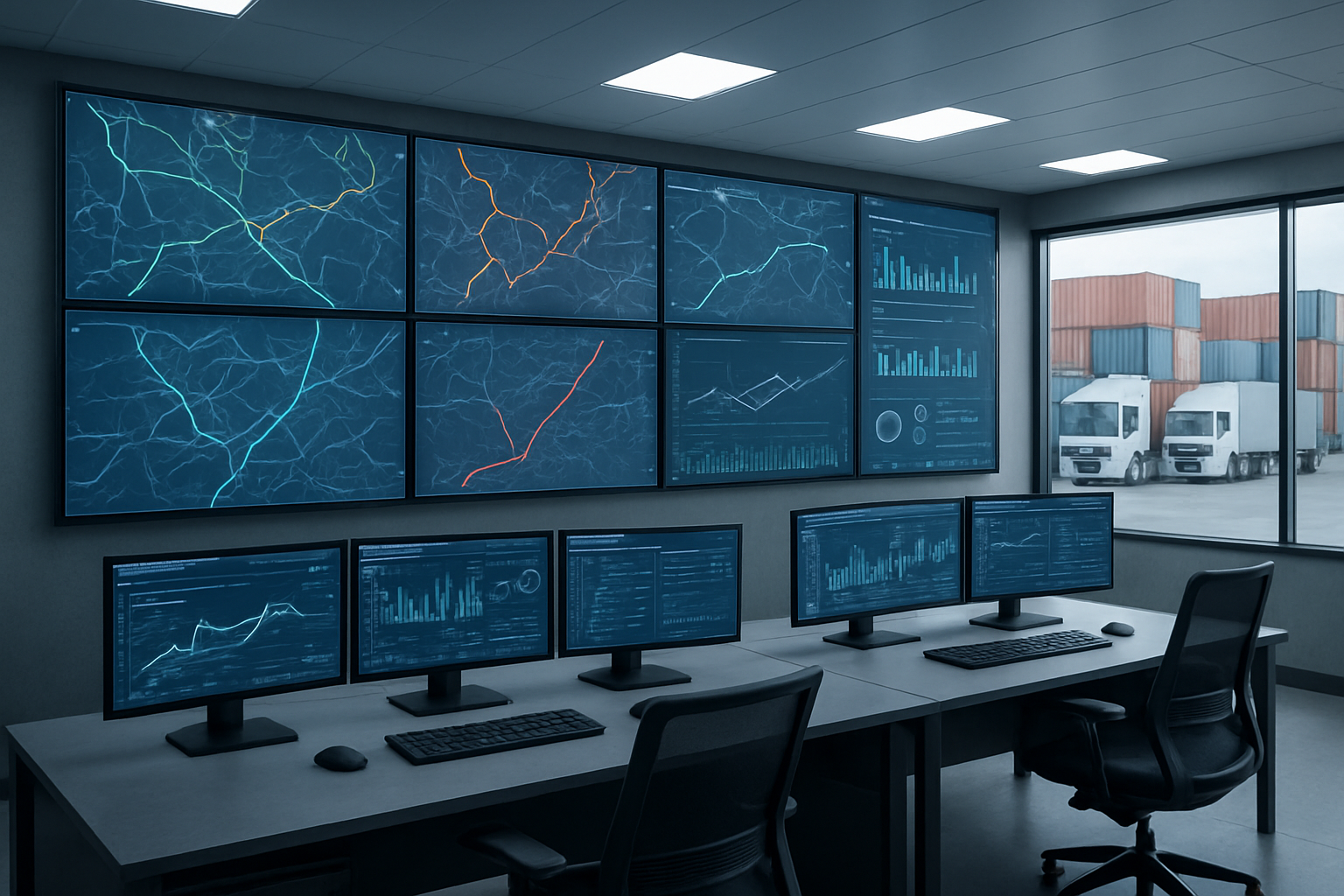
AI freight forwarding systems now tap into massive data streams to create smarter shipping routes. These advanced algorithms process real-time traffic data from GPS systems, historical congestion patterns, and weather forecasts to map out the most efficient paths for cargo movement. Machine learning models continuously learn from millions of data points, including rush hour patterns in major shipping hubs, seasonal weather disruptions, and port congestion levels.
The technology goes beyond basic GPS navigation by incorporating predictive weather modeling that can forecast storms, temperature changes, and other conditions that might affect transportation. For temperature-sensitive cargo, AI systems automatically adjust routes to avoid extreme weather zones, protecting valuable shipments while maintaining delivery schedules. Traffic pattern analysis helps avoid bottlenecks at major intersections, border crossings, and industrial areas during peak hours.
Dynamic routing reduces fuel consumption by up to 30%
AI route optimization delivers substantial cost savings through intelligent fuel management. Advanced algorithms calculate the most fuel-efficient paths by analyzing vehicle weight, cargo type, road gradients, and current fuel prices across different regions. The technology considers multiple variables simultaneously – something human planners simply can’t match in terms of speed and accuracy.
Companies using AI logistics solutions report dramatic reductions in fuel costs. The 30% savings comes from eliminating unnecessary mileage, avoiding traffic congestion, and selecting routes with optimal speed limits and fewer stops. Smart routing also factors in driver break requirements and vehicle maintenance schedules to create comprehensive efficiency gains.
Dynamic load balancing plays a crucial role here. AI systems can redistribute cargo across multiple vehicles to optimize weight distribution, reducing fuel consumption per shipment. The technology also identifies opportunities for consolidated shipments, allowing multiple customers’ cargo to share transport resources more effectively.
Real-time adjustments minimize delivery delays and penalties
Modern freight forwarding faces constant disruptions – from weather events to port strikes to sudden traffic accidents. AI-powered systems excel at making split-second routing decisions when conditions change. Real-time monitoring of global shipping conditions allows immediate route modifications that keep deliveries on track.
The financial impact of avoiding delays extends beyond customer satisfaction. Late delivery penalties can cost freight companies thousands of dollars per shipment, especially in time-sensitive industries like automotive manufacturing or pharmaceuticals. AI route optimization prevents these costly penalties by building buffer time into schedules and automatically rerouting shipments around unexpected obstacles.
Machine learning algorithms become more accurate over time, learning from each disruption to better predict and avoid similar issues in the future. This creates a continuous improvement cycle where routing decisions become increasingly sophisticated and reliable.
Global and GCC impact
The Gulf Cooperation Council region presents unique logistics challenges that AI route optimization addresses effectively. Desert conditions, extreme temperatures, and concentrated urban areas require specialized routing strategies. AI systems designed for GCC markets factor in prayer times, cultural events, and regional business practices when planning delivery schedules.
Cross-border shipping within the GCC benefits significantly from AI logistics solutions. The technology navigates complex customs regulations, varying road conditions between countries, and different infrastructure capabilities. Smart algorithms optimize routes between major ports like Jebel Ali and King Abdulaziz Port, considering factors like processing times and facility capacities.
Globally, freight forwarding automation through AI route optimization creates competitive advantages for companies serving international markets. The technology handles multi-modal transportation seamlessly, coordinating between ships, trucks, trains, and aircraft to create the most cost-effective shipping solutions across continents.
Automated Documentation Eliminates Manual Processing Errors

Digital customs forms reduce compliance risks and fines
Paper-based customs documentation has long been the Achilles’ heel of freight forwarding operations. Traditional manual processes create countless opportunities for errors, from incorrect commodity codes to missing required fields. AI freight forwarding solutions now automatically generate digital customs forms by pulling data directly from shipment records, eliminating transcription mistakes that previously cost companies thousands in penalties.
Smart systems cross-reference product information with current tariff codes and trade agreements, ensuring accurate classification every time. They also flag potential compliance issues before submission, such as restricted goods or missing certificates. This proactive approach has helped freight forwarders reduce customs-related fines by up to 85% while accelerating clearance times.
Instant invoice generation accelerates payment cycles
Freight forwarding automation transforms billing from a weeks-long process into a matter of minutes. Instead of waiting for manual data entry and multiple approval layers, AI systems automatically compile charges from various sources – carrier rates, fuel surcharges, handling fees, and customs duties – into accurate invoices.
These systems track every cost component throughout the shipping process, creating detailed breakdowns that clients can easily understand and verify. Automated invoicing has cut payment processing time from an average of 45 days to just 12 days, significantly improving cash flow for freight forwarders.
Electronic bills of lading streamline cargo tracking
Digital bills of lading powered by AI logistics solutions provide real-time visibility that paper documents simply cannot match. Smart systems automatically update shipment status as cargo moves through different checkpoints, eliminating the need for manual status calls and reducing tracking errors.
Electronic documentation also enables instant sharing between all parties – shippers, carriers, customs authorities, and consignees – through secure digital platforms. This seamless information flow prevents delays caused by missing or misplaced documents and creates an audit trail that’s accessible from anywhere.
Automated regulatory updates ensure constant compliance
Trade regulations change frequently, making manual compliance tracking nearly impossible. AI-powered systems continuously monitor regulatory databases worldwide, automatically updating documentation requirements and flagging changes that affect specific shipments or trade lanes.
These systems learn from historical data to predict which regulatory changes will impact different types of cargo, giving freight forwarders advance notice to adjust their processes. This predictive capability helps maintain compliance while avoiding costly delays from unexpected regulatory shifts.
Predictive Analytics Transform Supply Chain Visibility

Machine learning forecasts potential shipping disruptions
AI supply chain visibility reaches new heights when machine learning algorithms analyze thousands of data points to predict shipping disruptions before they happen. These systems process weather patterns, port schedules, vessel tracking data, and historical shipping records to identify potential bottlenecks weeks in advance.
Smart algorithms can predict when a typhoon might delay cargo ships in the Pacific or when labor disputes could shut down major ports. This early warning system gives freight forwarders time to reroute shipments, adjust schedules, and communicate changes to clients before problems escalate into costly delays.
The technology goes beyond weather and labor issues. Machine learning models track vessel performance data, analyzing engine efficiency, fuel consumption patterns, and maintenance schedules to predict mechanical failures. When a ship shows signs of potential breakdown, the system alerts logistics managers who can arrange alternative transportation before cargo gets stranded at sea.
Demand prediction optimizes inventory placement
Predictive analytics logistics transforms how companies position inventory across global supply networks. AI algorithms analyze purchasing patterns, seasonal trends, economic indicators, and consumer behavior data to forecast where products will be needed most.
These systems help freight forwarders advise clients on optimal warehouse locations and inventory distribution strategies. Instead of reactive shipping after orders arrive, companies can position goods closer to anticipated demand centers, reducing transportation costs and delivery times.
The technology considers multiple variables simultaneously – holiday shopping patterns, regional economic growth, competitor activities, and even social media trends that might signal changing consumer preferences. This comprehensive analysis enables more accurate demand forecasting than traditional methods.
Machine learning models continuously refine their predictions by comparing forecasts against actual demand patterns. The more data they process, the more accurate their predictions become, creating a self-improving system that gets better at inventory optimization over time.
Port congestion alerts enable proactive planning
Port congestion represents one of the biggest challenges in global shipping, causing delays that ripple through entire supply chains. AI freight forwarding solutions now monitor port activity in real-time, tracking vessel arrivals, berth availability, cargo processing speeds, and dock worker productivity levels.
These monitoring systems create congestion forecasts that show when ports are likely to become overwhelmed. The technology analyzes patterns like seasonal shipping volumes, scheduled vessel arrivals, and port processing capacity to predict bottlenecks days or weeks ahead.
When congestion alerts trigger, freight forwarders can redirect shipments to less crowded ports, adjust shipping schedules, or negotiate priority handling with port authorities. Some systems even suggest alternative routes that might add distance but save time by avoiding congested facilities.
The alerts include severity levels and estimated delay durations, helping logistics managers make informed decisions about whether to wait out the congestion or pay extra for alternative routing. This proactive approach prevents cargo from sitting in port queues for extended periods, reducing storage fees and keeping supply chains moving smoothly.
Real-time port data integration allows these systems to adjust predictions as conditions change, providing freight forwarders with the most current information needed for quick decision-making in dynamic shipping environments.
Intelligent Warehouse Management Maximizes Operational Efficiency
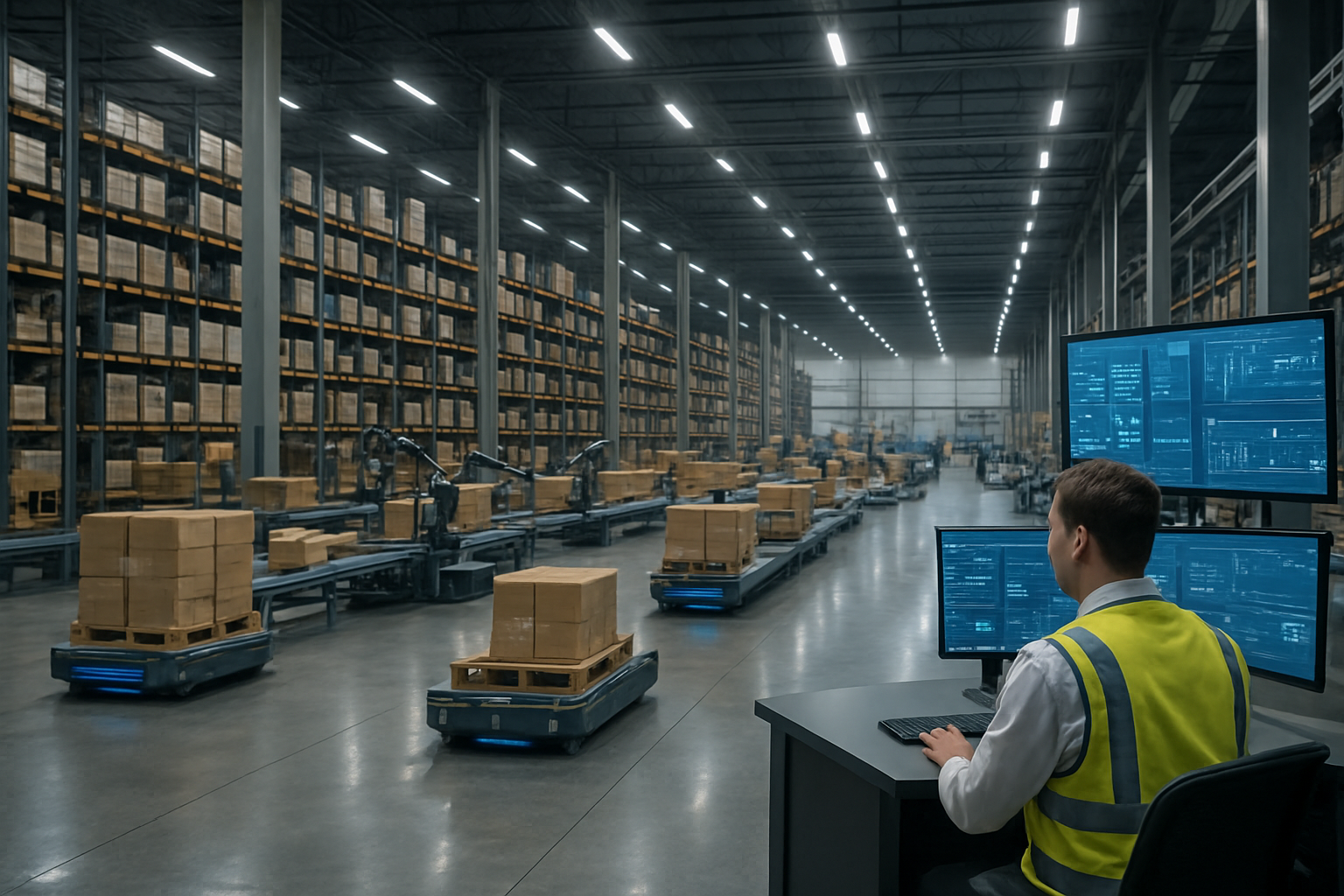
Modern warehouses are transforming their inventory management through AI freight forwarding technologies that precisely monitor stock levels in real time. Smart sensors and RFID tags work alongside machine learning algorithms to track every item’s movement, location, and condition throughout the facility. These systems learn from historical data patterns, seasonal fluctuations, and demand forecasting to automatically trigger reorders before stockouts occur.
The technology goes beyond simple counting. AI systems analyze product velocity, storage costs, and carrying expenses to determine optimal inventory levels for each item. This prevents the costly scenario of overstocking slow-moving products while ensuring fast-moving items remain available. Intelligent warehouse management platforms can predict demand spikes up to 90 days in advance, allowing freight forwarders to adjust inventory accordingly and maintain service levels without tying up excessive capital in stock.
Robotic systems accelerate picking and packing processes
Warehouse robotics powered by AI are revolutionizing order fulfillment speed and accuracy. Autonomous mobile robots (AMRs) navigate warehouse floors using computer vision and mapping algorithms, efficiently retrieving items for human workers or robotic arms. These systems reduce picking time by up to 70% compared to traditional manual methods.
AI-powered robotic arms equipped with advanced sensors can handle various package sizes and shapes, adapting their grip strength and positioning automatically. Machine learning algorithms continuously improve their performance, learning from each interaction to become more precise and faster over time. The robots work collaboratively with human staff, taking over repetitive tasks while humans focus on complex decision-making and quality checks.
Smart space utilization increases storage capacity
AI logistics solutions optimize warehouse layouts by analyzing product dimensions, turnover rates, and access patterns to maximize storage density. Dynamic slotting algorithms continuously reassign product locations based on changing demand patterns, ensuring frequently picked items are positioned in easily accessible zones while slower-moving inventory occupies higher shelves or less convenient locations.
Vertical space optimization systems use AI to determine the most efficient stacking patterns and storage configurations. These platforms can increase storage capacity by 40% without expanding physical footprint, significantly reducing real estate costs for freight forwarding operations.
| Storage Optimization Method | Capacity Increase | Implementation Time |
|---|---|---|
| AI-driven slotting | 25-30% | 2-4 weeks |
| Dynamic location assignment | 15-20% | 1-2 weeks |
| Vertical space algorithms | 35-40% | 4-6 weeks |
Automated quality control reduces damaged goods claims
Computer vision systems powered by AI inspect packages at multiple points throughout the warehouse workflow, identifying damage, incorrect labeling, or packaging issues before items reach customers. These systems can detect microscopic cracks, dents, or other defects that human inspectors might miss, reducing damaged goods claims by up to 85%.
Machine learning algorithms analyze images of products in real time, comparing them against quality standards and flagging anomalies immediately. The technology learns to identify new types of damage patterns and quality issues, becoming more effective over time. Automated sorting systems divert potentially damaged items for human inspection, while acceptable products continue through the fulfillment process without delay.
Weight verification systems integrated with AI ensure packages match expected specifications, catching mislabeled or incorrectly packed items before shipment. This proactive approach protects both freight forwarders and their customers from costly returns and damaged relationships.
Enhanced Customer Experience Through Real-Time Communication

Chatbots provide instant shipment status updates
Modern AI freight forwarding companies deploy sophisticated chatbots that deliver immediate responses to customer inquiries about shipment locations, delivery times, and cargo status. These intelligent systems tap into real-time tracking databases and provide accurate information within seconds, eliminating the frustration of waiting for human representatives during business hours.
Smart chatbots understand natural language queries and can handle complex questions about multiple shipments, customs clearance status, and expected delivery windows. They integrate seamlessly with existing logistics platforms, pulling data from various sources to give customers comprehensive updates about their freight movements across different transportation modes.
Predictive notifications keep clients informed of delays
AI logistics solutions analyze historical patterns, weather data, port congestion levels, and traffic conditions to predict potential delays before they impact shipments. This proactive approach allows freight forwarders to notify customers about expected delays hours or even days in advance, giving businesses time to adjust their operations accordingly.
These predictive systems send automated alerts through multiple channels – email, SMS, or mobile app notifications – ensuring clients receive critical updates through their preferred communication method. The AI continuously learns from new data, improving prediction accuracy over time and reducing the number of unexpected surprises that can disrupt supply chains.
Mobile platforms offer 24/7 cargo visibility
Supply chain AI technology powers mobile applications that give customers round-the-clock access to their cargo information. These platforms display real-time location data, temperature readings for sensitive goods, and milestone updates as shipments progress through different stages of the logistics journey.
Advanced mobile interfaces include interactive maps showing exact vessel or truck locations, estimated arrival times at each checkpoint, and detailed timeline views of completed and upcoming logistics events. Customers can set custom alerts for specific milestones, receive push notifications about important updates, and access complete shipment histories for better supply chain planning.
Automated exception handling resolves issues faster
When problems arise during freight transportation, AI systems immediately detect anomalies and trigger automated response protocols. These intelligent solutions can reroute shipments around port closures, reassign cargo to alternative vessels when delays occur, and automatically generate new documentation when routing changes happen.
The automated exception handling process includes instant customer notification about the issue, proposed solutions, and revised delivery timelines. AI freight forwarding platforms can even predict which alternative routes will minimize delays and costs, presenting customers with optimized options while human experts focus on more complex problem-solving tasks.
Cost Reduction Strategies Powered by Machine Learning
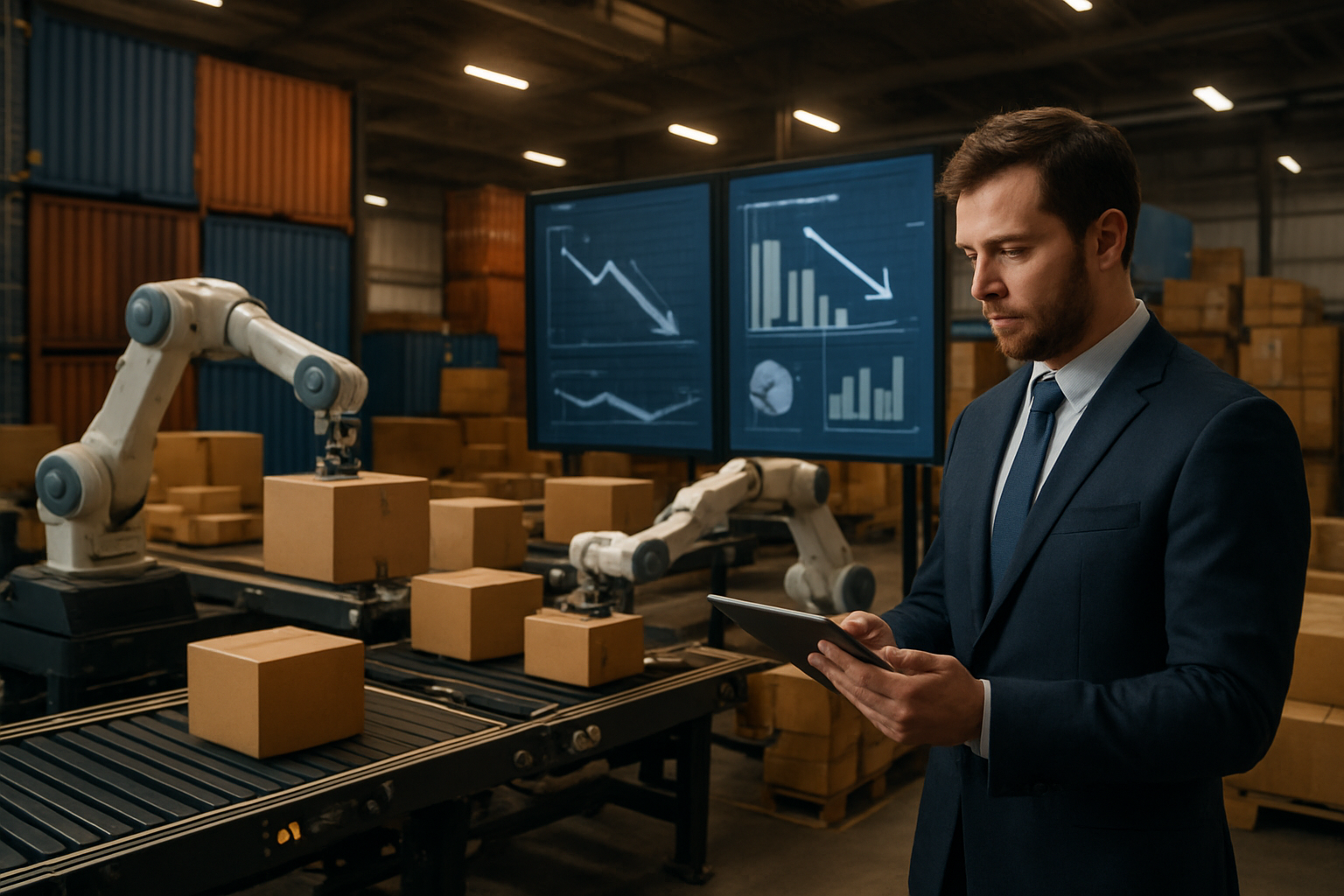
Carrier Rate Optimization Finds the Best Shipping Deals
Machine learning algorithms continuously analyze millions of carrier rates, shipping routes, and historical pricing data to identify the most cost-effective shipping options. These AI logistics solutions compare rates across multiple carriers in real-time, factoring in variables like delivery timeframes, service reliability, and seasonal pricing fluctuations. The technology learns from past shipping patterns and market trends, automatically flagging opportunities where companies can switch carriers or negotiate better rates.
Smart rate optimization systems track carrier performance metrics beyond just price, including on-time delivery rates, damage claims, and customer service quality. This comprehensive approach helps freight forwarding cost reduction by preventing costly delays and service failures that traditional lowest-price strategies often overlook. Companies using these AI-powered systems report savings of 15-25% on their annual shipping costs while maintaining or improving service quality.
Container Utilization Algorithms Minimize Wasted Space
Advanced algorithms solve complex three-dimensional packing problems that human planners struggle with, maximizing container space usage while respecting weight limits and cargo compatibility rules. These systems consider factors like fragility, temperature requirements, and loading sequence to create optimal loading plans that reduce the number of containers needed for shipments.
AI freight forwarding platforms use machine learning to analyze historical shipment data and predict optimal container configurations for future loads. The technology identifies patterns in cargo dimensions, weights, and shipping routes to continuously improve packing efficiency. Companies implementing these solutions typically see container utilization rates improve from 65-70% to 85-90%, directly translating to lower shipping costs and reduced environmental impact.
Insurance Premium Reduction Through Risk Assessment
Machine learning models analyze vast datasets including weather patterns, geopolitical events, carrier safety records, and route-specific risk factors to provide more accurate cargo insurance assessments. These predictive analytics logistics systems help freight forwarders negotiate lower insurance premiums by demonstrating reduced risk profiles through data-driven insights.
Risk assessment algorithms evaluate real-time conditions along shipping routes, identifying potential hazards like severe weather, port congestion, or security threats. This proactive approach allows for dynamic route adjustments and risk mitigation strategies that insurance providers recognize with reduced premiums. Companies leveraging AI-powered risk assessment report insurance cost reductions of 10-20% while maintaining comprehensive coverage.
Cost Impact
The combined effect of these machine learning strategies creates significant financial advantages for freight forwarding operations. Companies implementing comprehensive AI solutions across rate optimization, container utilization, and risk assessment typically achieve total cost reductions of 20-35% within the first year of deployment. The technology’s ability to process and analyze data at scale provides competitive advantages that traditional manual processes simply cannot match, making AI supply chain visibility essential for staying competitive in today’s logistics market.

The bottom line is simple: businesses that embrace these AI tools are already seeing dramatic improvements in their operations and their profit margins. If you’re still handling freight forwarding the old-fashioned way, you’re not just missing out on efficiency gains – you’re falling behind competitors who are using machine learning to cut costs and deliver better service. The technology is here, it’s proven, and it’s time to make the switch before your competition leaves you in the dust.